




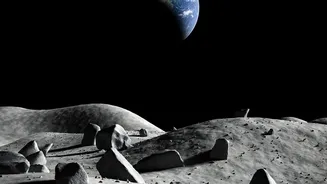

The Lure of the Lunar South Pole
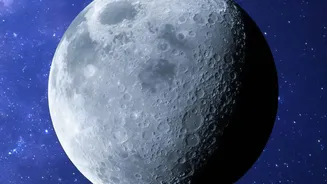
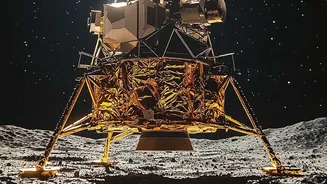
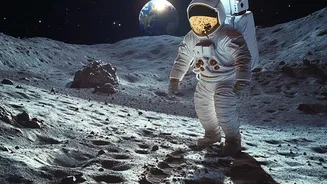
For decades, all six Apollo landings touched down near the Moon's equator. The Artemis program, however, has its sights set on a much different and more strategic location: the South Pole. The reason is simple and vital for long-term settlement: water.
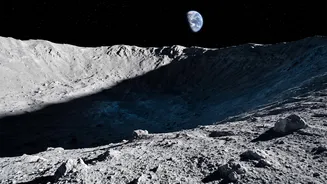
Unlike the sun-scorched equatorial regions, the South Pole is home to deep craters whose floors are in permanent shadow. These ultra-cold areas are believed to hold vast reserves of water ice, a critical resource that can be harvested for drinking water, breathable air, and rocket propellant. Establishing a base camp here, as NASA plans to do, would allow astronauts to conduct long-duration missions and test the technologies needed for an eventual journey to Mars. The unique lighting conditions, with the sun always low on the horizon, also offer near-constant sunlight on the rims of some craters, providing a reliable source for solar power. This combination of potential resources and power makes the South Pole the most promising real estate for humanity's first sustainable outpost beyond Earth.
The Smallest, Toughest Stowaways
Every human is a walking ecosystem, carrying trillions of microbes. It is impossible for astronauts to travel without these microscopic companions, which can vent from spacesuits and habitats. This has prompted a critical question for NASA: could Earth's microbes survive on the Moon? Recent studies suggest the answer is a surprising yes, at least temporarily. A NASA-led study published in August 2026 modeled the conditions at several candidate landing sites near the South Pole. It found that while direct sunlight, with its intense UV radiation and heat, would be lethal, the permanently shadowed regions could act as protective niches. In these cold traps, some resilient microorganisms could survive. The study tested several organisms commonly found on spacecraft, including the fungus Aspergillus niger, a common mold. This fungus showed remarkable resistance, even surviving brief exposure to some sunlight, outperforming microbes known for their extreme toughness. While the conditions likely wouldn't allow these microbes to grow or reproduce, their ability to simply survive presents a new set of challenges.
A Question of Planetary Protection
The potential survival of Earth microbes on the Moon raises concerns about "forward contamination"—the process of inadvertently polluting another world with our own biology. One major risk is to science. If we are searching for signs of ancient lunar chemistry or, however unlikely, native life, we need to be sure we are not just detecting the bacteria we brought with us. This is why establishing a baseline of the lunar environment before extensive human activity is crucial. There's also the historical controversy from the Apollo 12 mission, where bacteria were thought to have survived on the Surveyor 3 probe for years on the Moon, although later analysis suggested possible contamination after it was returned to Earth. To avoid repeating such ambiguities, NASA sterilizes its robotic probes. But that's not an option for missions with human crews. This makes understanding microbial behavior essential for preserving the scientific integrity of the Moon.
Preparing for a Biological Frontier
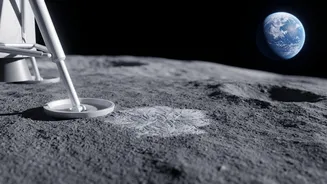
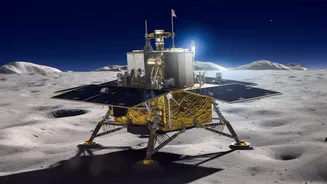
Beyond scientific contamination, there are practical health considerations for astronauts. Spaceflight is known to alter both astronaut immune systems and the behavior of some microbes. Understanding how bacteria and fungi fare in the lunar environment—with its partial gravity and intense radiation—is key to keeping future lunar inhabitants safe. To study this directly, NASA is developing projects like the Lunar Explorer Instrument for space biology Applications (LEIA). Scheduled to launch on a commercial lander, LEIA will send yeast to the Moon's surface to study its biological response to radiation and lunar gravity in real time. Because yeast DNA shares similarities with human DNA, the experiment will provide invaluable data for mitigating health risks for astronauts on long missions. These studies are not just about protecting the Moon from us; they are about learning how to protect ourselves in a new and hostile environment, turning an unavoidable contamination issue into a vital scientific experiment.