





Why 'Non-Toxic' Matters More in Small Spaces
In a compact apartment, ventilation can be limited, concentrating the fumes from cleaning products. Pets are especially vulnerable because they live closer to the ground, lounge on sprayed surfaces, and groom themselves by licking their paws and fur.
This increases their exposure to any residual chemicals. Conventional cleaners often contain ingredients like ammonia, chlorine, and formaldehyde, which can irritate pets' respiratory systems, skin, and eyes. Choosing non-toxic sprays isn't just a trend; it's a crucial step in creating a healthier indoor environment for the entire household, two-legged and four-legged members alike.
The Power of Enzymes for Accidents
For the inevitable accidents, enzymatic cleaners are the gold standard. Unlike standard soaps that can mask odours, these sprays use beneficial bacteria and enzymes to physically break down and digest the organic compounds in urine, faeces, and vomit. The key culprit in lingering urine smell is uric acid, which forms stubborn crystals that are resistant to traditional cleaners. Enzymatic formulas effectively dismantle these crystals at a molecular level, eliminating both the stain and the odour for good. This is critical because it helps prevent pets from re-marking the same spot, a common behaviour driven by their powerful sense of smell. When using, it's important to thoroughly saturate the spot and let the product sit for several minutes to allow the enzymes to work before blotting clean.
A Three-Pronged Spray Strategy
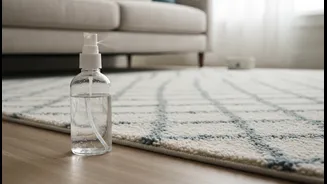
Safeguarding your rug requires more than just cleanup. A comprehensive approach involves prevention, immediate action, and general maintenance. First, use a deterrent spray on the rug. These often contain scents that pets dislike but are pleasant or unnoticeable to humans, like citrus or specific essential oils such as peppermint and lemongrass. This discourages chewing or using the rug as a toilet. Second, always have an enzymatic cleaner on hand for immediate accident response. The faster you treat a stain, the less likely it is to set. Finally, for overall freshness, use a non-toxic fabric freshening spray. This helps neutralize general pet odours without loading your home with harsh chemicals.
Reading Labels: What to Look For and Avoid
Navigating the cleaning aisle can be confusing. Look for products that clearly state they are plant-based, biodegradable, and free of harsh chemicals. Key ingredients to avoid include phenols (often in antibacterial products), bleach, ammonia, chlorine, and phthalates (found in artificial fragrances). Safer, effective ingredients often include plant-derived surfactants, natural enzymes, and essential oils known to be safe for pets. However, be aware that even some 'natural' essential oils can be toxic to pets, especially cats, so it's best to stick to formulas specifically designed and marketed as pet-safe. When in doubt, choose fragrance-free options. Always test a new spray on an inconspicuous area of your rug first to check for colourfastness.
The DIY Approach: A Simple & Safe Solution
For those who prefer a homemade solution, a simple and effective spray can be made with household items. A basic all-purpose cleaner is a 50/50 solution of white vinegar and water. Vinegar is a natural deodorizer and disinfectant. For a simple carpet deodorizer, you can sprinkle baking soda on the rug, let it sit for 15-30 minutes to absorb odours, and then vacuum it up thoroughly. For a stain-fighting paste, you can mix baking soda with a small amount of hydrogen peroxide and a drop of pet-safe dish soap. Always apply the paste, let it work for about ten minutes, and then vacuum once dry. As with any cleaner, test your DIY solution on a hidden spot first.