




Why Generic Advice Fails
The problem with generic hydration rules is that we are all different. Your body size, fitness level, the intensity of your workout, and even the day's weather all dramatically influence how much fluid you lose. An individual can lose anywhere from a couple
of cups to several litres of fluid through sweat in a single hour of activity. Following a generic guideline could mean you're drinking far too little, risking dehydration, or even drinking too much, which can also be dangerous. Even mild dehydration, representing just a 2% loss of body weight, can significantly impair performance by increasing fatigue, reducing concentration, and raising your heart rate. It affects your endurance, flexibility, and even your mood. A personalised plan ensures you are replacing what your specific body needs to perform at its best and stay safe.
What Is Sweat Rate Anyway?
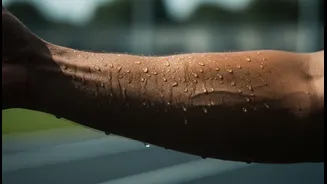
Your sweat rate is simply a measurement of the fluid you lose through perspiration over a specific period. Think of it as your body's unique cooling signature. When you exercise, your internal temperature rises, and your body produces sweat that evaporates from your skin to cool you down. This process is vital for regulating body temperature, but it comes at the cost of losing water and essential minerals called electrolytes. Everyone’s sweat rate is different and can change based on factors like heat, humidity, and how hard you're working. Knowing your rate is the first step in moving beyond guessing and creating a smart, effective hydration strategy that is tailored specifically to you.
How to Calculate Your Sweat Rate
Calculating your sweat rate is surprisingly simple and doesn't require any fancy equipment. All you need is a reliable scale. Follow these steps to get a good estimate: 1. Before you start your workout, use the toilet and then weigh yourself, ideally with no clothes on. Record this as your 'pre-exercise weight'. 2. Perform your workout for a set duration, like 60 minutes. Try to replicate the intensity and conditions of your typical training. 3. Keep track of any fluid you drink during the session. If you drink from a water bottle, weigh it before and after to know exactly how much you consumed (1 gram equals 1 millilitre). 4. After the workout, towel yourself completely dry and weigh yourself again (wearing the same, if any, clothing as before). This is your 'post-exercise weight'. 5. Now for the calculation: (Pre-exercise weight - Post-exercise weight) + Fluid consumed = Total sweat loss. Since 1 kg of weight loss is roughly equal to 1 litre of fluid loss, this gives you your sweat rate for that hour.
Putting Your Data into Action
Once you've calculated your sweat rate, you have a powerful tool to build a personal hydration plan. For example, if you discovered you lose 1.2 litres of fluid per hour, you now have a target for replacement. The goal during exercise is not necessarily to replace 100% of what you lose, but to prevent excessive dehydration by staying within about 2% of your starting body weight. A good starting point is to aim to replace about 70-80% of your sweat losses during the activity. For that 1.2 litre per hour sweat rate, this would mean sipping around 840-960 ml of fluid throughout the hour. Don't wait until you're thirsty; by then, you're already dehydrated. Start drinking early and continue at regular intervals throughout your workout.
It Is Not Just About Water
Replacing lost fluid is only half the battle. Sweat isn't just water; it's also packed with electrolytes, most notably sodium. These minerals are crucial for nerve function, muscle contractions, and maintaining fluid balance in your body. If you're exercising for over an hour or in very hot conditions, drinking only plain water can dilute your body's sodium levels, which can lead to cramps, fatigue, and in rare cases, a dangerous condition called hyponatremia. For longer or more intense sessions, a sports drink containing sodium and other electrolytes is recommended to replenish what you've lost. This helps your body absorb and retain fluid more effectively, keeping you safer and stronger for longer.