


The Ultimate Off-World Resource
Water is the single most critical resource for establishing a sustainable human outpost on the Moon. It's not just for drinking; its components, hydrogen and oxygen, are the primary ingredients for breathable air and, crucially, rocket propellant. Launching
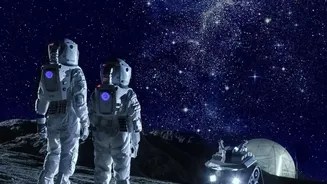
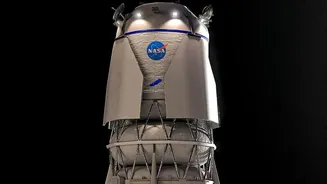
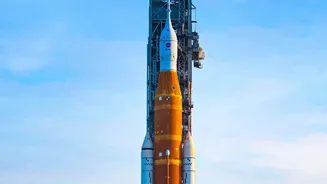
a single kilogram of anything from Earth is incredibly expensive, costing thousands of dollars to escape our planet's gravity. By harvesting water already on the Moon, NASA can turn the lunar surface into a self-sufficient refueling station and life-support reservoir. This concept, known as in-situ resource utilization (ISRU), is the bedrock of the Artemis program's long-term strategy. It's what transforms the Moon from a temporary campsite into a true stepping stone for future missions to Mars and beyond.
The Hunt for Frozen Water
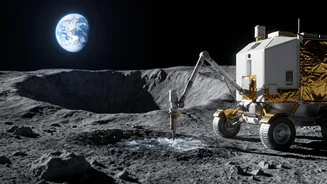
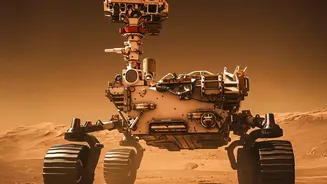
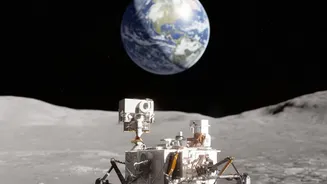
Before NASA can mine the ice, it needs to know precisely where it is, how much is there, and in what form. Data from orbiters like the Lunar Reconnaissance Orbiter (LRO) has confirmed that water ice is concentrated in permanently shadowed regions (PSRs) at the lunar south pole—craters that haven't seen sunlight in billions of years. To get a closer look, NASA is deploying a new generation of robotic prospectors. The centerpiece of this effort is the Volatiles Investigating Polar Exploration Rover, or VIPER. This golf-cart-sized rover is designed to map the ice deposits in detail. Equipped with a drill and specialized instruments, VIPER will venture into the frigid, dark craters to analyze the soil, measuring the concentration and depth of ice reserves to create the first true resource maps of the Moon.
Technology for a Lunar Ice Drill
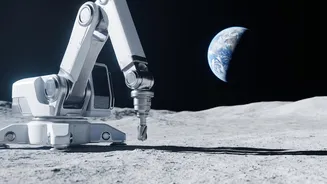
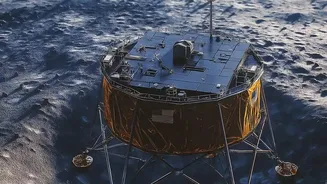
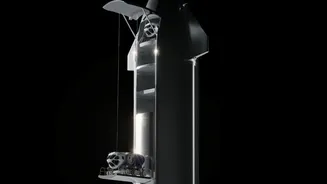
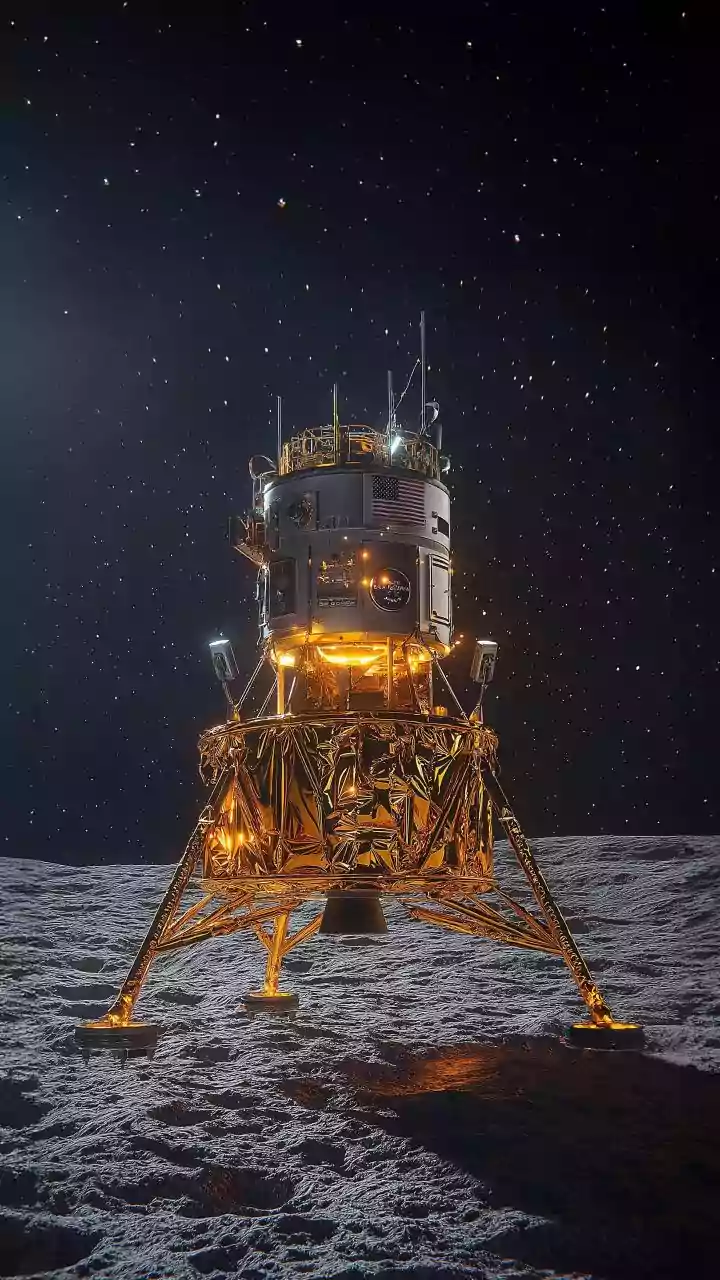
Extracting water from frozen lunar regolith (the Moon's soil) requires sophisticated technology. NASA is testing this with precursor missions under the Commercial Lunar Payload Services (CLPS) initiative. A key demonstration is the Polar Resources Ice Mining Experiment-1 (PRIME-1). PRIME-1 consists of a drill named TRIDENT (The Regolith and Ice Drill for Exploring New Terrains) and a mass spectrometer called MSOLO (Mass Spectrometer Observing Lunar Operations). The process works like this: TRIDENT drills into the surface, collecting soil samples from up to a meter deep. This icy soil is then heated, causing the ice to turn directly into vapor in a process called sublimation. The MSOLO instrument then analyzes this vapor to measure the amount of water and other volatile compounds present. This testbed mission provides critical data for designing larger, more robust mining systems for future use.
Building a Lunar Economy
The ultimate goal is to scale up these initial experiments into a full-fledged industrial operation. Future Artemis missions envision larger robotic miners and processing plants stationed at the lunar south pole. These facilities will extract large quantities of water ice from the regolith. The water will then be purified and processed through electrolysis, which splits the H₂O molecule into hydrogen and oxygen. The oxygen can be used for astronauts' life support systems, while the hydrogen and oxygen can be stored as a cryogenic liquid propellant. This lunar-derived propellant could refuel spacecraft heading back to Earth or embarking on the long journey to Mars, dramatically reducing the cost and complexity of deep space exploration. By learning to live off the land, NASA isn't just planning a return to the Moon; it's laying the foundation for a permanent and economically viable human presence in space.