





More Than Just Pretty Lights
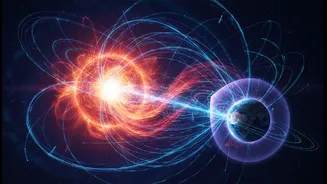
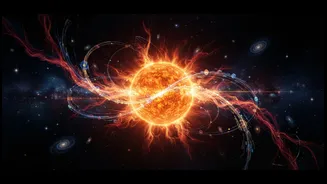
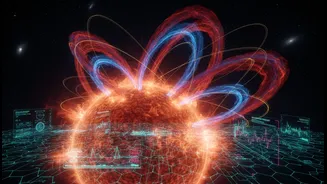
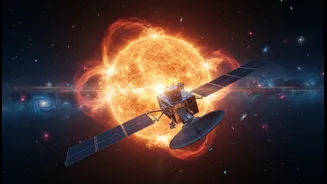
A solar storm is a disturbance on the Sun, which can send a torrent of energetic particles and magnetic fields hurtling towards Earth. These events, including solar flares and coronal mass ejections (CMEs), can have serious consequences. When a powerful
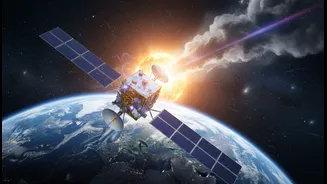
storm hits Earth's magnetic field, it can induce currents in power grids, potentially causing widespread blackouts. It can also disrupt radio communications, damage the electronics on satellites, and interfere with GPS signals, which are critical for everything from aviation to agriculture. In an increasingly connected world, the ability to predict these events is no longer a niche scientific interest; it's a matter of global security and economic stability.
The Rise of the Space Weather Forecaster
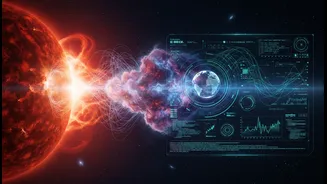
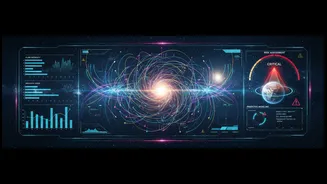
Just as a meteorologist predicts weather on Earth, a space weather forecaster predicts conditions in space. These professionals analyse data from solar observatories and satellites to monitor the Sun's activity, issue warnings about potential solar storms, and model their likely impact on Earth. Their work is crucial for industries and agencies that operate the very technologies at risk. This includes satellite operators, airlines, power grid managers, and defence organisations. It is a field that combines the thrill of astrophysics with the practical responsibility of protecting critical infrastructure.
India's Journey into Solar Observation
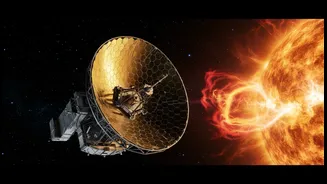
India has made significant strides in this domain, most notably with the Aditya-L1 mission, its first dedicated space-based observatory to study the Sun. Positioned at a unique vantage point, Aditya-L1 continuously observes the Sun, providing a wealth of data on solar phenomena. This mission, led by the Indian Space Research Organisation (ISRO), is not just a scientific achievement; it's a job creator. The immense volume of data flowing from Aditya-L1 requires a new generation of scientists, engineers, and data analysts to process, interpret, and translate it into actionable forecasts. This has spurred the creation of support cells and research programmes at institutions like the Aryabhatta Research Institute of Observational Sciences (ARIES).
Your Academic Launchpad
For students in India, the path to this career begins with a strong foundation in science and mathematics. In school, focus on physics, maths, and computer science. For higher education, a bachelor's degree in physics, astrophysics, atmospheric science, or a related engineering field is the typical starting point. Many senior roles in research and forecasting require a master's degree or even a PhD. Premier institutions like the Indian Institute of Space Science and Technology (IIST) in Thiruvananthapuram, which works closely with ISRO, and the Indian Institute of Science (IISc) offer specialised postgraduate programmes relevant to space science. Other research hubs include the Indian Centre for Space Physics (ICSP) and the Inter-University Centre for Astronomy and Astrophysics (IUCAA).
The Modern Skillset: Physics Meets Big Data
This career isn't just about looking through a telescope. Modern space weather forecasting is deeply rooted in data science. Proficiency in programming languages like Python or MATLAB is essential for processing the vast datasets from solar missions. Experience with data analysis software, machine learning, and numerical modelling is highly desirable. Forecasters use these tools to build predictive models that can identify the early signs of a solar eruption and simulate its journey through space. Therefore, the ideal candidate is someone who is as comfortable with coding and algorithms as they are with the principles of plasma physics and electromagnetism.