




From Counter to Cloud: The Digital Shift
For decades, buying makeup or skincare involved a trip to a department store or salon. You’d chat with a human assistant, test shades on the back of your hand, and hope for the best under the store’s fluorescent lights. While that personal touch is still
valuable, technology has introduced a powerful new player. The shift began with brands moving online, but the real revolution is happening now with the rise of AI. Major companies like L'Oréal and retailers like Sephora are investing heavily in AI-powered tools that act as a personal beauty consultant, available 24/7 in your pocket. [1, 3, 6] This technology aims to make shopping more personal, precise, and convenient than ever before. [11]
What Can These AI Assistants Actually Do?
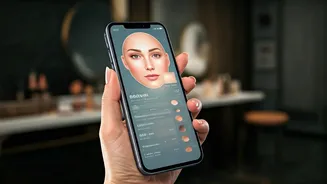
These AI tools are much more than simple chatbots. They use a combination of augmented reality (AR) and sophisticated algorithms to offer a range of personalized services. [2] The most popular feature is the virtual try-on. Using your phone’s camera, you can see how hundreds of different lipstick shades, eyeshadows, or even hair colours will look on you in real-time. [18, 23] Beyond makeup, AI is making waves in skincare. [12] By uploading a selfie, AI-driven diagnostic tools can analyze your skin for concerns like fine lines, dark spots, hydration levels, and texture. [4, 7] Based on this analysis, the tool can then recommend a customised skincare routine, suggesting specific products tailored to your needs. [9] Some advanced systems, like L'Oréal's Perso, can even assess local environmental factors like humidity and UV index to adjust your recommended formula for the day. [14, 15, 17]
The Perks of a Digital Consultation
The benefits for consumers are clear. First is the unparalleled convenience. You can get expert advice and 'try on' products from your couch at any time of day, without any sales pressure. [3, 12] This privacy allows for more freedom to experiment with bold looks you might be hesitant to try in a public setting. Second is the power of personalization. These tools analyze vast amounts of data to provide hyper-personalized recommendations, moving beyond generic advice to find what truly works for you. [11, 20] Sephora's 'Virtual Artist' and 'AI Beauty Chat' tools, for example, use AI to analyze your facial features and skin tone to help you find the perfect foundation shade, a notoriously tricky task. [7, 8, 10] This data-driven approach can reduce the costly trial-and-error of buying products that don't work out.
The Human Touch vs. The Algorithm
Despite their sophistication, AI assistants have limitations. A key concern is whether an algorithm can truly replace the nuanced expertise of a trained human makeup artist or esthetician. While AI can analyze data points, it can't always replicate the human connection, understand the subtleties of skin texture, or provide the creative artistry that comes from experience. [1] Accuracy can also be an issue; the way a virtual lipstick looks can be affected by your phone’s camera quality and the lighting in your room. [12] Furthermore, there are valid concerns about data privacy and the potential for AI to reinforce narrow, unrealistic beauty standards if not trained on diverse enough data sets. [12, 13, 20]
A Hybrid Future: The Best of Both Worlds
Instead of a complete replacement, the future of beauty retail is likely to be a hybrid model. AI tools are best seen as a powerful support system rather than a substitute for human experts. [1] They can empower customers to come into a store more informed and confident in what they're looking for. A shopper might use a virtual try-on at home to narrow down their choices, then visit a store for a final confirmation and application tips from a human artist. [26] This integration enhances the customer experience, giving shoppers the data-driven precision of AI combined with the personal touch and artistry of a professional. For beauty brands and professionals, embracing these tools is becoming essential to stay competitive and meet the expectations of the modern consumer. [1]