






The Promise of a Celestial Show
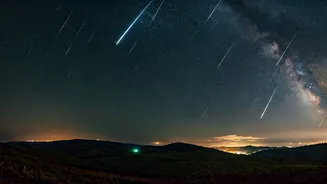
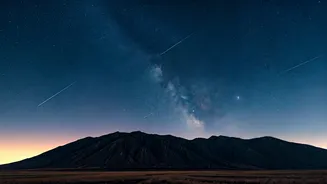
There is something magical about a meteor shower. The idea of Earth passing through a trail of cosmic dust left by a comet decades or centuries ago captures the imagination. News reports promise dozens, or even hundreds, of shooting stars per hour, painting
a picture of a sky alive with streaks of light. For many, it's a reason to gather with family and friends, look up, and connect with the cosmos. Yet, for countless city and suburban dwellers, the reality is often a stiff neck and a sense of disappointment. A handful of faint meteors over a couple of hours can feel like a cosmic letdown.
The Great Obstacle: Light Pollution
The primary culprit for this underwhelming experience is light pollution. The glow from our cities, streetlights, and homes creates a phenomenon called 'skyglow', a luminous veil that washes out the night sky. This artificial brightness drastically reduces the number of stars and meteors visible to the naked eye. In a major city, you might see fewer than 20 stars on a clear night. Under these conditions, only the brightest fireballs can punch through the glare, while the majority of meteors—the fainter, more numerous ones—are rendered completely invisible. Your eyes can't adapt to the dark, and the celestial show is over before it even begins.
What 'Dark Sky' Really Means
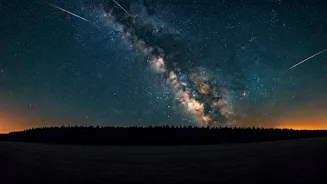
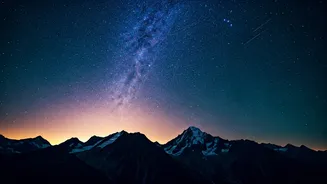
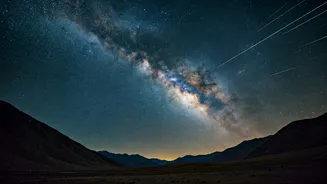
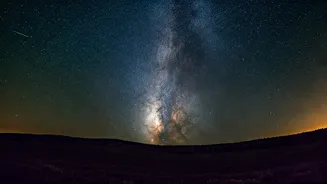
So, what is the 'hack'? It’s trading city lights for starlight. A true dark sky is one where light pollution is minimal, allowing your eyes to fully adapt and perceive faint celestial objects. Astronomers use the Bortle Scale, a nine-level system, to measure sky darkness. Class 9 is an inner-city sky, while Class 1 represents a pristine, remote wilderness sky. For a good meteor shower, you want to be in a Bortle Class 5 (suburban) or lower, but the real magic happens in Class 4 or below. In these locations, the Milky Way becomes visible as a structured, textured band, and the number of visible stars jumps from a few dozen to several thousand. That is the environment where a meteor shower transforms from a few random streaks into a genuine spectacle.
Your Guide to Finding Darkness
Finding a dark sky location in India is more achievable than you might think. The key is to get away from major urban centres. A drive of even an hour or two can make a significant difference. You can use online light pollution maps (like lightpollutionmap.info) to scout for 'cooler' coloured zones—yellow, green, or blue areas—which indicate less light pollution. For those in North India, places like Astroport Sariska in Rajasthan offer organised viewing experiences just a few hours from Delhi. High-altitude locations in Ladakh, Spiti Valley, and parts of Uttarakhand are legendary for their pristine skies. In the south, the Western Ghats (like in Coorg), Javadi Hills, and areas around Kodaikanal are excellent destinations. Even the white desert of the Rann of Kutch or the remote Andaman Islands offer phenomenal stargazing opportunities.
Prepare for the Perfect Night
Once you've found your dark spot, a few extra steps will maximize your experience. Firstly, give your eyes time to adjust. It takes about 20-30 minutes for your pupils to dilate fully and adapt to the dark; avoid looking at your bright phone screen during this time. If you need a flashlight, use one with a red light, as red light doesn't ruin your night vision. Secondly, check the Moon phase. A bright full moon can wash out a meteor shower just as effectively as city lights, so aim for a peak night that falls near a new moon. For example, the famous Perseid meteor shower in August 2026 is predicted to have its peak during a new moon, promising ideal conditions. Lastly, be patient and comfortable. Bring a reclining chair or a blanket, dress in warm layers, and simply lie back and look up. The best tool is the naked eye, as it offers the widest field of view to catch those fleeting streaks of light.