






A Tale of Two Halves
The Pool D match at the FIH Men's Hockey World Cup 2026 began with the intensity expected of this classic rivalry. England drew first blood, with Nicholas Bandurak finding the net in the 14th minute after catching the Indian defence off guard with a swift
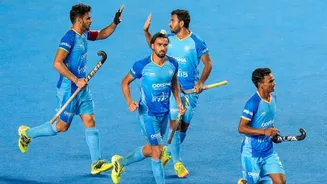
counter-attack. India, however, roared back in the second quarter. Captain Harmanpreet Singh leveled the score with a blistering signature drag-flick from a penalty corner just minutes after the restart. The momentum swung firmly in India's favour when Dilpreet Singh masterfully deflected a pass from Hardik Singh to give his team a 2-1 lead in the 24th minute. Heading into the long break, India looked in control, playing with flair and confidence, and on track to finally break their long-standing World Cup curse against the English.
The English Resurgence
Whatever was said in the English dressing room at halftime worked wonders. They returned to the pitch a different team, pressing high and playing with relentless aggression. India, in contrast, seemed to lose their rhythm, struggling to handle the sustained pressure. The equaliser came in the 39th minute when Stuart Rushmere got a deft touch to deflect the ball past the Indian keeper, making it 2-2. Just four minutes later, England took the lead through Henry Croft, who finished off another well-constructed attacking move. The comeback was complete, and the hope that had filled the Indian camp at halftime began to fade. Nicholas Bandurak scored his second goal late in the final quarter, sealing a 4-2 victory and confirming England's dominance in the second half.
A Three-Decade Burden
This defeat was more than just a single loss; it was the continuation of a painful 32-year winless streak for India against England in the Hockey World Cup. The last time India managed to beat England on this grand stage was in a 5th-6th place classification match in Sydney way back in 1994. Since then, the teams have met multiple times, with England consistently having the upper hand. They secured narrow 3-2 victories in the 2002, 2006, and 2010 editions, followed by a 2-1 win in 2014. Their most recent World Cup encounter before this one, in 2023, ended in a hard-fought goalless draw. This history adds a psychological layer to every meeting, a burden of the past that the Indian team has repeatedly struggled to overcome.
The Tactical Divide
The rivalry is often seen as a clash of hockey philosophies. India, under coach Craig Fulton, plays a fast, fluid, and attacking style, relying on quick transitions and creative circle entries to generate opportunities. England, on the other hand, is known for its rigid structure, defensive discipline, and tactical organisation. They excel at slowing the game down, frustrating opponents, and capitalizing on mistakes. In Amstelveen, both styles were on display. India's flair and speed gave them the edge in the first half, but England's disciplined structure and clinical finishing proved decisive in the second. Despite nearly equal possession stats and shots on goal, England's efficiency in the attacking circle made all the difference.
The Road Ahead
The loss complicates India's path forward in the tournament. While their opening 3-1 win over Wales provides a cushion, their final pool match against arch-rivals Pakistan now becomes a virtual must-win. Under the 2026 World Cup format, the top two teams from each initial pool advance to a second group stage. With England now firmly at the top of Pool D with two wins, India must secure a positive result against Pakistan to guarantee their spot in the next phase and keep their hopes of a first World Cup title since 1975 alive. The team will need to quickly regroup, learn from the second-half collapse, and find the resilience that has defined their recent successes, including consecutive Olympic medals.