




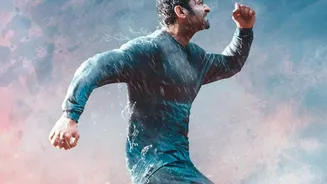

Sholay (1975): The Original Blueprint
Before 'pan-Indian' was a buzzword, there was 'Sholay'. Ramesh Sippy’s magnum opus is often seen as the definitive 'masala' film, blending genres, but its soul was pure action-adventure. Taking inspiration from Hollywood Westerns, it established a template
for large-scale productions, iconic villains, and thrilling set-pieces like the opening train sequence that set new cinematic standards. Its story of two hired guns, Jai and Veeru, against the ruthless dacoit Gabbar Singh, became a cultural touchstone. Though initially met with a lukewarm response, it went on to become one of the highest-grossing Indian films of its time, proving that a well-told, high-stakes story could resonate with audiences everywhere.
Siva (1989): Redefining Raw Action
In the late '80s, director Ram Gopal Varma shattered the conventions of Telugu cinema with 'Siva'. The film, starring Nagarjuna, introduced a raw, realistic, and visceral style of action that was a world away from the often-theatrical fights of the era. The iconic scene where the protagonist yanks a cycle chain to use as a weapon became a symbol of a new, gritty urban anger. Varma's use of new technologies like the Steadicam and innovative sound design gave the action sequences an immersive, kinetic energy that had never been seen before. 'Siva' not only made Nagarjuna a superstar but also influenced a generation of filmmakers across India to adopt a more grounded approach to on-screen violence.
Ghayal (1990): The Arrival of Raw Fury
While 'Siva' was changing the game in the south, 'Ghayal' did the same for Bollywood. Starring Sunny Deol in one of his most memorable roles, the film brought an unmatched intensity and raw physicality to Hindi action cinema. The action wasn't slick or choreographed; it was brutal and emotional, driven by the protagonist's quest for vengeance. 'Ghayal' solidified Sunny Deol's status as one of the biggest action stars of the '90s and became a benchmark for revenge dramas, showcasing a hero who was both powerful and vulnerable.
Baahubali (2015): The Dawn of the Modern Pan-Indian Epic
If 'Sholay' laid the foundation, S.S. Rajamouli's 'Baahubali: The Beginning' built a towering modern kingdom on it. This Telugu epic was the first to consciously use the 'pan-Indian' label as a marketing and release strategy, and it paid off spectacularly. By dubbing the film seamlessly into multiple languages and mounting an unprecedented marketing campaign, the producers ensured it reached every corner of the country. The film's combination of grand visuals, mythological storytelling, and breathtaking action sequences created a cinematic experience that transcended linguistic and cultural barriers, making Prabhas a national star and proving that a regional film could conquer the Indian box office.
K.G.F. (2018-2022): The Stylistic Powerhouse
Following the path forged by 'Baahubali', the Kannada film industry delivered its own pan-Indian behemoth with the 'K.G.F.' series. Starring Yash as the ambitious anti-hero Rocky, these films were a masterclass in style. The action was less about realism and more about creating a mythic, larger-than-life persona through slick editing, a thunderous score, and memorable one-liners. 'K.G.F.' was an homage to the angry young man films of the '70s, but repackaged with a modern, hyper-stylised aesthetic that resonated powerfully with mass audiences, particularly in the Hindi-speaking belt. Its success further cemented the trend of South Indian films dominating the national conversation.
RRR (2022): Taking Indian Action Global
S.S. Rajamouli returned to top his own creation with 'RRR', a film that not only conquered India but also became a global phenomenon. The film’s “what if” premise, uniting two real-life freedom fighters, provided the canvas for some of the most inventive and exhilarating action sequences ever put on screen. From the wild animal introduction scene to the explosive bridge rescue, 'RRR' operated on a level of pure spectacle and creative audacity. It demonstrated that the pan-Indian model wasn't just a domestic strategy; it was a formula that could captivate international audiences and put Indian action cinema on the world stage.