




We all want to breathe cleaner air at home. The two most popular solutions we hear about are modern air purifiers and leafy houseplants. But when you put the high-tech against the all-natural, which one actually works? The evidence might surprise you.
The High-Tech Solution: Air Purifiers
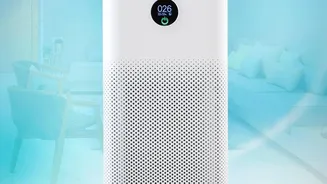
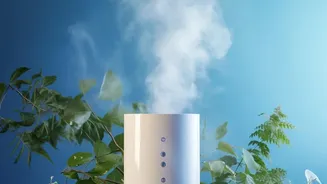
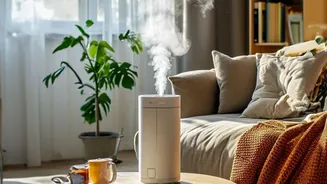
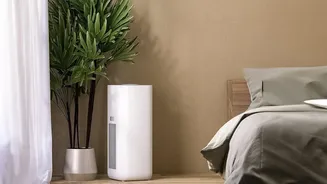
Mechanical air purifiers are designed for one job: to clean the air. Most quality units use a combination of filters to do this. The most important is the HEPA (High-Efficiency Particulate Air) filter. A true HEPA filter is a physical mesh so fine that it's certified to trap at least 99.97% of airborne particles that are 0.3 microns in size. This includes common irritants like dust mites, pet dander, pollen, and mold spores. Many purifiers also include an activated carbon filter. This type of filter is porous and works to adsorb odours, gases, and volatile organic compounds (VOCs)—chemicals released from things like paint, cleaning supplies, and furniture. Together, these filters work as air is pulled through the machine by a fan, effectively and measurably reducing the concentration of pollutants in a room.
The All-Natural Appeal of Houseplants
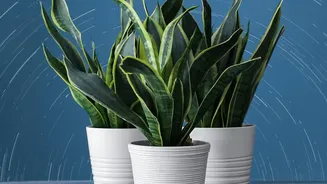
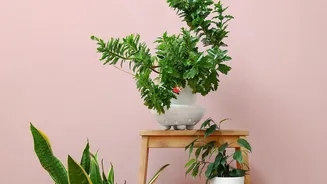
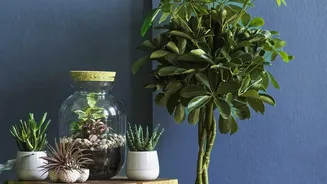
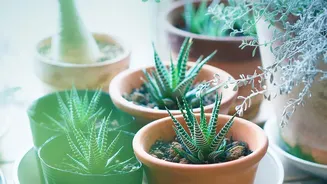
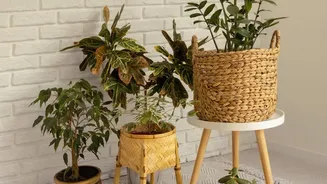
The idea that houseplants can purify indoor air is a popular and attractive one. Much of this belief stems from a well-known NASA study from 1989. The research, designed to see if plants could clean the air in sealed environments like space stations, found that certain common houseplants could indeed remove VOCs like formaldehyde and benzene from small, sealed chambers. The mechanism is simple: plants absorb these compounds through tiny pores in their leaves, and microbes in the soil can also help break down pollutants. This study led to decades of articles and advice suggesting that adding a few green friends to your home is an effective way to clean the air you breathe.
The Green Myth: Why Plants Aren't Enough
While the NASA study was scientifically sound, its conclusions have been widely misinterpreted when applied to a typical home or office. The key problem is scale. The original experiments were performed in small, sealed chambers, not in a room with open doors, windows, and constant air movement. A landmark 2019 review of decades of research found that in a real-world setting, plants remove pollutants at a rate that is far too slow to make a meaningful difference. The natural ventilation of a building dilutes pollutants much faster than a plant can absorb them. Researchers calculated you would need an impractically huge number of plants—somewhere between 10 and 1,000 per square metre—to achieve the same air-cleaning effect as a building's standard air exchange rate, let alone a dedicated purifier.
Head-to-Head: What The Evidence Shows
When you put them side by side, the data is clear. For significantly improving indoor air quality, an air purifier is vastly more effective than houseplants. Air purifiers are engineered to remove a high percentage of airborne particulate matter, which is a major trigger for allergies and asthma. Studies show that using a HEPA purifier can lead to a significant reduction in symptoms. Plants, on the other hand, do very little to remove these particles. While plants can absorb some VOCs, the rate is negligible in a real world room. One analysis concluded that a typical air purifier cleans the air thousands of times faster than a single plant. Essentially, for the job of 'air purification', there is no real contest.