




Peering Through the Cosmic Dust
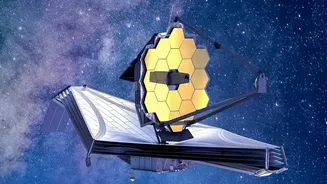
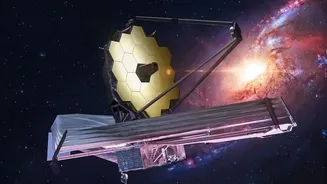
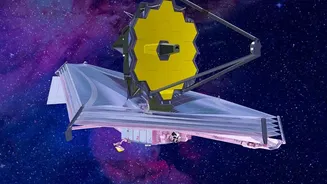
Star-forming regions, often called stellar nurseries, are vast clouds of gas and dust. While beautiful, this cosmic dust acts like a thick fog, blocking the view of conventional telescopes. This is where the James Webb Space Telescope’s genius lies. By
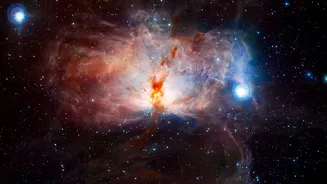
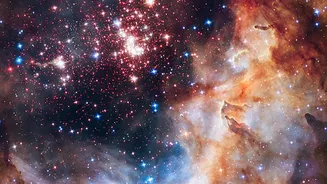
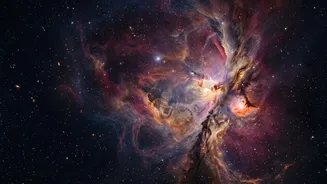
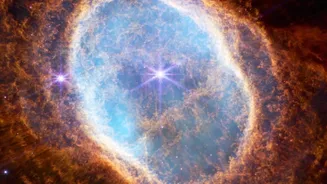
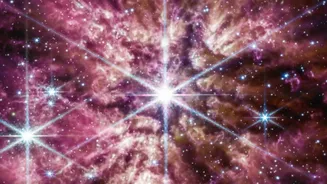
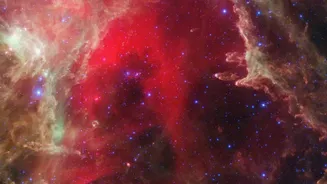
observing the universe in infrared light, JWST can pierce through these obscuring layers, revealing the previously hidden processes of star birth in incredible detail. Recent images of regions like the Carina Nebula and a star-forming area called W51 have showcased this power, turning dark, dusty patches into vibrant landscapes of stellar creation. Scientists can now see fledgling stars that were completely invisible before, giving them a front-row seat to the earliest stages of development.
The Blueprint of a Baby Star
The latest images are doing more than just showing us new stars; they are revealing the complex mechanics of their formation. At the heart of the process are protostars—infant stars still gathering mass from a surrounding disk of gas and dust. JWST's high-resolution infrared eyes have captured the dramatic outflows and jets of material being shot out from these young stars. As a protostar pulls in material, it also violently ejects some of it, a process that helps regulate its growth. For the first time, in images of objects like Herbig-Haro 46/47, we can clearly see the shape of these outflows and the shockwaves they create as they slam into the surrounding gas.
A Race Against the Clock
One of the most significant new insights concerns the protoplanetary disks themselves—the swirling platters of material where planets are born. A recent large-scale study using JWST examined 72 young star systems and found that the way gas escapes these disks changes over time. In the early stages, powerful magnetic winds and jets clear out a lot of material. Later, the star's own radiation takes over in a process called photoevaporation to finish the job. This means planet formation is a race against time. Gas giants like Jupiter must form their massive atmospheres while there is still plenty of gas in the disk, before these stellar winds blow it all away. This process sets a strict timeline for when and how planets can be built.
Finding the Ingredients for Worlds Like Ours
JWST is not just observing the structure of these nascent systems, but also their chemistry. The telescope has confirmed the presence of water vapor in the inner regions of planet-forming disks, precisely where rocky, Earth-like planets are expected to form. This discovery suggests that water, a key ingredient for life as we know it, is available from the very beginning of a planet's life. In other observations, Webb has identified crucial carbon-based molecules, like the methyl cation, which are believed to be essential building blocks for more complex organic chemistry. These findings help connect the dots between the raw materials in a stellar nursery and the potential for habitable worlds to emerge.