




The Agony of Being ‘Clouded Out’
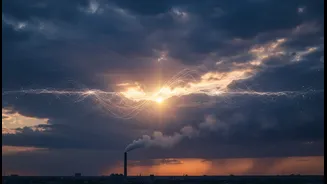
For anyone who has traveled to witness a total solar eclipse, the fear of being “clouded out” is very real. You can spend months, even years, planning your trip to be in the narrow path of totality. You can have the perfect viewing spot and all the right
safety gear. But if a thick cloud bank rolls in just minutes before the main event, all you will experience is a strange midday darkness. You’ll miss the main attraction: the sun’s ethereal corona, the wispy atmosphere that is only visible during those precious moments of totality. The experience of seeing the sky go dark is still profound, but it’s a world away from the awe-inspiring sight of the fully eclipsed sun. Experienced eclipse chasers know this pain and have developed a core strategy to avoid it. They don't just pick a spot and hope for the best; they plan to be mobile.
From Fixed Point to Flexible Chaser
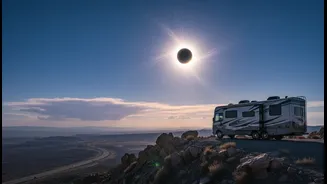
The traditional approach to eclipse viewing involves choosing a single location well in advance, booking accommodation, and setting up camp. This is simple, but it leaves everything to chance. The modern, more effective approach is to become an eclipse chaser. This mindset shift is crucial: instead of having one destination, you have a target region and a flexible plan. The idea is to identify several potential viewing locations along the path of totality, often hundreds of kilometres apart. In the final days and hours leading up to the eclipse, you use detailed weather forecasts to make a final decision, driving to whichever location promises the clearest skies. For the 2017 total solar eclipse in the United States, countless chasers successfully dodged clouds by driving just an hour or two away from their initial, overcast locations. This flexibility transformed potential disappointment into a triumphant viewing experience.
Crafting Your Plan for August 2026
The next major opportunity for many is the total solar eclipse on August 12, 2026. The path of totality will cross over parts of Greenland, Iceland, and a wide swath of northern Spain. While Iceland offers dramatic volcanic landscapes, its August weather is notoriously unpredictable and cloudy. For this reason, Spain is emerging as the top destination for chasers, offering much better odds of clear skies. To build your mobile plan for Spain, start by studying the eclipse path. It runs from the northern coast near cities like A Coruña and Gijón, southeast towards the Balearic Islands, including Mallorca and Ibiza. Identify three potential viewing zones: Plan A, B, and C. Plan A might be near the coast, Plan B could be further inland near Burgos or Zaragoza, and Plan C could be on the island of Mallorca. Research the road networks connecting these areas and estimate driving times. Remember, the eclipse occurs in the late evening in Spain, so you will need a clear view to the west.
The Modern Chaser's Toolkit
A mobile strategy is powered by good data. Your smartphone is your most critical tool, but a basic weather app showing a sun or cloud icon isn't enough. You need to go deeper. Start using weather apps that show you the actual forecast models, like Windy or Astrospheric. These allow you to compare different forecasts (like the European ECMWF and American GFS models) and, most importantly, provide detailed cloud cover predictions at different altitudes. High, thin cirrus clouds might dim the view but not block it, whereas low, thick cumulus clouds are a disaster. Pay close attention to satellite imagery in the days leading up to the eclipse. This gives you a real-world view of where cloud systems are and how they are moving, which is often more reliable than a model alone. Also, join online forums and social media groups dedicated to the eclipse; these communities are fantastic for sharing real-time, on-the-ground weather reports.
The 72-Hour Countdown
Your decision-making timeline should start about three days out. At 72 hours, check the regional forecasts for your A, B, and C locations. You might see a large, stable high-pressure system promising clear skies over one area, or a problematic front threatening another. At 24 hours out, the forecasts become much more reliable. This is the time to make your preliminary decision. If Plan A looks cloudy but Plan B, a three-hour drive away, looks pristine, you should prepare to move. On the morning of the eclipse, make your final call. Check the latest satellite loops and high-resolution, short-term models. Be prepared to leave early to account for the almost-certain traffic, as thousands of other chasers might be making the same move. The goal is to be settled in your new, clearer location at least a couple of hours before the partial phases begin.