





An Echo from the Past
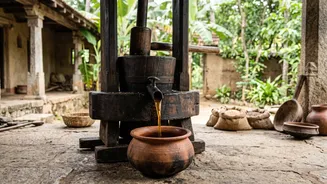
Long before industrial refineries and chemical solvents, there was the ghani. Also known as 'chekku' or 'kolhu', this simple yet ingenious device is essentially a large wooden mortar and pestle. Historically powered by bullocks plodding in a steady circle,
the wooden pestle slowly crushes oilseeds like groundnut, sesame, or coconut placed inside the mortar. This tradition, with roots stretching back over a thousand years, represents a stark contrast to modern high-speed extraction. While today many ghanis are powered by slow-moving electric motors to improve efficiency, the core principle remains unchanged: a slow, gentle, and natural process.
The Art of Slow and Cool Extraction
The magic of the wooden ghani lies in its low-and-slow approach. Unlike industrial methods where machines generate intense heat through friction, the ghani’s wooden components and slow rotation speed ensure that the oil is extracted without raising temperatures significantly. This process is a true form of 'cold-pressing', where the oil’s temperature is kept low, preserving its natural integrity. Industrial refining, on the other hand, often involves high heat and chemical solvents like hexane to maximize yield. These harsh processes can strip the oil of its natural nutrients, aroma, and flavour, resulting in a bland, uniform product. The ghani method, by avoiding chemicals and high heat, produces an unrefined, pure oil that is as close to its natural state as possible.
More Than Just Oil: A Nutritional Powerhouse
The primary benefit of this gentle extraction is the superior nutritional profile of the final product. Wood-pressed oils retain a wealth of natural compounds that are often lost during industrial refining. They are rich in antioxidants like Vitamin E and polyphenols, which help protect the body from cellular damage. Furthermore, these oils are packed with essential fatty acids, including omega-3 and omega-6, which are crucial for heart health and reducing inflammation. Studies have shown that wood-pressed oils can help in lowering bad cholesterol (LDL) levels. The final product is not just a cooking medium but a nutrient-dense food that retains the authentic flavour and aroma of the original seed, enhancing any dish it is added to.
A Blueprint for Sustainable Living
The sustainability of the wooden ghani extends far beyond nutrition. Environmentally, the process is inherently eco-friendly. It consumes minimal energy, especially in its traditional bullock-powered form, resulting in a low carbon footprint. The method produces virtually no waste, creating a perfect circular economy. The dense cake of crushed seeds left over after extraction is a protein-rich supplement used as nutritious cattle feed or a natural fertilizer for farms, returning nutrients to the soil. Economically, the ghani model supports local farmers and small-scale entrepreneurs, strengthening community resilience. In an era where a significant portion of India's edible oil is imported, revitalizing this local industry offers a path towards greater self-sufficiency.
The Revival in South Indian Kitchens
Today, there is a noticeable revival of interest in ghani-extracted oils across South India and beyond. As consumers become more conscious of their health and the environmental impact of their food choices, they are increasingly seeking out authentic, traditionally made products. This movement is not just about nostalgia; it is a deliberate choice for purity, taste, and wellness. From the use of coconut oil along the coasts to sesame (gingelly) oil in Tamil Nadu, these traditional fats are being embraced once again for their culinary and health benefits. This resurgence proves that sometimes, the most innovative solutions are the ones that have been with us all along, waiting to be rediscovered.