





Seeing Back in Time
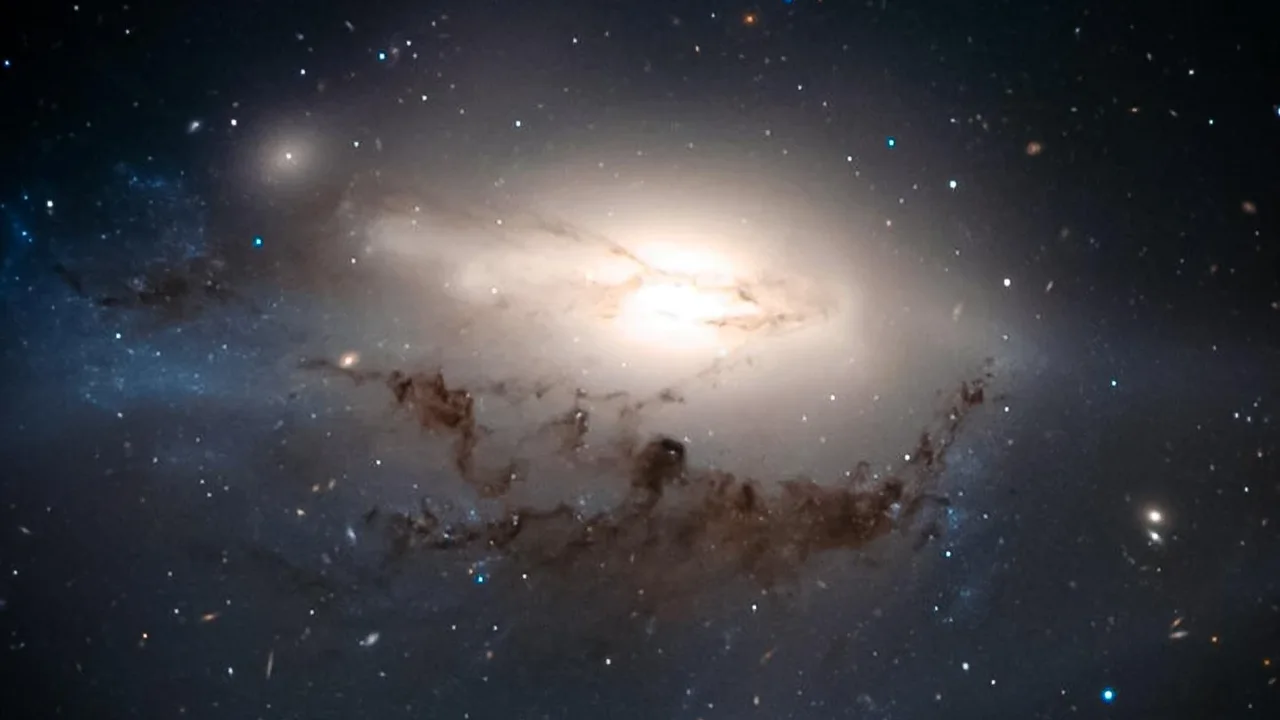
To understand how the Webb telescope works, we first need to grasp a key concept: light travels at a finite speed. When we look at the Moon, we see it as it was 1.3 seconds ago. For distant objects, this 'lookback time' is immense. Light from the earliest
galaxies has traveled for over 13 billion years to reach us. We are, in effect, seeing these objects as they existed shortly after the Big Bang. However, there’s a complication. As the universe has expanded over these billions of years, it has stretched the light traveling through it. Ultraviolet and visible light emitted by the first stars has been 'redshifted'—stretched into longer, infrared wavelengths.
An Eye for Invisible Light
This redshift is why the Hubble Space Telescope, which primarily sees in visible light, has its limits when peering into the cosmic dawn. To see the universe's first light, you need a telescope that specializes in the infrared spectrum. This is precisely what Webb was designed for. Its instruments are engineered to detect this faint, stretched-out light, which is invisible to the human eye. By focusing on infrared, Webb can peer through cosmic dust clouds that would otherwise obscure our view, revealing the birthplaces of stars and galaxies that were previously hidden.
A Giant, Golden Mirror
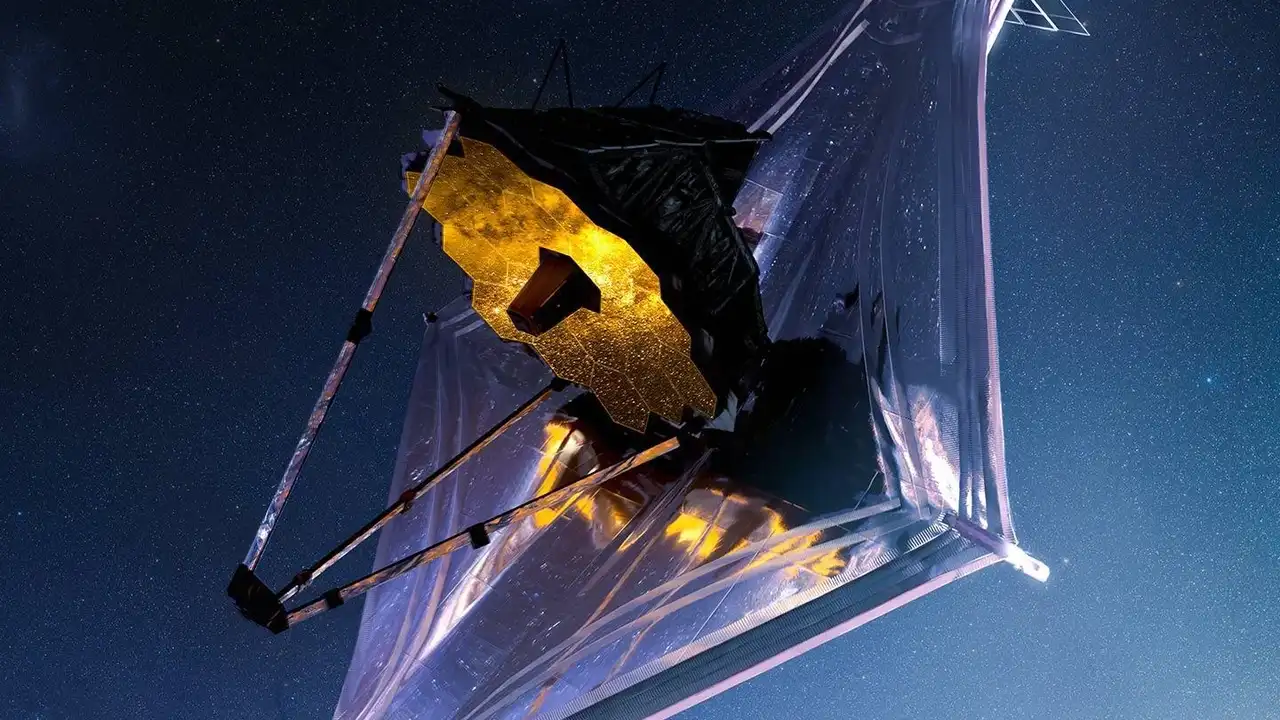
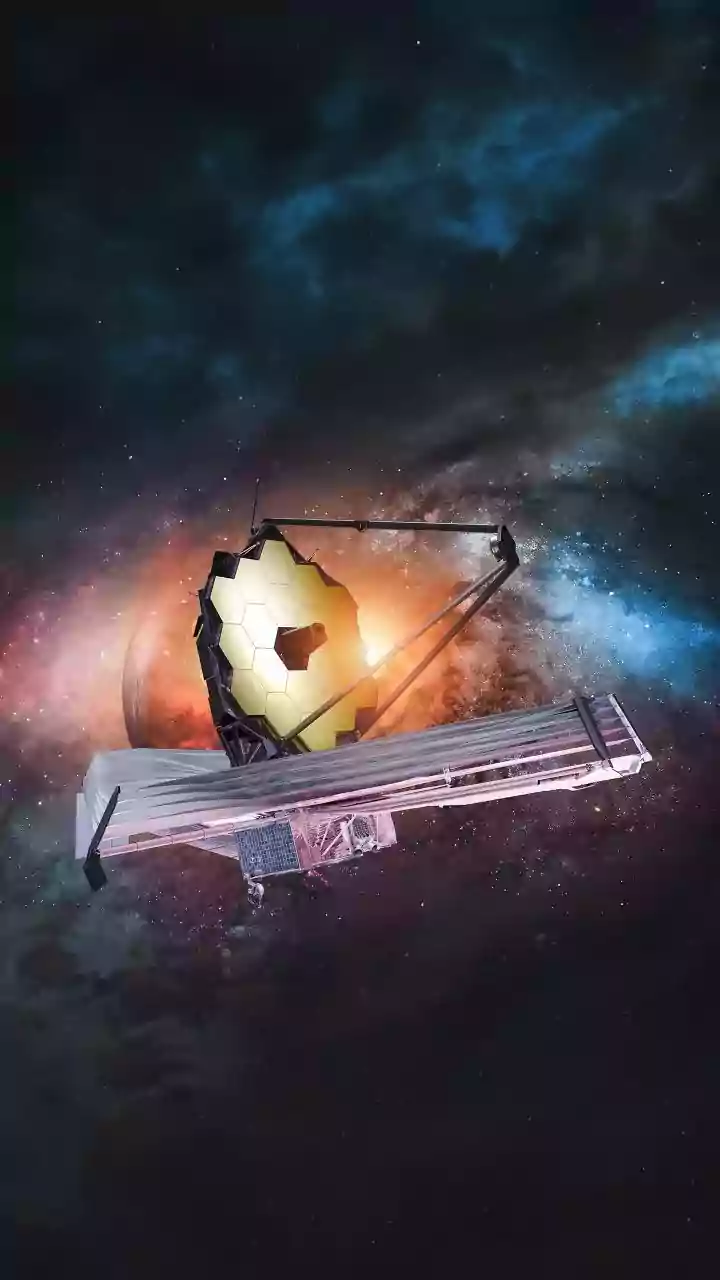
To capture light that has traveled for more than 13 billion years, you need a massive mirror. Webb’s primary mirror is over two stories high, composed of 18 hexagonal segments that work together as one. Its sheer size is crucial for gathering as many photons—particles of light—as possible from incredibly dim and distant sources. The mirror's distinctive golden hue isn't just for show. The segments are coated in a microscopically thin layer of gold, which is exceptionally good at reflecting infrared light, maximizing the telescope's sensitivity. This incredible piece of engineering had to be folded, origami-style, to fit inside its launch rocket before unfurling in space.
Keeping Its Cool
Detecting faint infrared signals from the edge of the universe is an exceptionally delicate task. The telescope itself emits infrared heat, which would interfere with its observations. To prevent this, Webb must be kept incredibly cold. The solution is a five-layer, tennis-court-sized sunshield. This marvel of engineering protects the telescope's mirror and instruments from the heat of the Sun, Earth, and Moon, allowing them to cool down to frigid temperatures. This extreme cold is essential to reduce the telescope's own infrared glow, ensuring that the only signals detected are from distant cosmic objects.
The Scientific Eyes
The collected light is directed to a suite of four advanced scientific instruments. The Near-Infrared Camera (NIRCam) is the primary imager, responsible for capturing the stunning deep-space photos we’ve seen. It detects light from the earliest stars and galaxies as they were forming. But taking a picture is only part of the story. The Near-Infrared Spectrograph (NIRSpec) breaks the light down into its component colors, creating a spectrum. By analyzing this spectrum, scientists can determine a star or galaxy's age, chemical composition, and distance, providing crucial clues about the early universe.
Glimpsing the First Generation
These technological feats have enabled Webb to search for the long-theorized first generation of stars, known as Population III stars. These were believed to be massive, brilliant objects composed only of the primordial elements of hydrogen and helium that existed after the Big Bang. By analyzing light from extremely distant galaxies, astronomers have found compelling evidence that might be the chemical signature of these first stellar giants. In some cases, Webb gets an assist from a phenomenon called gravitational lensing, where the gravity of a massive galaxy cluster acts as a natural magnifying glass, amplifying the light from even more distant objects behind it. These first glimpses are already reshaping our understanding of how the first large galaxies formed so rapidly in the early universe.