


The Flaw in Traditional Wardrobe Organisation
Most of us organise our wardrobes by category—all tops together, all trousers in another section, and so on. While visually neat, this system forces your brain to build outfits from scratch every single morning. When you’re short on time, you'll likely
default to the same few combinations, ignoring a huge portion of your wardrobe. This is a common reason why many people report wearing only about 20% of their clothes 80% of the time. The result is a closet full of possibilities that you never see or use, simply because the mental work of pairing items feels like too much effort at 7 a.m.
The Advantage: Thinking in Outfits
Switching to an outfit-based system turns your closet from a puzzle into a menu. Instead of grouping by item type, you group items by how you actually wear them. The primary benefit is a massive reduction in decision fatigue. Your best combinations are pre-built, saving you precious time and mental energy. This approach also helps you see what you truly own, preventing you from buying duplicate items and allowing you to identify real gaps in your wardrobe. Ultimately, it helps you get more value and wear out of the clothes you've already invested in.
Step 1: The Essential Declutter
You cannot organise clutter. Before you can rearrange your wardrobe, you must first clear it out. Take everything out of your closet and create distinct piles: keep, mend, donate, and discard. Be honest with yourself. If an item doesn't fit, is damaged beyond repair, or no longer reflects your style, it's time to let it go. This process is crucial because it ensures you're only organising clothes you genuinely love and will wear. Decluttering first makes the subsequent steps infinitely easier and more effective.
Step 2: Build and Document Your Outfits
Now for the creative part. Start with a core piece, like a favourite pair of trousers or a versatile blazer, and build several distinct outfits around it. Lay your pants and skirts out, then experiment by pairing each top with multiple bottoms to see what works. Don't forget to add shoes and accessories to complete each look. Challenge yourself to create at least three different outfits for a single versatile item. As you create these combinations, take a quick photo of each one on your phone. This creates a visual catalogue you can refer back to, making the ‘what to wear’ decision as simple as scrolling through a gallery.
Step 3: Arrange Your Closet by Outfit
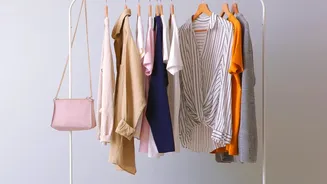
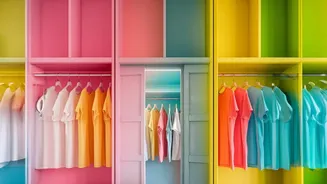
Once you have your pre-built outfits, it's time to physically arrange them in your closet. Hang the components of a single outfit together. For example, a blouse, the trousers it pairs with, and the blazer that completes the look should all hang side-by-side. You can use closet dividers to separate each outfit 'cluster' or use special cascading hangers to group items vertically. The goal is to make each outfit a grab-and-go set. For items that are part of multiple outfits, like a versatile pair of black jeans, you can either place them with the outfit you wear most frequently or create a small, separate section for these highly flexible 'core' pieces.
Maintaining Your New System
An organised closet stays that way with a little maintenance. When you do laundry, make the effort to return clothes to their designated outfit groupings rather than just hanging them anywhere. When you buy a new piece of clothing, take a few minutes to think about the outfits it can create. Before it even goes into your closet, pair it with items you already own and take photos. This prevents you from acquiring 'wardrobe orphans'—items you love but that don't go with anything. This small habit ensures your system remains functional and your closet stays a source of calm, not chaos.