





The Alluring Promise of More Time
Imagine adding two extra hours to your day. What could you accomplish? This is the seductive promise that often emerges from headlines about sleep research. In a culture that glorifies productivity, the idea that science might have found a way for us
to function on less than the recommended seven to nine hours is powerful. These interpretations suggest we can 'hack' our biology and train our bodies to thrive on minimal rest. This has led to a popular belief that the long-standing advice from doctors is outdated. However, the reality of the science is far more complex and interesting, and it's not a prescription for burning the midnight oil.
A Tale of Fruit Flies
The experiment at the heart of this discussion didn't involve people trying to squeeze more hours out of their day. It often involves model organisms like fruit flies. In some of these studies, scientists have been able to genetically manipulate flies to drastically reduce their sleep time without any apparent impact on their lifespan. On the surface, this sounds revolutionary. If a creature can live a full life without much sleep, maybe sleep isn't as essential as we thought. But the scientists behind these experiments were not trying to develop a new wellness trend. They were probing one of the deepest mysteries in biology.
The Real Question: Why Do We Sleep?
For all our medical advancements, scientists still don't have a single, complete answer to the fundamental question of why we sleep. We know it's crucial for things like memory consolidation and clearing metabolic waste from the brain, but its core purpose remains elusive. The fruit fly experiments were designed to investigate this very question. By observing what happens when sleep is almost entirely removed, researchers can gather clues about its most basic, life-sustaining functions. The surprising results—that some flies survived—don't prove that sleep is unnecessary. Instead, they deepen the mystery and force scientists to rethink their hypotheses. This is the essence of basic science: it's not about providing immediate answers, but about asking better questions.
The Crucial Leap From Lab to Life
It's a massive leap to apply findings from a genetically modified fruit fly directly to human health. While these models are invaluable for research, human biology is vastly more complex. Decades of research in humans have consistently shown that regularly sleeping less than seven hours a night is associated with a host of negative health outcomes. These include an increased risk of obesity, diabetes, hypertension, heart disease, and depression. While some rare individuals may function well on less sleep due to a genetic mutation, it's not a skill that can be learned or trained. For the vast majority of the population, attempting to get by on less sleep isn't hacking your body; it's depriving it.
Celebrating Science for What It Is
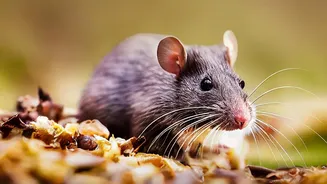
This experiment is a perfect example of why basic science is so important. It doesn't always yield a new product or a simple life hack. Instead, it builds the foundational knowledge that could lead to major breakthroughs decades from now. Understanding the core mechanisms of sleep could one day help us tackle complex neurological conditions. A recent study, for instance, found that calming overactive immune cells in the brains of mice with Alzheimer's-like pathology restored more than two hours of sleep, even without changing the disease's hallmarks. This kind of insight comes from years of fundamental research. These studies strengthen science itself, pushing the boundaries of what we know and opening up new avenues for future investigation.