






More Than Just a To-Do List
An aviation checklist is not like a grocery list. It’s a highly engineered tool designed to ensure that in complex, high-stress environments, nothing is missed. There are two main types: normal and non-normal (or emergency) checklists. Normal checklists are for
routine phases of flight like takeoff and landing, ensuring the aircraft is correctly configured. Emergency checklists, however, are a lifeline. They are specifically for handling system failures, fires, or other unforeseen events. These procedures are stored in a Quick Reference Handbook (QRH), a book or electronic document kept within immediate reach of the flight crew. It’s a collection of concise, step-by-step guides for nearly every conceivable problem, from a failed hydraulic system to an engine fire.
Designed for a Stressed Brain
In an emergency, the human brain is flooded with stress hormones. This can lead to the 'fight, flight, or freeze' response, impairing logical thinking, slowing reaction times, and causing tunnel vision. You can't simply will yourself to remain perfectly calm and logical when your brain is preparing for survival. A checklist's primary purpose is to offload that immense cognitive burden. Instead of trying to remember every single critical step from memory while under duress, pilots are guided by a proven, methodical procedure. This systematic approach ensures that even small but crucial actions are not overlooked. The process is deliberate: first, fly the aircraft. Maintaining control is always the top priority. Only then, once the immediate flight path is stable, does the crew turn to the QRH.
A Crew's Coordinated Dance
Using an emergency checklist is a team effort, a core component of what is known as Crew Resource Management (CRM). It’s not one pilot silently reading to themselves. The standard procedure is a 'challenge-response' protocol. One pilot, typically the one not flying the plane, reads the checklist item aloud (the 'challenge'). The other pilot then performs the action and verbally confirms it is complete (the 'response'). This verbal loop ensures that every step is consciously acknowledged and verified by both members of the crew, creating a powerful layer of redundancy and preventing one person's potential oversight from becoming a critical error. This disciplined back-and-forth keeps the crew synchronized, focused, and moving through the problem in a structured way.
Memory Items: When There's No Time
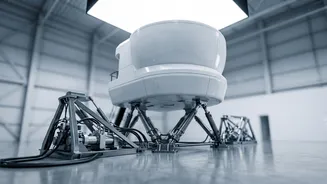
While the QRH is vital, some situations are so time-critical that there isn't even a moment to grab a book. For these scenarios, pilots are trained on 'memory items'. These are a handful of immediate, critical actions that must be performed from memory to stabilize the aircraft before the checklist is consulted. For an event like an engine failure on takeoff, the initial steps to maintain control are drilled through repetition in simulators until they become muscle memory. Once these memory items are completed, the crew will then transition to the QRH to work through the rest of the associated procedure, confirming the actions taken and methodically completing the remaining steps.
Proof on the Hudson
The power of this system was famously demonstrated on January 15, 2009. When US Airways Flight 1549 struck a flock of geese after departing LaGuardia Airport, it lost thrust in both engines. Captain Chesley 'Sully' Sullenberger took control of the aircraft, and one of the first things he said to his First Officer, Jeffrey Skiles, was to get the checklist. With the aircraft gliding silently, Skiles immediately turned to the QRH for the 'Engine Dual Failure' checklist. While the low altitude meant they couldn't complete the entire lengthy procedure, their training and reliance on the checklist process allowed them to manage the crisis methodically, leading to the successful ditching on the Hudson River where all 155 people on board survived.