







Find Your Zone: Choosing the Right Spot
The first step is identifying where your workout space will live. It doesn't need to be an entire room. Look for an underutilized area, like a corner of your bedroom, a section of the basement, or even a clear spot in the garage. When choosing, consider
a few factors. You'll want enough room to move freely without bumping into furniture, so test it out with a few lunges or arm circles. If possible, pick a location with natural light, as sunlight can boost your energy and mood. Also, think about noise. If you love high-energy morning workouts, setting up next to a sleeping family member's room might not be ideal. The goal is to find a convenient spot that fits naturally into your daily life.
Build From the Ground Up: Flooring Matters
The right flooring defines your workout zone, protects your floors, and cushions your joints. For most home gyms, interlocking rubber or foam tiles are an excellent choice. They are durable, shock-absorbent, and easy to install over existing surfaces like concrete or carpet. Rubber is the gold standard for weight training and high-impact exercises because it's incredibly durable and reduces noise. Foam tiles are a more budget-friendly option, perfect for yoga, stretching, and bodyweight exercises, providing excellent cushioning. If your workout space doubles as a living area, luxury vinyl can be a stylish and water-resistant choice that's easy to clean.
Declutter and Organize: Smart Storage Solutions
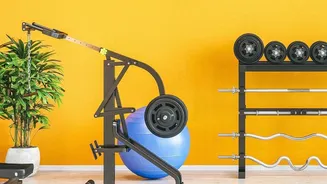
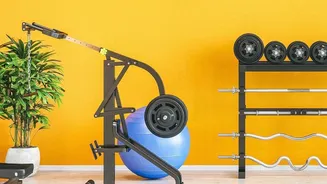
A cluttered workout area is a motivational killer and a safety hazard. Smart storage is key to keeping your space clean and functional. Think vertically to save floor space. Wall-mounted racks or pegboards are perfect for hanging resistance bands, jump ropes, and other small accessories. Decorative baskets or bins can neatly store towels, yoga blocks, and foam rollers. For heavier items like dumbbells and kettlebells, invest in a dedicated rack or stand to keep them organized and off the floor. If you prefer to keep things out of sight, a repurposed cabinet or armoire can hide your gear until you need it. The goal is a tidy space where everything has its place.
Equip Your Space Wisely
You don't need a room full of bulky machines to get a great workout. Start by defining your fitness goals and the activities you enjoy. For small spaces, multi-use equipment is your best friend. Adjustable dumbbells, for example, can replace an entire rack of weights. Resistance bands offer versatile strength training without taking up much room. A high-quality folding mat is essential for floor exercises and can be easily stored under a bed. You can even use household items like chairs or towels to get started. The key is to choose equipment that supports your intended workouts without creating clutter.
Set the Mood: Atmosphere is Everything
An inspiring environment will make you want to show up. Use paint, decor, and lighting to create a space that feels energizing. A mirror is a functional addition that helps you check your form and makes the space feel larger and brighter. Good lighting is crucial; if natural light is limited, add bright overhead lights to avoid a dim, dungeon-like feel. Consider what motivates you. This could be a speaker for music, a TV or tablet stand for guided workouts, or even motivational quotes on the wall. Adding a plant or two can also help freshen the air and create a more relaxing atmosphere.
Keep It Clean and Inviting
Finally, make a habit of keeping your workout space clean. A tidy gym is a motivating gym. Wipe down your equipment and mats after each use to keep them hygienic. Regularly dusting surfaces and sweeping or vacuuming the floor prevents the buildup of dust and other particles that get kicked up during exercise. Ensure the area has good ventilation by opening a window or using a fan to circulate air. A clean and fresh-smelling space is one you'll look forward to using every day, helping you turn your fitness goals into a lasting habit.