







The Global Push for Guardrails
Discussions around regulating military AI are gaining urgency. In recent days, the United Nations Institute for Disarmament Research (UNIDIR) launched a major initiative to establish an international forum for governing AI's military uses. This follows
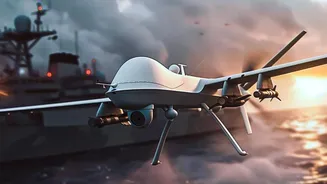
years of talks within the Convention on Certain Conventional Weapons (CCW), a forum where nations debate the rules of war. The core issue revolves around Lethal Autonomous Weapon Systems (LAWS)—weapons that can independently select and engage targets without direct human control. Proponents of regulation, including the UN Secretary-General, are calling for a legally binding treaty to ensure 'meaningful human control' over the use of force, citing ethical, legal, and security risks. The fear is that unchecked AI proliferation could lead to unintended escalation and an unstable global security environment.
What 'Controls' Actually Mean
The proposed controls aren't just about banning 'killer robots'. The discussions cover a spectrum of measures. A key component is distinguishing between the underlying AI technology and its specific application. For many nations, the goal is not to stigmatize AI itself, which has many beneficial uses, but to regulate its end use in weapon systems. The regulations would likely focus on ensuring that any use of autonomous systems complies with International Humanitarian Law (IHL), which governs conduct in armed conflict. This includes principles of distinction (between combatants and civilians) and proportionality (avoiding excessive harm). However, there is a significant divide. Some nations and civil society groups advocate for a pre-emptive ban, while major military powers often prefer a framework of principles and responsible use, leaving room for development.
Rethinking Technology Transfers
For decades, technology transfers in defense have been governed by regulations like the U.S. International Traffic in Arms Regulations (ITAR). These rules were designed for physical hardware like missiles and aircraft. AI complicates this immensely. An export is no longer just a physical shipment; it can be a software update, access to a cloud-based model, or sharing training data. Proposed UN rules could create a new international standard, forcing countries to redefine what constitutes a controlled 'defense service' or 'technical data'. This would directly impact collaborations between allied nations and the ability of tech companies, including startups, to work with foreign defense ministries. A standardized global framework could, in theory, streamline compliance, but disagreement on standards could also fragment the market, creating 'tech blocs' with different rules.
The Impact on Defense Exports
The multi-billion dollar defense export market faces significant disruption. Countries that are major developers and exporters of AI-enabled defense systems, such as the United States, China, and Israel, would be most affected. Strict regulations could limit the types of autonomous systems they can sell, potentially creating a competitive advantage for nations that either don't sign a treaty or interpret its rules loosely. Export controls like the U.S. Export Administration Regulations (EAR) already treat AI software as a controlled 'dual-use' technology. International rules would add another layer of complexity. Nations that rely on imported defense technology would also face new realities, as the systems available to them could be restricted based on their level of autonomy.
India’s Strategic Crossroads
For India, the debate presents a complex strategic challenge. As a rising power in both defense manufacturing and AI development, India has a significant stake in the outcome. Officially, India has maintained that the CCW is the appropriate forum for discussions and that any military use of AI must comply with International Humanitarian Law. New Delhi has argued against stigmatizing the technology itself and has expressed confidence that emerging tech can even improve IHL compliance. However, India has also shown a nuanced position, abstaining on some UN resolutions pushing for a binding treaty while supporting others focused on continued discussion. A strict regulatory regime could impact India's 'Make in India' defense ambitions and its ability to export its own developing AI-based systems. It navigates a fine line between supporting global norms and preserving its strategic autonomy in a challenging neighborhood.