





The New Campaign War Room
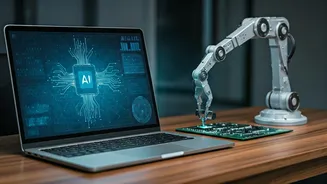
The traditional campaign 'war room,' once filled with strategists and volunteers, is now also home to data scientists and AI algorithms. The fundamental shift is from broad-stroke messaging to hyper-local, hyper-personalised outreach. AI tools can now analyse
vast datasets—from past voting patterns and census data to public social media sentiment—to predict voter behaviour with increasing accuracy. This allows campaigns to move beyond gut feelings and make data-driven decisions on where to allocate precious time and resources, identifying swing voters and tailoring messages to address their specific concerns. What started as an experiment in the 2024 national elections has become a core component of state-level campaign machinery.
Speaking Every Language, Instantly
In a country as linguistically diverse as India, reaching every voter in their native tongue has been a monumental challenge. AI is rapidly dismantling that barrier. Generative AI tools can translate speeches in real-time, create campaign materials in dozens of languages, and even generate a candidate's voice in languages they don't speak. This technology was notably used by Prime Minister Narendra Modi to translate a Hindi speech into Tamil live. This allows for unprecedented connection, enabling candidates to deliver nuanced, culturally relevant messages directly to communities that were previously hard to reach, making campaigns more efficient and personally resonant.
The Age of Hyper-Personalisation
The true power of AI in politics lies in its ability to personalise communication at a massive scale. Parties are already using AI to send personalised WhatsApp messages to voters, sometimes featuring AI-generated calls from local representatives discussing specific government benefits they have received. This creates a direct, one-to-one connection that a generic pamphlet or a mass rally can never achieve. By analysing voter data, campaigns can craft messages that resonate with an individual's specific circumstances—whether it's about jobs, infrastructure, or local grievances—making the voter feel seen and heard in a way that was previously impossible.
The Double-Edged Sword of Deepfakes
The rise of AI also brings significant risks that every candidate must prepare for. AI-generated 'deepfakes'—highly realistic but fabricated videos or audio clips—have become a potent weapon. These can be used to spread misinformation, create false narratives, or tarnish an opponent's reputation. Videos have circulated showing politicians making statements they never said, or featuring deceased leaders seemingly endorsing a candidate. While some parties use this technology for satire, the potential for malicious use is enormous. The Election Commission of India has responded by mandating that all AI-generated content must be clearly labelled, but the speed at which this content can spread means every campaign needs a defensive strategy.
What This Means for the Candidate
Ignoring this AI shift is no longer an option. For any candidate looking to compete effectively, understanding and integrating AI is now a necessity, not a novelty. This means building teams that include tech specialists, investing in data analytics capabilities, and preparing rapid-response strategies for AI-driven misinformation attacks. The goal isn't just to use AI as an offensive tool for outreach but also to build a strong defence to protect your own reputation and ensure voters receive accurate information. The candidates who master this new digital landscape will be the ones who define the future of Indian politics.