





Understanding the Instinct
A dog's prey drive is the innate instinct to search, stalk, chase, and capture. It's a deeply ingrained behavior, not a sign of malice or aggression. This drive is triggered by movement, which is why a small, fast, and playful kitten can activate this
instinct even in a dog who is otherwise gentle. The goal is not to eliminate this natural drive, but to manage and redirect it, teaching your dog that the kitten is a family member, not prey. This process is about slowly desensitizing your dog and rewarding calm behavior.
Phase 1: Scent Before Sight
Before your pets ever see each other, they must become familiar with each other's scent. For the first several days after the kitten arrives, keep it in a separate, secure room with its own food, water, litter box, and toys. This gives the kitten a safe space to acclimate. During this time, swap their bedding or toys. This allows both animals to investigate the other's scent in a non-threatening way, building a foundation of familiarity without the stress of a face-to-face encounter.
Phase 2: Controlled Visuals Through Barriers
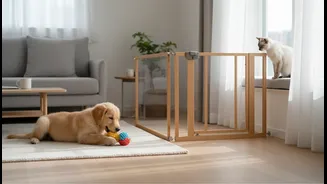
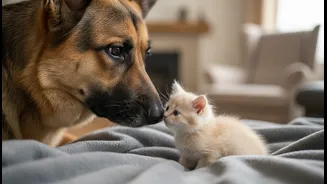
Once both pets are calm, you can begin controlled visual introductions. Use a sturdy baby gate, or even two stacked on top of each other, to create a barrier in a doorway. Keep the dog on a leash as an extra precaution. Let them see each other for very short periods. The key is to distract your dog and reward it for looking away from the kitten. Use high-value treats to praise your dog for any calm behavior, teaching it that good things happen when it remains relaxed in the kitten's presence. If your dog is fixated, barking, or overly aroused, you are too close or moving too fast. End the session and try again later from a greater distance.
Phase 3: Leashed and Supervised Interactions
When your dog can remain calm while seeing the kitten through a gate, you can move to the next step. This phase requires at least two people—one to manage the dog on a leash and one to look after the kitten. Choose a neutral space where the kitten has access to escape routes, like shelves or furniture it can hide under. Keep the dog leashed at all times. The goal is to allow them to be in the same room while reinforcing calmness. Reward your dog for ignoring the kitten or lying down quietly. Keep these sessions short and positive, ending them before either animal becomes stressed. Any lunge, hard stare, or stalking behavior from the dog means you must immediately and calmly create distance.
Reading the Signals and Long-Term Safety
Knowing the difference between playfulness and predatory behavior is critical. A dog exhibiting prey drive will often become stiff, fixate with a hard stare, and may hold its tail high. Lip licking, whining, and low stalking are also red flags that indicate intense focus. In contrast, a playful dog will have looser body language, might offer a play bow, and will be able to disengage. If you see signs of predatory intent, you must intervene immediately and go back a step in the introduction process. For many dogs with a high prey drive, supervision will be a permanent necessity. Never leave them together unsupervised until you are absolutely certain the dog sees the cat as a housemate. This process can take weeks, months, or even longer.