

A Glimmer of Life in the Shadows
In a study that redefines our understanding of lunar hospitality, NASA scientists have found that Earth's toughest microbes might be able to survive on the Moon. The research, published in Science Advances, doesn't claim life has been found, but rather
that the conditions for survival might exist in very specific locations. Using sophisticated computer models, a team led by planetary scientist Prabal Saxena from NASA's Goddard Space Flight Center simulated conditions at the lunar south pole. They discovered that certain Earth-based microorganisms, if transported there by future missions, could temporarily withstand the extreme environment. This finding has significant implications for how we approach lunar exploration and the persistent search for extraterrestrial life.
The Moon's Natural Sanctuaries
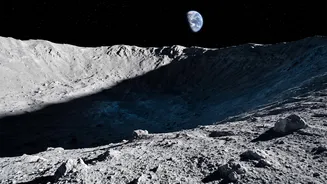
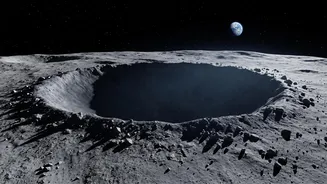
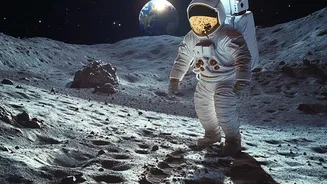
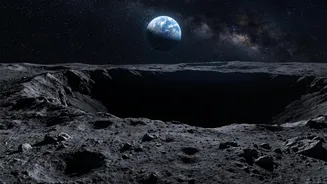
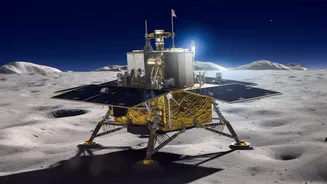
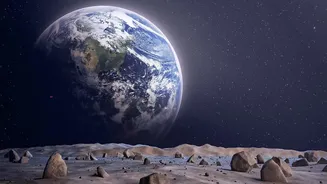
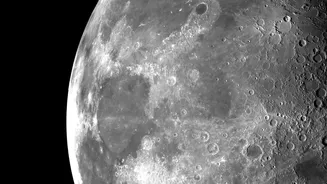
The key to this potential survival lies in what are known as Permanently Shadowed Regions, or PSRs. Because the Moon has a very slight axial tilt, the sun's rays hit the polar regions at an extremely low angle. This creates deep craters and other depressions where the sunlight never reaches. These areas are among the coldest places in our solar system, with temperatures plunging as low as -200° Celsius. While lethally cold for most life, these frigid, dark conditions offer a crucial benefit: they provide a natural shield against the relentless bombardment of solar and cosmic radiation that sterilizes the rest of the lunar surface. The models showed these niches could range in size from vast crater floors to areas as small as an astronaut's boot print.
Testing Earth's Toughest Hitchhikers
The NASA team didn't just model the environment; they simulated how specific organisms would fare. They focused on five microbes commonly associated with human spaceflight, including several types of bacteria and fungi. The results were surprising. All five microbes showed they could potentially survive for at least 24 hours in some of the simulated lunar south pole environments. The standout performer was a fungus called Aspergillus niger, often known as black mold, which is commonly found in our homes. This fungus proved so resilient that it could even withstand brief exposure to some ultraviolet light, a testament to its hardy nature. It's important to note the study focused on survival, not growth. The researchers stress that these microbes would likely enter a dormant, freeze-dried state, as there is no evidence of the liquid water or other conditions needed for them to thrive and reproduce.
The Contamination Conundrum
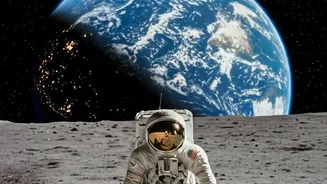
This research raises a critical issue for future lunar missions like the Artemis program, which aims to establish a long-term human presence near the south pole. Astronauts and their equipment will inevitably carry terrestrial microbes with them. If these organisms can survive, they could contaminate the pristine lunar environment. This contamination could complicate one of the primary goals of lunar science: studying the Moon's original geology and chemistry to unlock secrets about the solar system's history. Scientists are concerned that if we aren't careful, we could mistake microbes we brought with us for signs of ancient lunar life. As a result, the study highlights the urgent need for stringent planetary protection protocols and for establishing a clear baseline of the Moon's native conditions before human missions arrive in these sensitive areas.
A Natural Laboratory at Our Doorstep
While microbial contamination presents a challenge, the researchers also see a unique opportunity. The permanently shadowed craters of the Moon could serve as a natural, large-scale laboratory. Here, scientists could study the absolute limits of life in an environment that is nearly impossible to replicate perfectly on Earth. By carefully monitoring how Earth's most resilient organisms fare in these extreme conditions, we can learn invaluable lessons for astrobiology. This knowledge would be crucial for future missions to Mars and beyond, where the search for life will require us to distinguish between native organisms and our own microbial hitchhikers. Understanding how life holds on in the most unforgiving corners of our own cosmic neighborhood is a vital step in knowing what to look for elsewhere in the universe.