




A New Chapter Beyond 'Frugal Innovation'
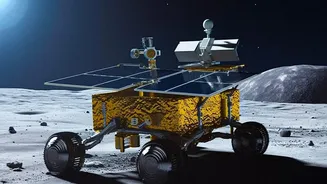
For decades, the Indian Space Research Organisation (ISRO) built a formidable reputation on what's often called "frugal engineering." It sent a probe to Mars for less than the cost of a Hollywood blockbuster and landed a rover on the Moon's south pole
on a shoestring budget. This approach established India as a serious spacefaring nation. But the next chapter isn't just about saving money; it's about a strategic leap in capability. The Indian government's 2023 space policy has thrown the doors open for private sector participation, aiming to create a robust ecosystem that can push technological boundaries. This new landscape is less about doing more with less and more about doing things that were previously impossible, with AI and quantum mechanics as the cornerstones of this new ambition.
AI: The Onboard Brain for Smarter Missions
The sheer volume of data beamed back from space is staggering. Artificial intelligence is seen as the essential tool to manage this flood of information. Instead of downlinking massive datasets for analysis on Earth, ISRO plans to use on-board AI to process information directly in space. This allows satellites to make faster decisions, sending back only the most critical information. Applications range from disaster management, where a satellite could autonomously detect flooding or wildfires and alert authorities in real-time, to precision agriculture and monitoring troop movements along borders. AI is also critical for autonomous navigation, reducing a spacecraft's reliance on ground control for complex maneuvers in deep space or for landing on other celestial bodies, a capability ISRO already used in its Chandrayaan missions. It also plays a key role in monitoring the health of the spacecraft itself, predicting potential failures before they happen.
Quantum Tech: The Shield of Unbreakable Security
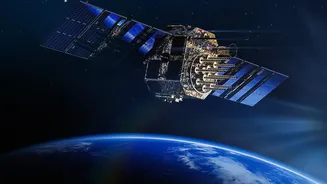
As space becomes more crowded and contested, the security of satellite communications is paramount. This is where quantum technology comes in. The primary application for ISRO is Quantum Key Distribution (QKD), a method of encryption rooted in the laws of physics. In simple terms, it allows two parties to create a secret key to encrypt and decrypt information, with the guarantee that any attempt by an eavesdropper to intercept the key would instantly be detected. This makes communication virtually unhackable, a critical advantage for military, intelligence, and sensitive government data transmissions. ISRO has already successfully demonstrated free-space QKD over short distances and is now working toward a satellite-based system that could create a secure communications network across the country. This effort is part of India's broader National Quantum Mission, a government initiative launched in 2023 to become a global leader in this transformative field.
The Strategic Imperative
India's push into AI and quantum isn't happening in a vacuum. It's a direct response to a rapidly changing space environment. The rise of private companies like SpaceX has changed the economics of space access, while the growing strategic competition with China, which has its own advanced quantum satellite program, adds a geopolitical urgency. By investing in these next-generation technologies, India aims to not only keep pace but to establish a unique advantage. The goal is to build a space infrastructure that is not only capable and cost-effective but also intelligent, autonomous, and fundamentally secure. This shift positions India not just as a launch provider, but as a hub for the sophisticated data and security services that will define the future of the global space economy.