



How a Hydrogen Train Works
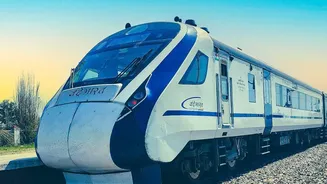
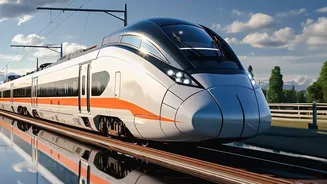
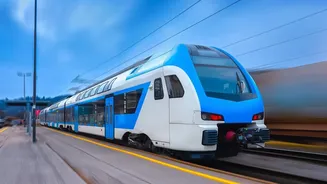
Imagine a train that runs on electricity but doesn't need overhead wires and emits only water vapour. That’s the core idea behind a hydrogen train. These trains use hydrogen fuel cells, which act like miniature power plants on board. Pressurised hydrogen gas
is stored in tanks on the train and is fed into a fuel cell. Inside the cell, an electrochemical reaction combines the hydrogen with oxygen taken from the air. This process generates electricity to power the train's motors, with the only by-product being clean, drinkable water. Any excess electricity can be stored in onboard batteries to provide a power boost when accelerating. This technology offers a zero-emission alternative to the diesel engines that currently power many of these trains.
The 'Hydrogen for Heritage' Initiative
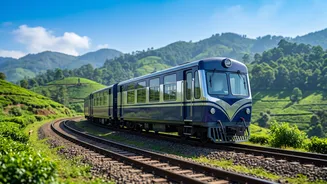
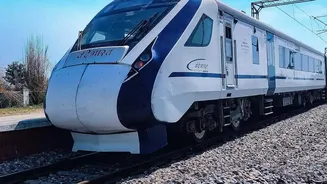
Indian Railways has launched a plan, officially dubbed 'Hydrogen for Heritage', to strategically introduce this clean technology. The initiative aims to deploy 35 hydrogen-powered trains across eight of the country's most iconic and ecologically sensitive routes. These include the Kalka-Shimla Railway, the Darjeeling Himalayan Railway, the Nilgiri Mountain Railway, and the Matheran Hill Railway, among others. Many of these narrow-gauge lines pass through fragile ecosystems and UNESCO World Heritage sites where installing traditional electric lines would be difficult and would spoil the natural beauty. By converting the existing diesel-powered trains to run on hydrogen, the Railways can preserve the classic look and feel of these historic lines while eliminating their carbon footprint and air pollution.
Why Start with Heritage Routes?
Focusing on heritage lines is a clever strategic move. These routes are relatively short, closed-loop systems, making them ideal environments to test and perfect the new technology without disrupting the wider rail network. They are also major tourist attractions, and running clean, silent trains on these scenic journeys sends a powerful message about India's commitment to sustainable development and preserving its cultural assets. While India has already electrified a vast majority of its main railway lines, these heritage routes present unique challenges where hydrogen offers a viable green solution. The experience gained from the 'Hydrogen for Heritage' project will be crucial for evaluating the technology's performance and economics for potential future use.
The Road Ahead: Challenges and Costs
The transition to hydrogen is not without its hurdles. One of the biggest challenges is the cost and availability of 'green' hydrogen—hydrogen produced using renewable energy like solar or wind. Currently, most hydrogen is produced from fossil fuels, which is not a clean process. Building the necessary infrastructure for producing, storing, and safely refuelling hydrogen trains across multiple remote, hilly locations is a complex and expensive undertaking. The estimated cost runs into crores of rupees per train and for the ground infrastructure on each route. Moreover, there are significant safety protocols to consider, as hydrogen is highly flammable. Indian Railways is betting that as the technology matures and production scales up under the National Green Hydrogen Mission, costs will eventually come down, making it a more economically viable option in the long run.