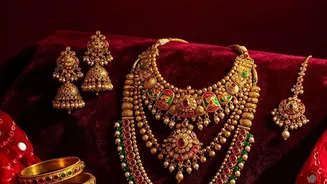








Gold jewellery is more than an adornment in India; it's a crucial financial asset. When you need quick funds, a gold loan is a popular choice. But how much can you borrow? The answer hinges on the Loan-to-Value, or LTV, ratio.
Understanding Loan-to-Value (LTV)
The Loan-to-Value (LTV) ratio
is the percentage of your gold's market value that a lender is willing to offer you as a loan. Think of it as the core rule that decides your borrowing power. For example, if your gold is appraised at ₹1,00,000 and the lender applies an LTV of 85%, the maximum loan you can receive is ₹85,000. This ratio is not just a lender's policy; it is regulated by the Reserve Bank of India (RBI) to ensure fair lending practices and protect both borrowers and financial institutions from the risks of gold price fluctuations.
The RBI's Tiered LTV Framework
Effective from April 1, 2026, the RBI has implemented a tiered LTV structure for gold loans taken for personal consumption, moving away from a uniform 75% cap. This new framework is designed to help small borrowers access more funds. The current maximum LTV limits are: 85% for loans up to ₹2.5 lakh, 80% for loans between ₹2.5 lakh and ₹5 lakh, and 75% for loans above ₹5 lakh. So, if you pledge gold worth ₹2,00,000, you could be eligible for a loan up to ₹1,70,000. However, it's important to remember that these are regulatory ceilings. Lenders can still offer a lower LTV based on their own risk assessment policies.
How Lenders Value Your Gold
The final loan amount depends critically on how your gold is valued. Lenders are mandated by the RBI to follow a standardised process. They assess the purity (karat) and net weight of your gold. Only the intrinsic value of the gold is considered; elements like gemstones, diamonds, and making charges are excluded from the valuation. The gold's value is typically determined using the lower of two prices: the average closing price of 22-karat gold over the last 30 days or the closing price on the previous day, based on rates from recognised bodies like the India Bullion and Jewellers Association (IBJA). This ensures a fair and transparent valuation process for the borrower.
Purity and Weight are Paramount
The purity of your gold directly impacts the valuation and, therefore, the loan amount. Most lenders in India accept gold jewellery between 18 and 22 karats for loans. Higher purity gold, like 22nd karat, will naturally fetch a higher value per gram than 18nd karat gold. Lenders are required to value the gold based on a 22nd karat benchmark. If your jewellery has a lower purity, its weight will be proportionately adjusted to its 22nd karat equivalent for the valuation. It's also worth noting that loans are generally not granted against raw gold or goldnd backed financial products like ETFs. Specially minted gold coins sold by banks are often accepted, but usually with a weight limit, such as $5$ grams per borrower.
Beyond LTV : Other Factors to Consider
While the LTV ratio is central, other elements influence your gold loan. Interest rates can vary significantly between lenders, starting from around $8$.$5$ % p.a .and going higher depending on the lender, loan amount, and your profile. You should also account for additional costs like processing fees, valuation charges, and stamp duty, which add to the total cost of borrowing. Repayment tenure is another key aspect. Under the new RBI rules, bullet repayment loans (where you pay interest during the tenure and the full principal at the end) are capped at $1$ $2$ months for consumption loans, and this option is no longer indefinitely renewable.