







Trap 1: The Generic, Buzzword-Filled Summary
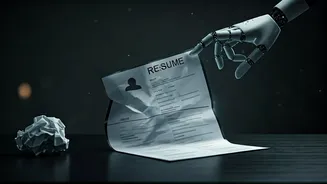
AI resume builders are trained on millions of online resumes, which often leads them to produce generic and repetitive language. They tend to pack professional summaries with empty buzzwords like “results-driven,” “strategic thinker,” or “team player”
without providing any real context. Recruiters have become skilled at spotting this robotic, overly polished tone. A resume that reads like a template fails to communicate what makes you uniquely qualified for a role. Instead of accepting the AI's first draft, use it as a starting point. Rewrite every line to reflect your personal brand and career story, ensuring it sounds authentic to you.
Trap 2: Hallucinated Skills and Exaggerated Experience
One of the most dangerous AI traps is its tendency to “hallucinate” or fabricate information. Because AI doesn’t know your actual career history, it makes educated guesses based on your prompts, which can lead to exaggerated job titles, incorrect timelines, or skills you don’t possess. While it might seem tempting to accept these embellishments, inaccuracies will be exposed during interviews or reference checks, putting your credibility at risk. Always fact-check every detail the AI generates, from employment dates to specific responsibilities. Your resume must be an honest representation of your experience.
Trap 3: Ignoring the Applicant Tracking System (ATS)
Nearly all large companies use Applicant Tracking Systems (ATS) to scan and filter resumes before they ever reach a human. While many AI tools claim to create ATS-friendly resumes, they can sometimes miss the mark. Complex formatting, such as tables, columns, or text embedded in graphics, can confuse the parsing software. Even using non-standard headings like “My Journey” instead of the conventional “Work Experience” can cause the system to misread your information. To avoid this, stick to a simple, clean format with clear, standard section headings. Use AI to help identify and naturally incorporate keywords from the job description, but don't overstuff your resume to the point where it seems unnatural.
Trap 4: Forgetting the Human on the Other Side
While your resume first needs to pass the robot test (ATS), its ultimate audience is a human recruiter. A 2024 survey revealed that the majority of hiring managers prefer a personal voice over a perfectly polished but impersonal AI output. AI-generated text can often feel cold, overly formal, and devoid of personality. Recruiters are looking for a sense of your career narrative and cultural fit, which a machine struggles to convey. After drafting your resume, read it out loud. Does it sound like something you would actually say in an interview? If not, revise it until it reflects your authentic voice and enthusiasm.
Trap 5: Relying on a One-Size-Fits-All Document
Using AI to mass-apply for jobs without tailoring your resume for each specific role is a common mistake. A generic resume that isn’t aligned with the nuances of a job description is unlikely to impress. Customisation is key to standing out in a crowded market. Use AI as a tool to help you analyse a job posting and identify the most critical skills and qualifications. Then, take the time to manually tweak your resume, highlighting the specific experiences and quantifiable achievements that are most relevant to that particular opportunity. Replacing vague statements with concrete metrics—like revenue growth, cost savings, or team size—will prove your impact far more effectively than any generic description.