



Why Dry Air Disrupts Your Skin
Our skin has a natural protective barrier, a bit like a wall made of skin cells and natural fats (lipids). This barrier's main job is to keep good things in, like water, and bad things out, like pollutants. When the air around us becomes less humid, it acts
like a sponge, pulling moisture from whatever it can—including our skin. This process, known as transepidermal water loss (TEWL), accelerates in dry conditions. As your skin loses water, this protective barrier weakens. The result is often a complexion that feels tight, looks dull, and may become rough or flaky. It can also become more sensitive and prone to irritation because its defenses are down.
Hydration vs. Moisturization: What's the Difference?
Before we dive into serums, it's crucial to understand a key skincare concept: hydration is not the same as moisturization. Hydrating products are designed to increase the water content of your skin cells. Moisturizing products, on the other hand, are designed to create a seal on the skin's surface to prevent that water from escaping. Think of it this way: hydration is like pouring water into a cup, while moisturization is like putting a lid on it. You need both for your skin to stay truly comfortable and healthy, especially in dry weather. A heavy cream on dehydrated skin won't fix the problem alone; you first need to replenish the water that's missing.
The Role of a Hydrating Serum
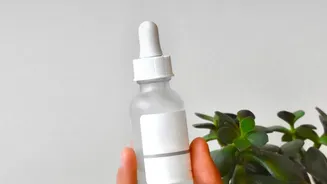
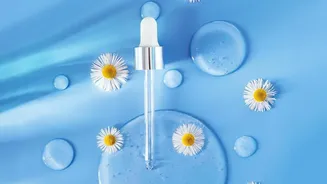
This is where hydrating serums come in. These are typically lightweight, water-based formulas that deliver a high concentration of 'humectant' ingredients directly to the skin. Humectants are clever molecules that attract water from the air and the deeper layers of your skin and hold it in the outermost layer, the stratum corneum. Because serums are made of smaller molecules than most creams, they can penetrate more deeply and efficiently, delivering that much-needed water where it's needed most. This infusion of water helps to plump up skin cells, which can smooth the appearance of fine lines and restore a healthy, supple look and feel.
The Powerhouse Ingredients to Look For
Not all serums are created equal. When combating dryness, look for these hero ingredients on the label: Hyaluronic Acid (HA) is the most famous humectant, renowned for its ability to hold up to 1,000 times its weight in water. It provides an immediate plumping effect and hydrates the surface layers of the skin. Glycerin is another powerful, tried-and-true humectant. It's a smaller molecule than HA, allowing it to work within the skin's surface layers to maintain water balance and support the skin barrier. Many formulas combine HA and glycerin for multi-level hydration. Ceramides are lipids that are a natural part of your skin barrier. Adding them via a serum helps to repair and reinforce that barrier, reducing water loss and protecting from irritation. Niacinamide and Panthenol (Vitamin B5) are excellent supporting ingredients that help strengthen the skin barrier and soothe irritation, making them perfect companions to hydrating actives.
How to Apply Serums for Maximum Impact
Application technique is just as important as the product itself. To get the most out of your hydrating serum, follow this simple rule: always apply it to damp skin. After cleansing, gently pat your face but leave it slightly damp. Applying the serum to moist skin helps the humectants grab onto that extra water and pull it into your skin. Use a few drops and gently press it in. The most critical next step is to 'seal' it all in. Within a minute of applying your serum, follow up with a moisturizer. This occlusive layer will lock in the hydration your serum just delivered and prevent it from evaporating back into the dry air. Without this sealing step, a humectant-heavy serum can sometimes have the opposite effect in a very dry climate, pulling water out of your skin instead of into it.