





Pomegranate: The Antioxidant Powerhouse
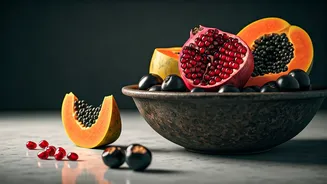
Often called “nature’s candy,” pomegranates are as powerful as they are beautiful. Those ruby-red seeds, or arils, are packed with some of the most potent antioxidants found in the fruit world. Chief among them are punicalagins and anthocyanins, compounds
that give the fruit its deep color and are heavily studied for their role in fighting inflammation and protecting cells from damage. But what does that mean for your daily routine? Incorporating pomegranates may support heart health by helping to maintain healthy blood pressure and cholesterol levels. Their anti-inflammatory properties can be beneficial for overall wellness, from joint comfort to metabolic health. The best part is how easy they’ve become to enjoy. The intimidating task of de-seeding a pomegranate is now optional. Most grocery stores sell ready-to-eat arils, making it simple to toss them into Greek yogurt, sprinkle over a salad for a sweet and tangy crunch, or blend into a smoothie for a nutrient boost. For a simple, elegant appetizer, mix the arils with goat cheese and serve on whole-wheat crackers.
Papaya: Your Tropical Digestive Aid
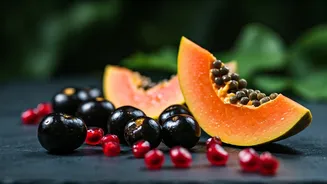
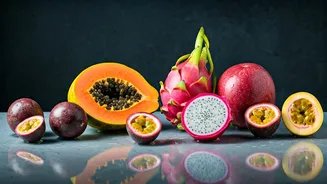
Walking through the produce aisle, it’s hard to miss the vibrant orange glow of a ripe papaya. This tropical fruit is more than just a sweet treat; it’s a well-known ally for your digestive system. Papaya contains a unique enzyme called papain, which helps break down proteins in the gut, making digestion smoother and potentially easing symptoms like bloating and constipation. It’s a natural way to support your body’s digestive processes, especially after a protein-heavy meal. Beyond digestion, papaya is a vitamin superstar. A single serving can provide more than a day’s worth of Vitamin C, a crucial nutrient for immune function and skin health, as well as a healthy dose of Vitamin A for vision and cell growth. Making papaya part of your diet is incredibly simple. A ripe papaya is perfect on its own—just slice it open, scoop out the seeds, and enjoy. A squeeze of fresh lime juice beautifully enhances its flavor. It also blends wonderfully into smoothies, adding a creamy texture and tropical sweetness, or can be chopped into a fruit salsa to serve with grilled fish or chicken.
Jamun: The Surprising Nutrient Boost
While pomegranate and papaya are familiar favorites, jamun might be the new star of your fruit bowl. Also known as Java plum or black plum, this deep-purple fruit has been a staple in Ayurvedic traditions for centuries, particularly for its association with blood sugar management. Modern science is catching up, revealing that jamun is rich in anthocyanins—the same type of powerful antioxidant found in blueberries and pomegranates—which are responsible for its dark, rich color. These compounds are believed to have anti-inflammatory and antioxidant effects that contribute to overall health. Jamun is also a good source of Vitamin C and iron. So, how do you find it in the U.S.? While fresh jamun can be rare, it’s increasingly available in the frozen section of Indian or Asian grocery stores, which is perfect for smoothies. You can also find it in powdered or juice form online or in specialty health food stores. The powder can be easily mixed into yogurt, oatmeal, or water, providing a convenient way to access its unique benefits without needing the fresh fruit. It’s a simple switch that adds an exotic and nutritious twist to your daily habits.