




What Is the Atmospheric Boundary Layer?
Think of the atmospheric boundary layer (ABL), or planetary boundary layer, as the air we live and breathe in. It's the lowest part of the atmosphere, directly influenced by the Earth's surface. During the day, the sun warms the ground, which in turn
warms this layer of air, causing it to expand upwards, sometimes to a height of a kilometre or more. This vertical mixing is crucial; it allows pollutants from traffic, industry, and other sources to rise and disperse into the wider atmosphere. The ABL's height is not fixed, changing with the time of day, season, and weather patterns. It's essentially the 'breathing space' for a city, and when that space shrinks, problems begin.
Why It Shrinks Dramatically in Winter
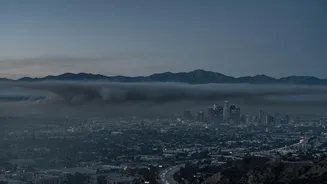
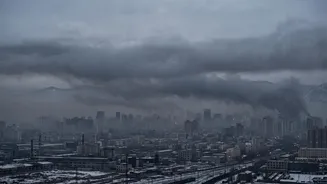
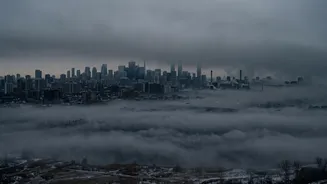
During winter in northern India, the days are shorter and the sun's rays are weaker. The ground doesn't heat up as much, and at night, it cools rapidly. This creates a situation known as a temperature inversion. Normally, air gets colder as you go higher, but during an inversion, a layer of warmer air sits on top of a layer of cooler, denser air near the ground. This warm layer acts like a lid, preventing the air below from rising. This phenomenon drastically reduces the height of the boundary layer, sometimes compressing it to just a few hundred metres. Calm winds during this season further prevent pollutants from dispersing horizontally, compounding the problem.
The Trapping Effect: A City in a Gas Chamber
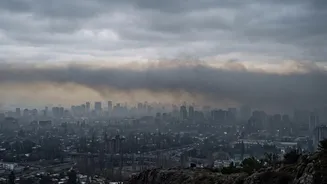
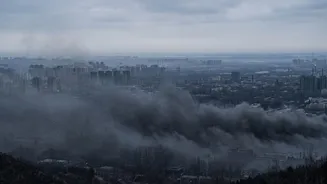
A shallow boundary layer is disastrous for air quality. All the pollutants emitted within the city—PM2.5 from vehicle exhaust, industrial emissions, construction dust, and smoke from biomass burning—are released into a much smaller volume of air. Unable to rise and disperse due to the inversion lid, these pollutants become highly concentrated at ground level, where people breathe. This is why Delhi's Air Quality Index (AQI) can skyrocket from 'poor' to 'severe' overnight, even if the amount of pollution being generated hasn't changed dramatically. The meteorological conditions effectively turn the city into a 'gas chamber', trapping everything that is produced within it.
A Vicious Cycle of Pollution
The situation can quickly become a vicious cycle. The thick layer of smog and aerosols trapped by the shallow boundary layer blocks sunlight from reaching the ground. This further reduces surface heating during the day, keeping the ground and the air layer above it cooler. A cooler surface strengthens the temperature inversion, which in turn keeps the boundary layer shallow and traps even more pollution. This feedback loop can lock the region into prolonged periods of severe air quality, as seen in early November when Delhi's AQI entered the 'very poor' category for the first time this season.
An Amplifier, Not the Sole Cause
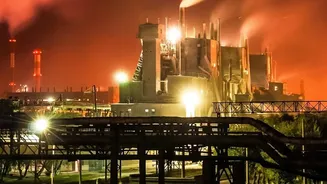
It's crucial to remember that the shallow boundary layer and temperature inversions are natural meteorological phenomena. They don't create pollution; they amplify it. The root causes remain the massive emission loads from various sources. Studies attribute Delhi's pollution to a mix of transport (around 23%), secondary particulates formed from other gases (27%), biomass burning including crop residue (20%), and dust (15%). During the post-monsoon and winter months, smoke from stubble burning in neighbouring states is a significant additional contributor. The shallow boundary layer simply ensures that instead of dispersing, this toxic cocktail remains concentrated over the city.