
The Sun's 11-Year Rhythm
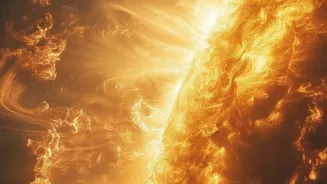
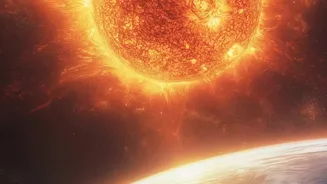
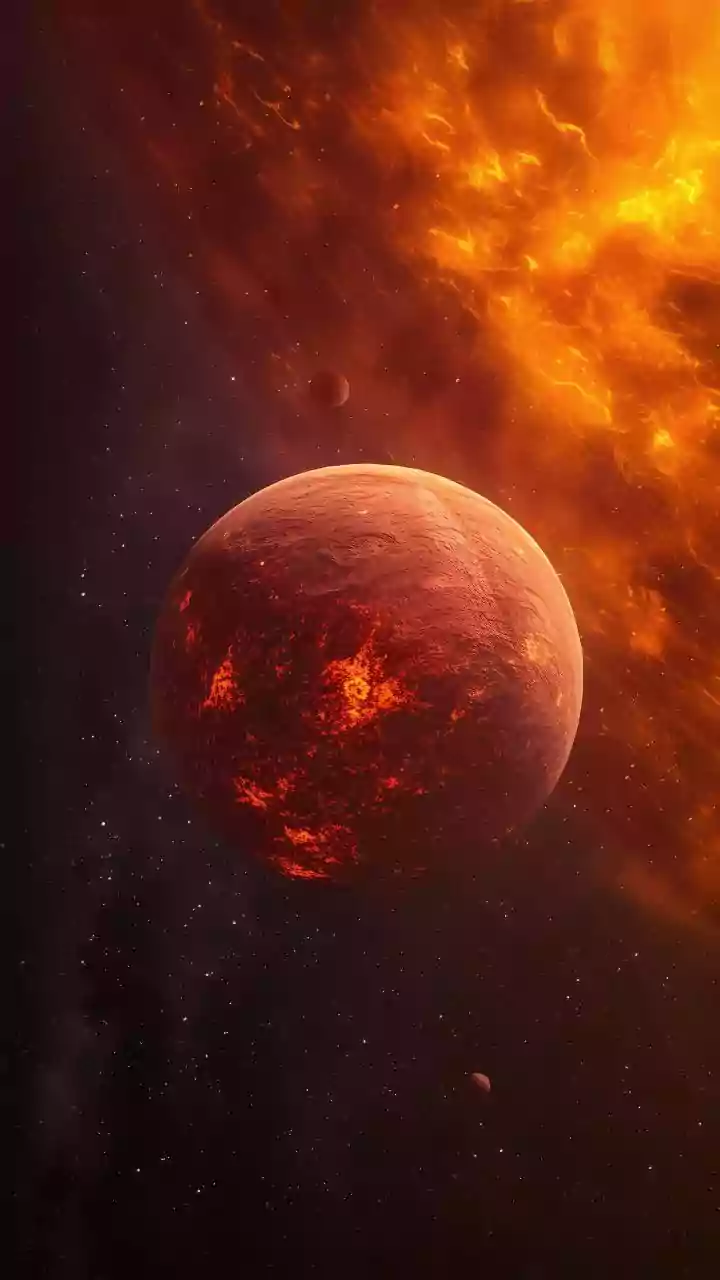
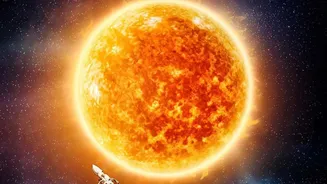
The sun isn't a static ball of fire; it's a dynamic, magnetic star with a heartbeat that pulses roughly every 11 years. This is known as the solar cycle. It swings between two extremes: solar minimum, a period of relative calm with few sunspots, and solar maximum,
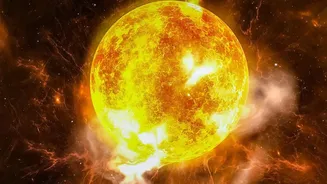
a stormy peak of intense magnetic activity. Scientists track these cycles by counting sunspots—dark, magnetically complex regions on the sun's surface. The current cycle, Solar Cycle 25, began in December 2019 and has been building in intensity, surprising scientists with activity that has outpaced initial predictions.
What Is Solar Maximum?
Solar maximum is the peak of this 11-year cycle. During this phase, which can last for a couple of years, the sun's magnetic field becomes highly unstable, eventually leading to a complete flip of its north and south poles. This magnetic turmoil manifests as a dramatic increase in the number and complexity of sunspots. NASA and NOAA officially announced that the sun entered the maximum phase for Solar Cycle 25 in late 2024, with heightened activity expected to continue. This isn't just an abstract astronomical event; this peak activity is the engine that drives what we call space weather.
The Engines of Space Weather
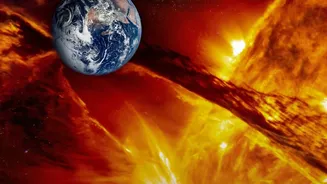
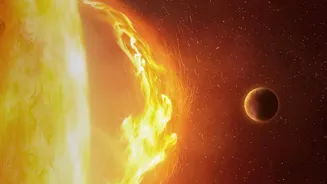
Space weather refers to the changing conditions in space driven by the sun. The two most significant events are solar flares and coronal mass ejections (CMEs). A solar flare is a powerful burst of radiation, like a giant explosion on the sun's surface. A CME is even more dramatic: a massive cloud of magnetised plasma and solar material, sometimes billions of tons, hurled into space at millions of miles per hour. During solar maximum, the frequency of these events skyrockets. When Earth is in the path of a CME, it triggers a geomagnetic storm—a major disturbance of our planet's magnetic field.
Satellites in the Firing Line
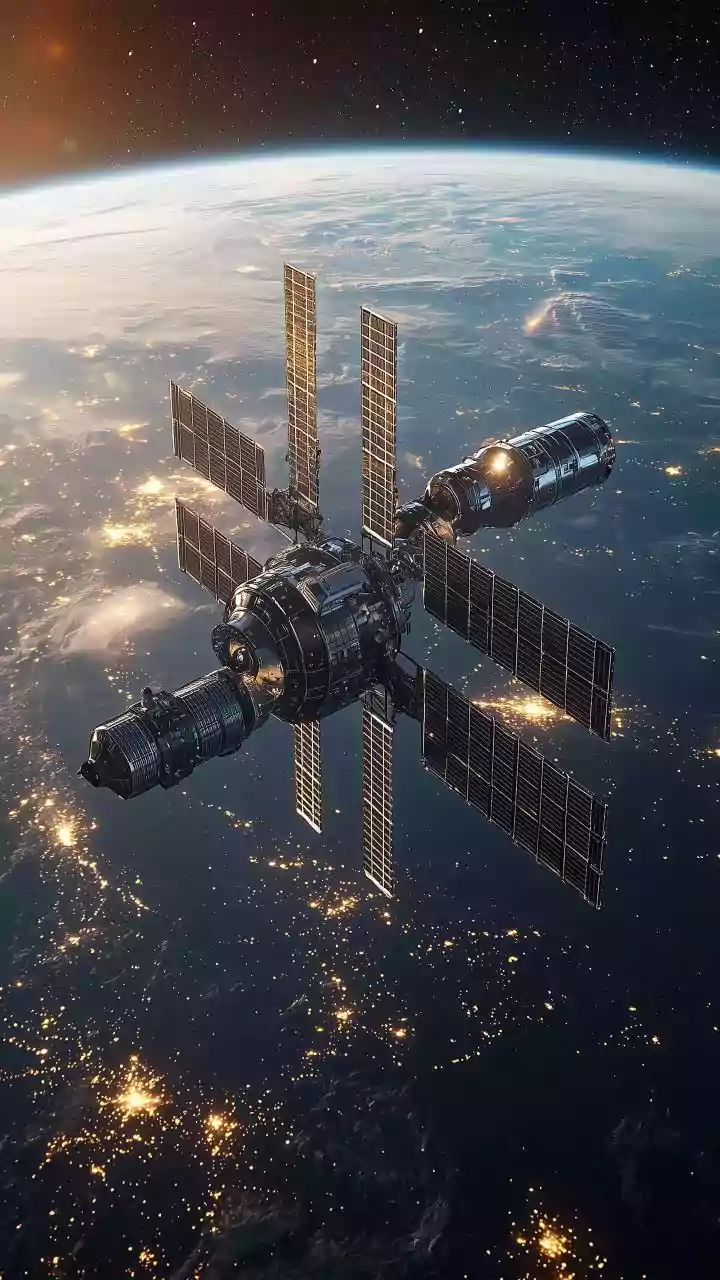
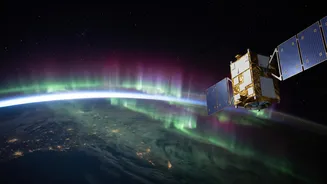
For the thousands of satellites orbiting Earth, a geomagnetic storm is a serious threat. The energy from a storm heats and expands our upper atmosphere. This increases the atmospheric drag on satellites in low-Earth orbit, causing them to lose altitude and potentially re-enter the atmosphere prematurely if they can't correct their orbit. In February 2022, a single geomagnetic storm led to the loss of 38 commercial satellites. Furthermore, high-energy particles can cause surface charging, damage electronics, and disrupt GPS and communication signals. Operators can put satellites into a 'safe mode' to weather the storm, but the risk of damage or disruption to the services we rely on—from navigation to internet access—is significantly higher during solar maximum.
A Celestial Light Show
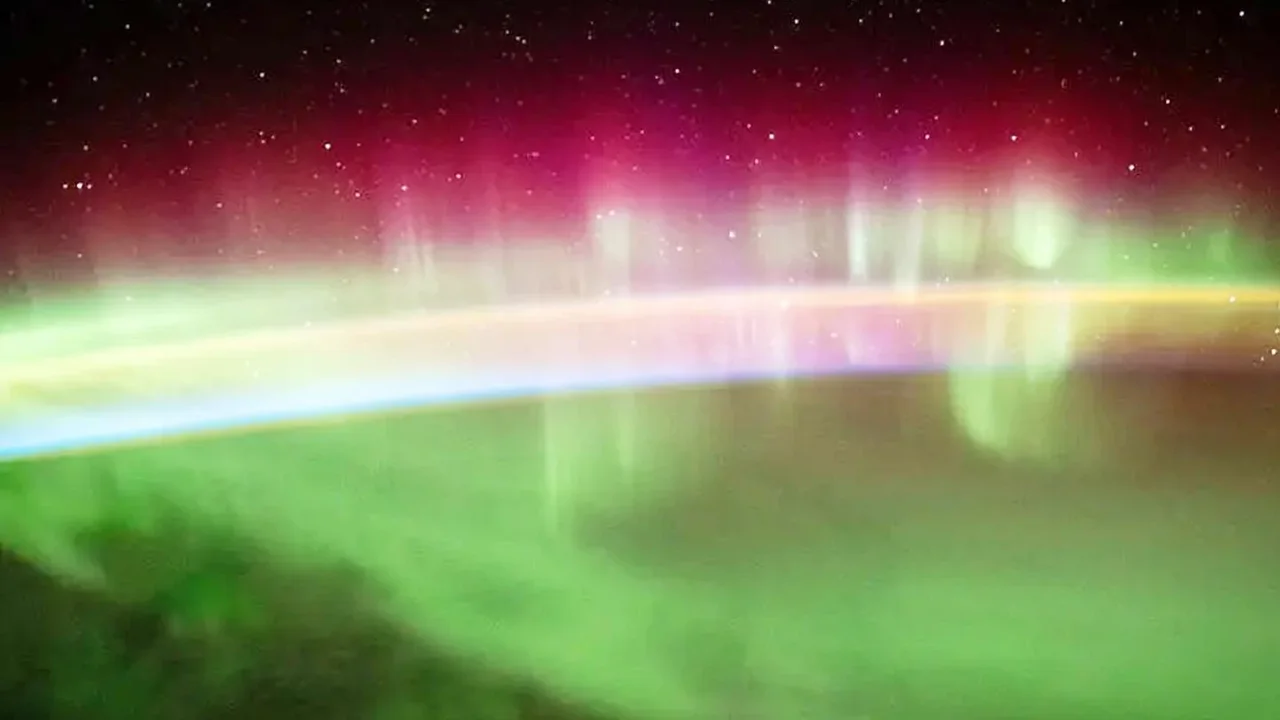
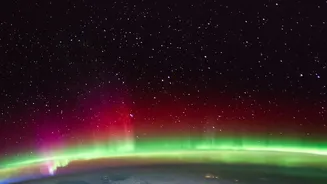
The very same solar particles that menace our technology also create one of nature's most spectacular displays: the aurora. Normally confined to the polar regions, the northern and southern lights are caused when charged particles from the sun are funnelled down Earth's magnetic field lines and collide with atoms in our atmosphere, causing them to glow. During a strong geomagnetic storm powered by a CME, this process is supercharged. The auroral oval expands, pushing the light show to much lower latitudes. This means that during solar maximum, people in regions that rarely see the aurora have a much greater chance of witnessing these vibrant, dancing curtains of green, pink, and purple light in their own night sky.