





From Project Chaos to Polished Narrative
Every young professional has a folder of 'raw projects'—messy notes, scattered code, and half-finished presentations. While rich with experience, this raw material doesn't impress recruiters. A case study, however, does. It tells a story: it outlines
a problem, details the process, and showcases a measurable result. A great case study demonstrates not just technical skill, but also critical thinking and commercial awareness. The problem is, building one from scratch is time-consuming and difficult. Many graduates and early-career professionals struggle to articulate their achievements, turning valuable experience into vague bullet points. This is where AI tools are becoming a game-changer.
AI as Your Personal Storytelling Assistant
Think of AI portfolio tools as a collaborator that helps structure your thoughts. Instead of staring at a blank page, a candidate can input their raw project data—notes, data, client feedback—and ask an AI tool to help organize it into a classic case study format: Challenge, Solution, and Result. Tools like ChatGPT, Claude, and specialized case study generators such as Bit.ai can take a jumble of information and produce a coherent first draft. This process helps candidates identify the core narrative of their project. The AI can prompt them for details they might have overlooked, asking about specific challenges, the steps taken during implementation, and the quantifiable outcomes.
Structuring and Refining the Content
The first step is often generating a structure. A candidate might use a prompt like: 'Act as a UX design expert. Write a detailed case study about a mobile app that helps users track expenses'. The user then provides their project details. The AI can then create sections for an introduction, the problem statement, the user research conducted, the design process, and the final outcomes. This saves hours of work and provides a solid foundation. From there, the candidate can use AI writing assistants to refine the language, making it more professional and achievement-focused. For example, a simple statement like 'I helped build the website' can be transformed into 'Contributed to the development of a responsive e-commerce platform, resulting in a 15% increase in user engagement'.
Beyond Text: Generating Visuals and Layouts
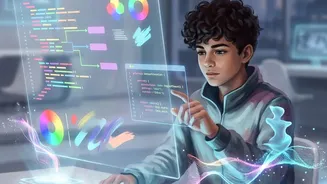
A modern portfolio is highly visual. AI is also making design more accessible. Many AI portfolio generators offer professional templates that ensure the final product is clean, modern, and easy to read. Some tools, like Venngage and Gamma, can generate not just the text but also the layout, complete with suggestions for charts, graphs, and images to illustrate key points. This allows candidates without a strong design background to produce a visually compelling document. For designers, AI can be a brainstorming partner, generating multiple concept directions or creating mockups that help clients—and recruiters—visualize ideas more effectively.
The Human Touch Remains Crucial
While AI is a powerful assistant, it is not a replacement for authenticity. Recruiters are becoming increasingly savvy at spotting work that is entirely AI-generated and lacks personal insight. A 2026 study found that a significant number of employers now test for AI fluency in interviews, meaning candidates must be able to explain their project choices and defend their work. The most effective strategy is to use AI as a starting point. Young professionals should use these tools to structure their story and polish their writing, but then heavily edit the output to inject their own voice, personality, and specific learnings. The goal is to let AI handle the heavy lifting of formatting and initial drafting, freeing up the candidate to focus on what really matters: showcasing their unique perspective and problem-solving skills.