


The Dress Rehearsal
The term 'practice flights' might conjure images of pilots in training, but for NASA's interplanetary missions, the reality is far more complex. These aren't physical flights on Earth, but massive, integrated simulations involving hundreds of engineers
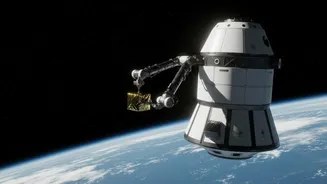
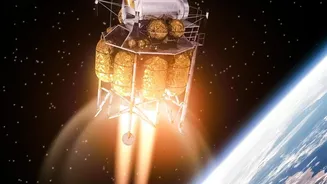
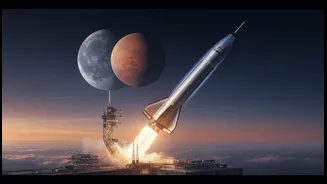
and scientists. For the upcoming Artemis III mission, NASA is planning what it calls a 'highly choreographed dance' involving three separate rocket launches to test lunar landers in Earth orbit before attempting a crewed Moon landing. This orbital rehearsal is designed to validate every system, command, and procedure in a controlled environment, because in deep space, there are no second chances. These simulations test everything from launch sequences to docking procedures and ground crew operations, ensuring all the 'dancers' know their steps perfectly.
Timing Is Everything
In this cosmic dance, timing is the rhythm that holds everything together. Missions can’t just launch whenever they’re ready; they must wait for precise launch windows when Earth and the target planet are perfectly aligned. This minimizes the travel time and fuel required. But the timing challenges don't end there. One of the biggest hurdles in deep space is communication delay. A signal sent to Mars can take anywhere from three to 22 minutes to arrive, one way. This means mission controllers on Earth can't 'joystick' a rover or lander in real-time. Every sequence of events—like a landing or sample collection—must be pre-programmed and uploaded to the spacecraft to be executed autonomously, hours after the command is sent. These 'practice flights' are critical for perfecting these automated sequences.
An Orchestra of Moving Parts
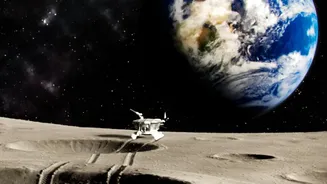
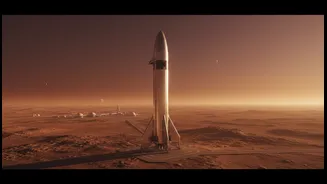
A planetary mission is never just one spacecraft. It’s an orchestra of hardware and software working in harmony. Consider missions that involve an orbiter, a lander, and a rover. The orbiter might act as a communications relay, the lander must navigate a perilous descent, and the rover must execute its science objectives on the surface. Each element has its own set of commands and constraints, and their actions must be perfectly synchronized. This is especially true for highly complex upcoming missions like Artemis III, which will involve an Orion capsule docking with two separate commercial landers from SpaceX and Blue Origin. It's a sequence so intricate that it has been called one of the most ambitious missions NASA has ever undertaken.
Mission Control as the Conductor
If the spacecraft are the dancers, then the teams at Mission Control and the Deep Space Network (DSN) are the conductors and choreographers. The DSN is a global network of massive radio antennas in California, Spain, and Australia that allows NASA to maintain constant contact with its spacecraft as the Earth rotates. These teams don't just send commands; they track the spacecraft's precise location, manage the flow of scientific data, and troubleshoot any anomalies. Their job is a constant balancing act, managing the limited power of the spacecraft and pulling faint signals from the background noise of the cosmos. Every command sequence sent across millions of miles is a carefully planned step in the overall mission choreography.
Why The Practice Matters
History has shown that even the smallest misstep in this choreography can have catastrophic consequences. The infamous loss of the Mars Climate Orbiter in 1999 was due to a simple mix-up between metric and imperial units—a tiny error in the 'dance steps' that led to the spacecraft's destruction. This is why NASA invests so heavily in simulations, modeling, and rehearsals on the ground. For the Europa Clipper mission, the entire spacecraft was placed in a giant thermal vacuum chamber to simulate the harsh environment of space and test the deployment of its instruments. These painstaking preparations, from massive digital simulations to physical tests in chambers that mimic the void of space, are designed to find and fix any potential flaw before the performance begins for real.