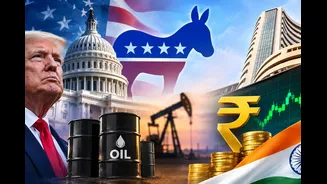






The ballots are counted, and the dust is settling on the 2026 US midterm elections. For global investors, the work is just beginning. Washington's new power dynamic will have ripple effects on everything from tech stocks to international trade.
The Market's Verdict: A Sigh of Relief?
Historically,
US stock markets tend to experience volatility and weaker performance leading up to midterm elections due to uncertainty. Once the results are in, a relief rally often follows, not because of which party won, but because the uncertainty has passed. Data shows that the year following a midterm election has historically been strong for stocks. In fact, since 1950, the S&P 500 has not had a negative return in the 12 months following a midterm vote. This pattern suggests that investors value clarity above all. With the election decided, focus can shift back to economic fundamentals like corporate earnings, inflation, and growth forecasts, which are ultimately bigger drivers for market performance.
The Power of Political Gridlock
A common outcome of midterm elections is divided government, where one party controls the White House and the other controls one or both chambers of Congress. Many on Wall Street welcome this scenario, often called 'gridlock'. The logic is that with power split, the odds of sweeping, disruptive legislation on taxes, spending, or regulation decrease significantly. This predictability allows businesses to plan and invest with greater confidence. However, some historical analysis suggests the 'gridlock is good' theory might be overstated, with unified governments sometimes producing stronger returns. Furthermore, gridlock carries its own risks. Partisan standoffs over crucial issues like raising the federal debt ceiling can introduce a different kind of volatility, potentially rattling markets and threatening economic stability.
Sectors in the Spotlight
Regardless of the broader market trends, shifts in Washington's power structure always create winners and losers at the industry level. A change in congressional committee leadership, for example, dictates which sectors face greater scrutiny. Following the 2026 elections, where Democrats made significant gains, there is an expectation of increased oversight on industries like artificial intelligence and data centers. The new political alignment may also be favourable for clean energy initiatives. On the other hand, a divided government makes it harder to pass major spending cuts, which could be a positive for sectors like healthcare by delaying planned reductions in programs like Medicaid. International trade is another critical area, though many of the protectionist policies, particularly concerning China, have shown bipartisan support, meaning dramatic reversals are unlikely.
Why It Matters for Indian Investors
The ripples from US politics are felt strongly in international markets, including India. Key Indian sectors like pharmaceuticals and IT services are deeply connected to US policy. For instance, any new US regulations or tariffs targeting generic drug imports could directly impact the profit margins of Indian pharma exporters. Similarly, changes in US policy toward tech, including potential restrictions on AI development or outsourcing, can influence investment and growth trajectories for India's massive IT industry. While a direct link can be hard to draw, shifts in the US dollar's strength and overall global financial stability—both influenced by US fiscal policy and events like debt ceiling debates—have significant second-order effects on capital flows to emerging markets like India.