



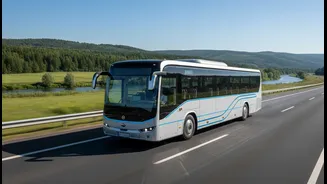


The Comfort Factor: A Smoother, Quieter Ride
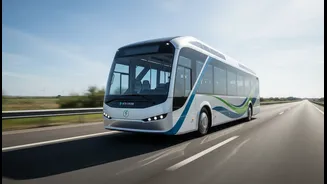
One of the most immediate differences passengers notice on an electric bus is the lack of noise and vibration.. Unlike their diesel counterparts, e-buses offer a significantly quieter and smoother journey, which can reduce travel fatigue on long routes..
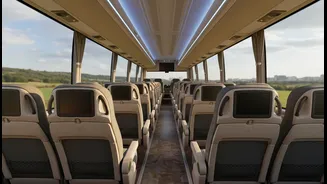
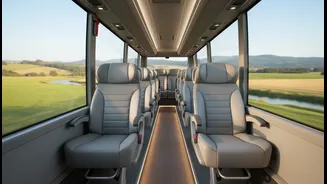
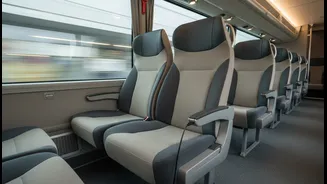
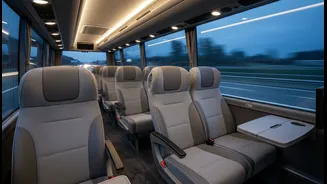
New models showcased by manufacturers like Eicher and Tata Motors feature amenities such as plush, reclining seats, air suspension for stability, individual USB charging ports, and onboard entertainment systems.. Many operators are positioning their electric fleet as a premium service, with features that are more in line with airline-style offerings.. While base models are comfortable, the level of luxury can vary. Travellers should check the specific amenities offered by operators like NueGo, FlixBus, or zingbus, as some provide extras like blankets, meal kits, and even onboard bio-washrooms.. The promise is a more relaxed journey, free from the constant rumble and judder of a combustion engine.
The Charging Question: Powering the Journey
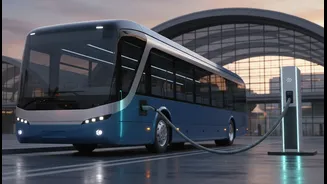
For any electric vehicle, the most pressing question is charging. While an e-bus can have a range of over 400 kilometres on a single charge, intercity routes often push this limit.. The primary challenge is the lack of a dense public charging network along highways specifically for heavy vehicles like buses.. Most operators currently rely on a captive charging model, where buses are charged overnight at their own depots.. For longer routes, this requires 'opportunity charging' at intermediate stops or partner depots, which must be factored into the schedule.. While projects like the National Highways for Electric Vehicles (NHEV) are working to establish e-highways with fast-charging stations, such as on the Delhi-Jaipur-Agra corridor, the nationwide infrastructure is still developing.. Passengers may experience longer halts than on diesel routes as buses take time to top up their batteries, a process that can take anywhere from 30 minutes for a quick boost to a few hours for a more substantial charge..
Punctuality: The On-Time Promise
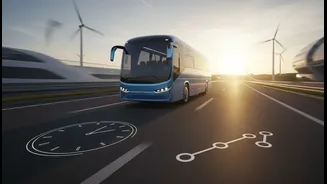
In the past, intercity bus travel was not known for its punctuality. However, new-age, tech-enabled fleet operators are making on-time performance a key promise.. Companies are now using GPS tracking and real-time monitoring to manage schedules tightly.. Some even publish their on-time performance data publicly, defining 'on-time' as departing or arriving within 15 minutes of the scheduled time.. For electric buses, punctuality is closely tied to the charging strategy. Efficient scheduling must account for charging breaks without causing significant delays. Unforeseen issues, like a charging station being occupied or out of service, can have a cascading effect on the schedule.. While the technology itself is reliable, the dependency on a still-maturing charging ecosystem remains the biggest variable affecting punctuality on longer electric routes.. Travellers are advised to book with operators who have established route histories and transparent tracking.
Route Reliability: Are We There Yet?
The reliability of an e-bus route depends on more than just the vehicle; it depends on the entire ecosystem. High-demand corridors connecting major cities like Delhi-Lucknow or Bangalore-Chennai have seen the most successful early adoption because they combine consistent passenger traffic with manageable distances for current battery technology.. However, expanding to less-trafficked or longer routes poses challenges.. Operators must meticulously plan routes to ensure they are within the vehicle's range, including a buffer for traffic and weather conditions, and have access to reliable charging points.. Unlike a diesel bus that can refuel in minutes at any petrol pump, an e-bus cannot be easily diverted from its planned route if it runs low on charge. This makes route planning critical. The government’s push for electrification and investment in highway charging infrastructure is expected to steadily improve the reliability and expand the network of viable e-bus routes across the country..
For Clean-Mobility Watchers: The Bigger Picture
For those tracking India's transition to clean mobility, the intercity e-bus segment is a fascinating case study. The push is driven by strong government incentives, including the FAME II scheme and the new PM-eBus Sewa program, which aim to put tens of thousands of e-buses on the road.. The primary motivation is economic and environmental: reducing India's massive oil import bill and cutting down on vehicular pollution.. However, operators face significant hurdles. The high upfront cost of an electric bus—which can be 30-70% more than a diesel one—is a major barrier, especially for the private operators who run over 90% of India's bus fleet.. Business models like the Gross Cost Contract (GCC), where operators are paid per kilometre, and discussions around credit guarantees and interest subvention are aimed at de-risking this investment.. The success of this transition hinges on solving the dual challenges of financing the vehicles and building out a robust, reliable charging infrastructure to support them..