



Why Temperature Is Everything
All true teas—green, white, oolong, and black—come from the same plant, Camellia sinensis. The vast differences in their flavour, colour, and aroma come from how the leaves are processed, specifically the level of oxidation they undergo. Oxidation is a chemical
reaction that begins once the leaves are picked and their cell walls are broken, exposing enzymes to oxygen. This process darkens the leaves and transforms their chemical composition, much like a cut apple turning brown. Water temperature is crucial because it controls how quickly compounds like catechins, tannins, and amino acids are extracted from the leaf. Water that's too hot can 'scorch' delicate, unoxidized leaves, releasing an excess of bitter-tasting compounds too quickly. Conversely, water that's too cool won't be powerful enough to coax the deep, rich flavours from fully oxidized leaves, resulting in a weak, under-extracted cup.
Green Tea: Go Cool and Gentle
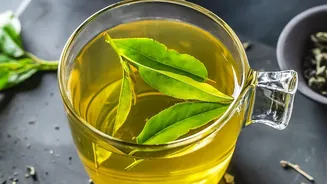
Green tea is unoxidized. The leaves are heated shortly after harvesting (by steaming or pan-firing) to halt the oxidation process, preserving their fresh, vegetal, and sometimes grassy character. These leaves contain high levels of delicate compounds called catechins, which are responsible for many of green tea’s health benefits but can also taste intensely bitter when over-extracted. Using boiling water is the single biggest reason many people think they dislike green tea; it shocks the leaves and creates a harsh, astringent brew. To preserve its natural sweetness, green tea should be brewed with much cooler water, typically in the range of 70°C to 85°C (160°F to 185°F). This gentle heat extracts the desirable flavours in balance with the bitterness.
White Tea: Handle with Care
As the least processed of all teas, white tea is prized for its subtle, delicate, and often floral notes. It consists of young tea buds and leaves that are simply withered and dried, allowing only for a slight, natural oxidation to occur. Because the leaves are so minimally handled, they are extremely fragile. Like green tea, brewing with water that is too hot will overwhelm its nuanced flavours with bitterness. A lower temperature is essential to gently coax out its gentle sweetness. The ideal range for white tea is generally between 75°C and 85°C (165°F to 185°F), ensuring a smooth and aromatic cup that honours its minimalist character.
Black Tea: Bring the Heat
Black tea sits at the opposite end of the spectrum. It is fully oxidized, a process that converts the catechins found in green tea into more complex compounds called theaflavins and thearubigins. These compounds are responsible for black tea's dark colour and its robust, malty, and sometimes fruity flavour profile. These sturdier molecules require more energy to be extracted properly. Using water that is just off the boil, around 93°C to 100°C (200°F to 212°F), is necessary to unlock its full depth and body. Brewing black tea with water that is too cool will result in a disappointingly thin and flavourless cup, as the water isn't hot enough to dissolve its defining compounds.
How to Get It Right Without a Gadget
You don't need an expensive variable-temperature kettle to improve your tea game. The easiest method is to simply let boiling water cool down. As a general guide, letting a kettle of boiled water sit for two to three minutes will bring it down to the right range for green and white teas. Another simple trick is to pour the boiling water into a cold mug or pitcher before pouring it over your leaves. Each transfer can drop the temperature by about 5-10°C, taking the harsh edge off the heat. For black teas, you can pour the water just as it reaches a rolling boil. A small effort to pre-warm your teapot or mug with a splash of hot water can also make a difference by preventing the vessel from rapidly cooling your brewing water on contact.