




The Invisible Saboteurs in Your Kitchen
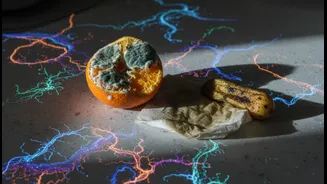
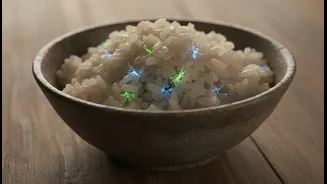
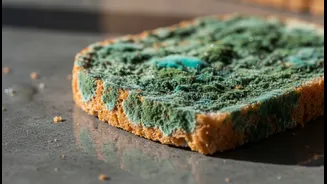
The primary culprits behind food spoilage are not visible to the naked eye. Your kitchen, like every other environment, is teeming with microscopic organisms, including bacteria, yeasts, and moulds. These microbes are constantly floating in the air and settling
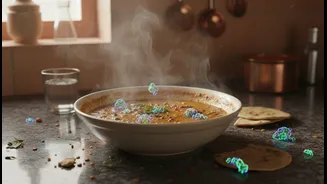
on surfaces, just waiting for the right conditions to find a meal and multiply. A pot of freshly cooked curry, rich in nutrients and moisture, presents an irresistible feast for these tiny invaders. While many microbes are harmless, spoilage organisms are experts at breaking down organic matter, turning delicious food into something unpalatable and potentially unsafe to eat.
How Humidity Gives Microbes a Superpower
Humidity is the secret weapon for these microbes. Scientists use the term 'water activity' (aw) to describe the amount of free, unbound water available in food that microbes can use to grow. When the air is humid, the high concentration of water vapour prevents moisture from evaporating from the surface of the curry. In fact, it can even add moisture to the food's surface, creating a perfect, damp environment for microbes to thrive. Think of it as rolling out a welcome mat. While a curry is already a high-moisture food, humid air ensures its surface remains a hospitable breeding ground, dramatically accelerating microbial growth.
A Buffet for Bacteria: The Chemistry of Curry
A typical curry is a complex and delicious mixture of water, oils or ghee, proteins from meat or lentils, vegetables, and carbohydrates from ingredients like onions, tomatoes, or potatoes. For microbes, this isn't just a meal; it's an all-you-can-eat buffet offering every nutrient they need. These ingredients provide the building blocks for the chemical reactions that we perceive as spoilage. The combination of high moisture content and a rich nutrient profile makes prepared curries particularly vulnerable to rapid decay, especially when not stored correctly.
The Science of Spoilage: From Delicious to Dangerous
Once the microbes begin to feast, they release enzymes that trigger a cascade of chemical breakdowns. Fats and oils undergo hydrolysis and oxidation, leading to rancidity and the characteristic 'stale' or 'off' flavours. Proteins are broken down in a process called putrefaction, which produces foul-smelling compounds like ammonia and hydrogen sulfide—the culprits behind the unpleasant odour of truly spoiled food. Meanwhile, carbohydrates are fermented into acids, which can give the curry a sour taste. These processes don't just ruin the taste and smell; they fundamentally alter the food's chemical structure and safety.
Your Best Defence: Smart Storage Strategies
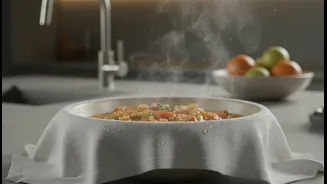
Understanding the science of spoilage empowers you to fight back effectively. The first rule is to cool leftover curry quickly. Leaving it at room temperature for more than two hours keeps it in the 'danger zone' (between 4°C and 60°C), where bacteria multiply exponentially. To cool it faster, divide the curry into smaller, shallow containers. Once cool, store it in airtight containers. This is crucial as it prevents airborne microbes from landing on the food and stops the humid air from interacting with its surface. Prompt refrigeration at 4°C or below is your most powerful tool, slowing microbial activity to a crawl and preserving your curry for 3-4 days.