






The Body’s Hidden Conversation
We intuitively know our bodies work as a whole. A sleepless night affects our focus, stress can cause stomach aches, and a problem in one organ, like the pancreas in diabetes, can impact the entire system. For years, medical science has often focused
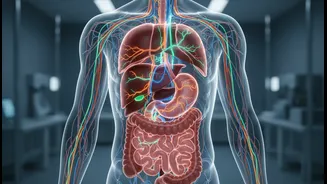
on individual organs in isolation. Now, a rapidly growing field of research is exploring 'inter-organ crosstalk'—the complex network of communication that constantly happens between different parts of our body. At the heart of this conversation are proteins and other molecules that act as messengers. Secreted by one organ, they travel through the bloodstream to deliver instructions to another, coordinating everything from energy levels to immune responses. This isn't just a new detail; it's a fundamental shift toward understanding the body as the deeply interconnected system it is.
Proteins as The Postal Service
Think of these signaling molecules as a biological postal service. An organ like the liver might release specific proteins, known as hepatokines, that carry messages to fat tissue or muscle. Similarly, muscles release myokines during exercise, and fat tissue sends out adipokines. These protein signals are part of what scientists call the 'secretome'—all the molecules secreted by our cells. This constant flow of information helps the body maintain a stable, healthy state, a condition known as homeostasis. For example, this crosstalk helps regulate metabolism, telling the body when to store energy and when to burn it. Disruptions in these communication lines are now believed to play a pivotal role in the development of chronic diseases like obesity, type 2 diabetes, and cardiovascular conditions.
A New Blueprint for Health and Disease
Mapping these protein signals could provide a revolutionary blueprint for whole-body health. Instead of just seeing diabetes as a pancreas problem or heart disease as a cardiac issue, doctors might one day trace the dysfunctional communication pathways that connect them. This research holds promise for explaining why conditions like obesity are linked to so many other health issues, or how physical activity benefits the entire body, not just the muscles. For instance, research has shown that exercise doesn't just build muscle; it prompts muscles to release signals that can improve metabolic health elsewhere in the body. Understanding this network could also unlock new insights into aging, as evidence suggests this inter-organ communication breaks down over time, contributing to age-related decline.
Why This Is Still Early Science
While the potential is enormous, it's crucial to understand that this is an emerging field. The headline’s caution about treating this as 'early research' is important. The human body's communication network is incredibly complex. Identifying a single protein signal is just the first step; researchers must then figure out what it does, how it interacts with thousands of other signals, and how its function might change in different people or contexts. Technologies like mass spectrometry and advanced 'omics' approaches are helping scientists analyze thousands of these molecules at once, but the challenge is immense. Furthermore, much of the foundational work is done in animal models or lab settings, and translating these findings to complex human systems takes years of careful validation. We are at the stage of drawing the map, not yet navigating with it in the clinic.