

The Quintessential Rajasthani Thali
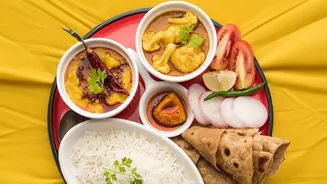
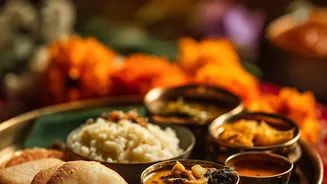
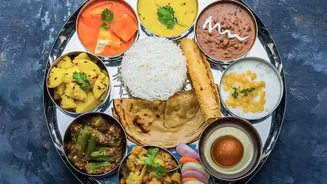
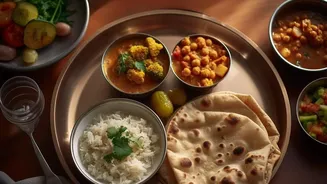
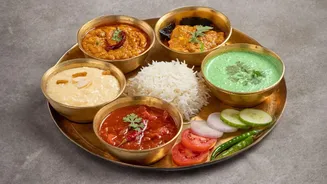
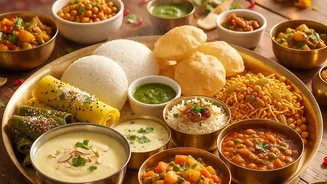
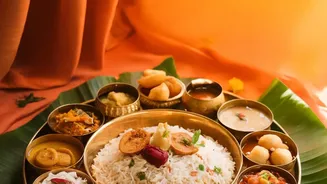
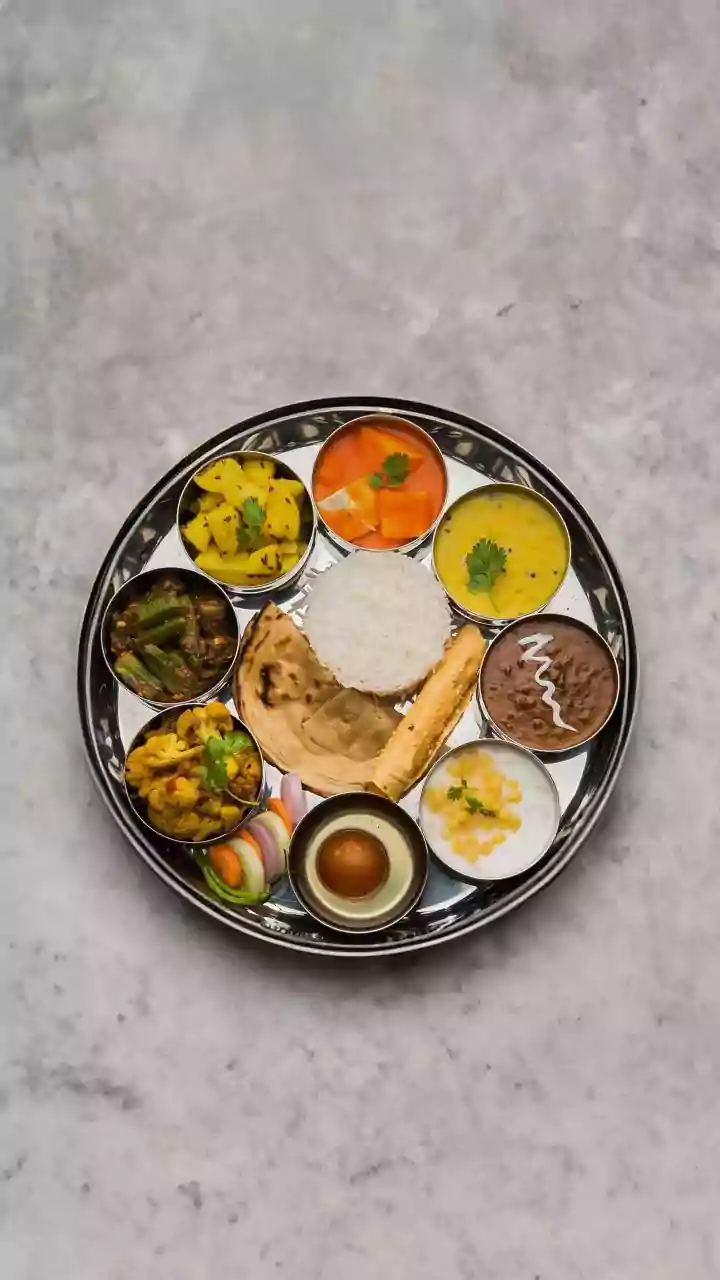
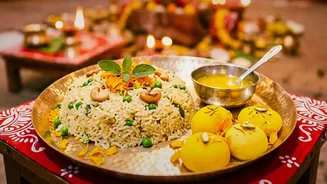
The Rajasthani thali is not just a meal; it is a grand culinary tour on a single platter. A constellation of small bowls, or 'katoris', offers a harmonious balance of flavours, textures, and aromas. Expect a vibrant spread that typically includes spicy
lentils, yogurt-based curries, dry vegetables, freshly baked breads, and a variety of chutneys and pickles. This platter is a testament to the local philosophy of making the most of available ingredients, with a heavy reliance on pulses, gram flour, and dairy, given the scarcity of fresh green vegetables in this desert state. It is a wholesome, elaborate affair that reflects the legendary hospitality of the region.
Dal Baati Churma: The Holy Trinity
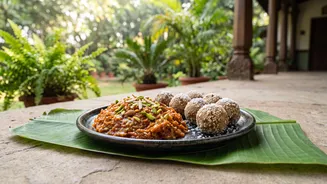
No discussion of Rajasthani food is complete without mentioning its most iconic dish: Dal Baati Churma. This is a complete meal that combines three distinct components into a perfect whole. The 'Baati' are hard, unleavened wheat rolls baked to a golden-brown crispness, traditionally in underground ovens or cow-dung fires. These are then broken apart and drenched in pure ghee. The 'Dal' is a flavourful mix of different lentils, spiced to perfection. Finally, 'Churma' provides the sweet counterpoint; it is a coarse, powdered mixture of crushed wheat, jaggery or sugar, and ghee, often studded with dried fruits. Born from the needs of warriors, this hearty dish is a true taste of Rajasthan's heritage.
Gatte Ki Sabzi: A Gram Flour Marvel
Gatte ki Sabzi is a prime example of Rajasthani resourcefulness. In a region where fresh produce can be scarce, cooks turned to gram flour (besan) to create delicious and satisfying dishes. 'Gatte' are steamed and spiced gram flour dumplings, which are then sliced and simmered in a tangy yogurt-based curry. The dumplings are soft yet firm, soaking up the flavour of the gravy, which is a spicy and aromatic blend of traditional spices like turmeric, coriander, and chili powder. It is a staple in a traditional thali and a testament to the creative spirit of Rajasthani kitchens.
Pyaaz Ki Kachori: A Spicy Street Staple
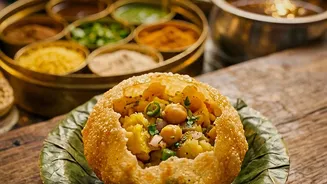
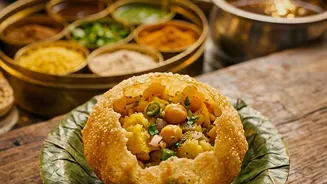
Transitioning from the elaborate thali to the bustling streets, the Pyaaz ki Kachori is an unmissable snack. Originating in Jodhpur but popular across the state, this deep-fried pastry is a local obsession. It is a large, flaky, golden-brown kachori filled with a spicy and slightly sweet onion mixture. The filling is a flavourful medley of onions, potatoes, and a blend of spices that provides a satisfying kick. Best enjoyed hot, often served with tamarind or mint chutney, it is a perfect breakfast item or an afternoon snack that offers a true bite of local life.
Mirchi Vada: The Fiery Jodhpuri Treat
For those who enjoy a bit of heat, the Mirchi Vada is a must-try, especially in its home city of Jodhpur. This popular street food consists of a large, mild green chili pepper that is stuffed with a spicy potato filling, coated in a gram flour batter, and deep-fried until golden and crisp. The result is a snack that is crunchy on the outside, soft and savoury on the inside, with the gentle heat of the chili coming through. It is often served with a tangy tomato or mint chutney, which helps to balance the spice. It’s an iconic Jodhpur experience you can find at almost any street-side stall.
Mawa Kachori: A Sweet Indulgence
Not all kachoris are savoury. Jodhpur also offers a decadent sweet version known as Mawa Kachori. This unique dessert features a crisp, flaky pastry filled with a rich and aromatic mixture of 'mawa' (dried evaporated milk solids), nuts, and fragrant spices. After being deep-fried to perfection, the kachori is dipped in a sweet sugar syrup, adding a glossy finish and an extra layer of sweetness. It is a truly indulgent treat, perfect for festive occasions or for anyone with a sweet tooth looking to sample the royal desserts of the region.
Ghevar: The Honeycomb Dessert
Ghevar is a special Rajasthani sweet with a distinctive, honeycomb-like texture. Made from a batter of flour and ghee that is skillfully drizzled into hot oil to create a porous, disc-shaped cake, it is a work of art. Once fried, it is soaked in sugar syrup. While the plain version is delicious on its own, it is often garnished with chopped nuts, edible silver leaf, or topped with a layer of sweetened 'rabri' (thickened milk). Ghevar is traditionally associated with festivals like Teej and Raksha Bandhan, which often fall during the monsoon season.