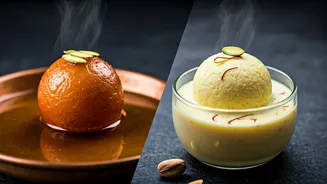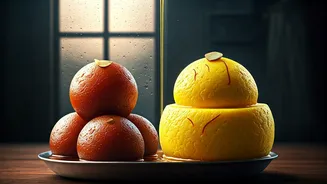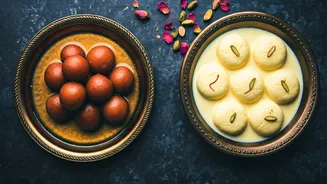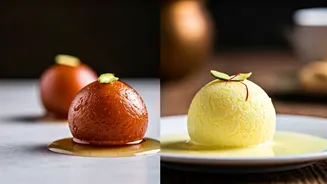



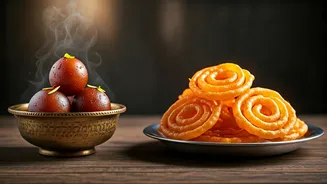


The Case for Gulab Jamun: A Warm, Syrupy Hug
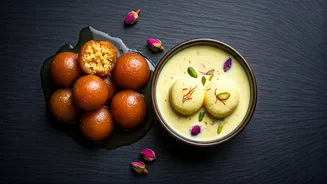
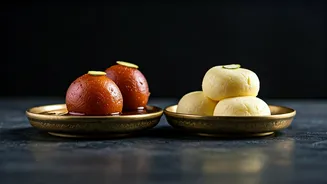
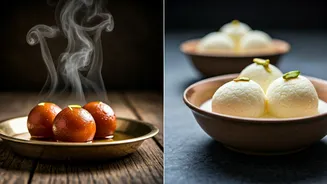
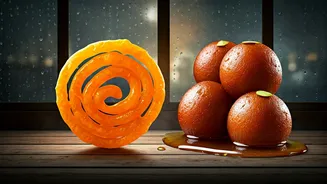
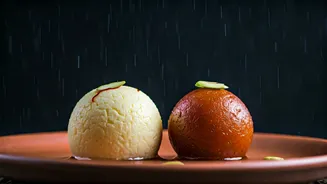
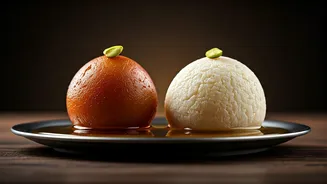
There are few things as comforting as a warm bowl of Gulab Jamun on a cool, rainy day. These soft, dense globes, made from milk solids (khoya), are deep-fried to a beautiful golden-brown and then plunged into a fragrant sugar syrup. [15, 26] The name
itself is poetic, derived from the Persian words 'gol' (flower) and 'ab' (water), referring to the rose-scented syrup. [20] The 'jamun' part alludes to the Indian black plum, which the sweet resembles in shape and size. [8, 20] Its origins are often traced back to medieval Persia, brought to India by Mughal invaders, where it evolved from a fritter-like dessert called Luqmat-Al-Qadi. [6, 13] When you bite into a warm Gulab Jamun, the experience is immediate and deeply satisfying. The rush of sweet, cardamom-infused syrup followed by the rich, melt-in-your-mouth texture feels like a decadent embrace—a perfect antidote to the gloomy weather outside. [10] It's a dessert that speaks of celebration and nostalgia, found everywhere from grand weddings to humble roadside stalls. [13, 11]
The Argument for Rasmalai: A Cool, Creamy Counterpoint
On the other side of this sweet divide is Rasmalai, a dessert that offers a different, more delicate kind of comfort. Its name translates to 'juice' (ras) and 'cream' (malai), perfectly describing the dish. [17] Rasmalai consists of soft, spongy discs of chhena (a fresh, unaged cheese) that are gently boiled in sugar syrup before being soaked in a thickened, sweetened milk, or rabri, delicately flavoured with cardamom and saffron. [2, 16] Its origins are rooted in the Bengal region, with confectioners in both Kolkata and what is now Comilla, Bangladesh, laying claim to its creation. [2, 16] Often served chilled, Rasmalai might seem like an unconventional choice for a rainy day, but its appeal lies in its sophisticated subtlety. [10] Unlike the intense sweetness of Gulab Jamun, Rasmalai is lighter and creamier. [10] The cool, milky liquid provides a soothing contrast to the spicy snacks often enjoyed during the monsoon, like pakoras and samosas. [4] Each spoonful is a gentle dance of spongy texture and aromatic, creamy goodness, a refreshing yet indulgent treat that comforts without overwhelming the senses.
The Sensory Showdown: Temperature, Texture, and Taste
The choice between the two often comes down to a fundamental sensory preference. Gulab Jamun is all about warmth, density, and a powerful punch of sweetness. [10] The experience is direct and intense. It is typically served warm or at room temperature, making it an obvious choice for cooler weather. [10] Its dense, khoya-based texture absorbs the sugar syrup completely, ensuring every bite is saturated with flavour. [21]
Rasmalai, in contrast, is about lightness, texture, and aromatic flavour. [10] The chhena discs are spongy and porous, designed to soak up the creamy milk they swim in. [16] Served chilled, it offers a refreshing quality. The sweetness is milder, carried by the thickened milk rather than a pure sugar syrup, allowing the delicate notes of saffron and cardamom to shine through. [2, 10] nutritionally, Rasmalai is generally lighter in calories as the dumplings are boiled, not fried, and it provides more protein and calcium from its milk base. [10]
A Matter of Mood and Memory
Ultimately, the 'winner' in this battle depends entirely on your mood and the specific craving the rain has conjured. Are you seeking a deep, decadent, and warming indulgence that feels like a cozy blanket? The Gulab Jamun is your answer. It is a sweet synonymous with festivals and big celebrations, a dessert of pure, unapologetic richness. [10, 11]
Or are you looking for something more refined and soothing? A treat that is creamy and light, yet deeply satisfying in its own right? Then you're likely craving Rasmalai. It's often chosen as a dessert after a heavy meal precisely because it is less intense. [10] Both sweets are deeply woven into the fabric of Indian culture, evoking powerful memories of family gatherings, festive occasions, and moments of simple joy. [3, 7] They are more than just desserts; they are carriers of tradition and emotion. [3, 7]