


The Landing We Know
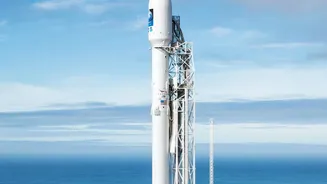
Since 2015, the sight of a Falcon 9 booster returning from space to land itself has become an almost routine part of modern spaceflight. After separating from the second stage, the booster reorients itself, fires its engines to slow down, and deploys
four landing legs before touching down on a ground pad or an autonomous droneship at sea. This process of propulsive landing was a revolutionary step, turning a single-use rocket component into a reusable asset. It dramatically lowered the cost of accessing space and has been performed hundreds of times. This method, while groundbreaking, requires the booster to carry the extra weight of its landing legs and involves a lengthy process of recovering the rocket from its landing zone, transporting it, and preparing it for its next flight.
Meet 'Mechazilla' and the 'Chopsticks'
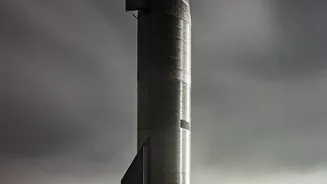
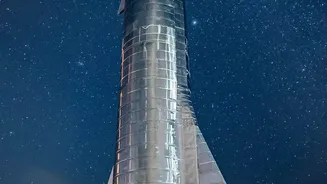
For Starship, SpaceX is rewriting the rulebook. Instead of landing legs, the recovery system is integrated into the launch infrastructure itself. The launch tower, nicknamed 'Mechazilla', stands nearly 480 feet tall and is equipped with two massive, hydraulically actuated arms. These arms, known colloquially as the 'chopsticks', are designed to reach out and literally catch the returning Super Heavy booster just before it reaches the ground. This isn't just about landing; it's a completely different philosophy of rocket recovery that moves the complex hardware from the rocket to the ground.
How the Tower Catch Works
The sequence is a high-stakes mechanical ballet. After separating from the Starship upper stage, the Super Heavy booster performs a flip and a 'boostback burn' to reverse its course and fly back toward the launch site. It uses its four large grid fins for aerodynamic steering as it descends. As it approaches the tower, the booster executes a final landing burn, using its Raptor engines to slow its descent to a near-hover beside the tower. The 'chopstick' arms, pre-positioned to intercept, then close around structural hardpoints near the top of the booster, absorbing the final momentum and securing the vehicle. The precision required is staggering, needing the 71-meter-tall booster to arrive within a capture window of just a couple of meters.
Why Ditch the Landing Legs?
The primary reason for this complex strategy is efficiency, driven by a philosophy of removing anything that isn't absolutely essential for flight. Landing legs are dead weight for most of the mission, used only in the final moments. Removing them from the Super Heavy booster saves a significant amount of mass, which can be reallocated to fuel or payload, improving the rocket's overall performance. A booster without legs is a lighter, more efficient booster. Furthermore, catching the rocket at the tower means it is already in position to be inspected and placed back on the launch mount, ready for another flight.
The Goal: Rapid, Airline-Like Reusability
The tower-catch strategy is the key enabler for SpaceX's ultimate goal: not just reusability, but rapid reusability. While Falcon 9's turnaround time is measured in weeks, the ambition for Starship is to relaunch boosters within hours. This airline-like cadence is essential for the company's long-term plans, including building a city on Mars. Such a feat would require launching a massive fleet of Starships in quick succession during planetary launch windows, which only open every 26 months. Catching the booster, stacking a new ship, and refueling on the same structure is the only way to achieve that tempo.
Immense Risk for an Immense Reward
The audacity of the plan is matched only by its risk. A failure during the catch maneuver could be catastrophic, potentially destroying not just the multi-million dollar booster but also the entire launch tower and ground infrastructure. The system relies on near-perfect execution every single time. Despite the risks, SpaceX has already successfully demonstrated the catch in test flights, proving the concept is viable. The reward for perfecting this maneuver is a system that could fundamentally change the economics of space travel and enable missions that are currently the stuff of science fiction.