





1. Simple Calf Raises
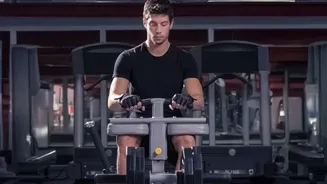
As the headline suggests, the calf raise is a perfect entry point into desk-based movement. It's discreet, easy, and effective at getting blood flowing in your lower legs. You can do this either sitting or standing. While seated, simply lift both heels
off the floor, pressing through the balls of your feet. Hold for five to ten seconds and then lower them back down. If you're standing, use your desk for balance, rise onto your tiptoes, hold, and slowly lower yourself. Aim for 10-15 repetitions every hour or so to help improve circulation and reduce the risk of stiffness.
2. Seated Spinal Twist
Sitting in one position for hours can make your spine feel rigid. A gentle twist can help restore mobility and ease lower back tension. Sit tall in your chair with your feet flat on the floor. Gently twist your torso to the right, using your left hand on your right knee for a light assist. Hold onto the back of your chair with your right hand for support. Hold the stretch for 15-20 seconds, breathing evenly, and then slowly return to the center and repeat on the other side. This movement helps keep your core flexible.
3. Neck Tilts and Chin Tucks
Staring at a screen often leads to 'text neck', where your head drifts forward, straining your neck and upper back. To counteract this, practice chin tucks. Sit straight, look forward, and gently pull your chin back as if you're trying to make a double chin. Hold for five seconds and release. You should feel a stretch at the back of your neck. Also, try gently tilting your ear toward your shoulder, holding for 15-30 seconds on each side to stretch the tense muscles along your neck.
4. Shoulder Shrugs and Rolls
We hold a surprising amount of tension in our shoulders, especially during stressful workdays. Shoulder shrugs are a simple way to release it. Sit or stand tall, inhale, and lift your shoulders up toward your ears. Squeeze them for a second or two, then exhale and let them drop completely. Follow this with shoulder rolls: circle your shoulders forward five times, then backward five times to loosen the joints and surrounding muscles. This can provide immediate relief for upper back and shoulder stiffness.
5. Wrist and Finger Stretches
Hours of typing and clicking can be tough on your hands and wrists, potentially leading to repetitive strain. To keep them flexible, extend one arm in front of you with your palm facing down. Gently bend your wrist so your fingers point toward the floor. Use your other hand to apply light pressure, holding the stretch for 15-30 seconds. Then, reverse it by extending your arm with the palm facing up and gently pulling your fingers back toward your body. Don't forget to spread your fingers wide and then make a fist several times to keep them nimble.
6. Seated Hip Stretch
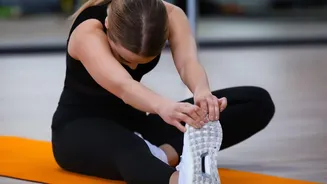
Prolonged sitting can cause your hip flexors to become tight, which can contribute to lower back pain. The figure-four stretch is excellent for opening the hips. While seated, cross your right ankle over your left knee. Keep your back straight and gently lean forward from your hips until you feel a stretch in your right glute and hip. Hold this position for 20-30 seconds, making sure not to push into pain. Then, switch legs. This simple move helps counteract the negative effects of being seated for hours.
7. Overhead Reach
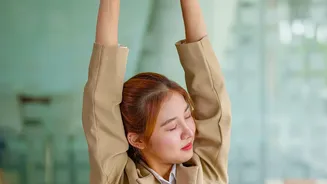
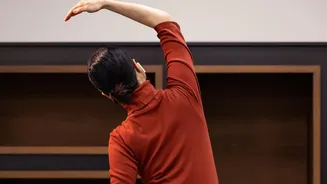
A full-body reach can feel incredibly refreshing, lengthening your spine and stretching your sides. While seated or standing, interlace your fingers and raise your arms above your head with your palms facing the ceiling. Push your arms up and back, feeling a stretch through your shoulders and upper back. From here, gently lean to your right, hold for a few breaths to stretch your left side, and then repeat on the other side. This motion helps decompress the spine and improve posture.