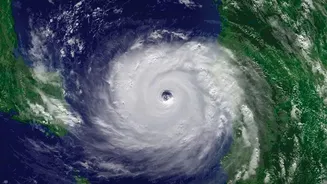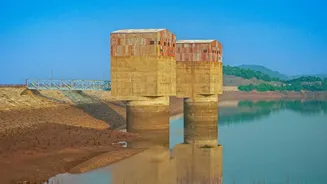









With Cyclone Arnab forecasted to bring exceptional rainfall, a critical and largely unseen battle is underway. Dam operators are rewriting their rulebooks to prevent catastrophic flooding, balancing public safety against future water security.
The Traditional Reservoir Playbook
For decades,
reservoir management in India has followed a predictable script known as the 'rule curve' or 'guide curve'. This is a calendar-based schedule that dictates the target water level for a reservoir throughout the year. The logic is simple and rooted in historical data: lower the water levels before the monsoon to create space for floodwaters, and allow them to fill during the rainy season to store water for drinking, irrigation, and power generation in the dry months that follow. This approach prioritises water conservation, ensuring that every precious drop from the monsoon is saved for the lean season. The entire system is built on past averages and predictable seasonal patterns, a method that has served communities for generations by providing a reliable water supply.
Why Cyclone Arnab Changes the Game
Cyclone Arnab isn't a typical monsoon event. Modern forecasting from the India Meteorological Department (IMD) points to rainfall that is not just heavy, but extreme in its intensity and volume. Studies of past events, like the 2018 Kerala floods, have shown that when reservoirs are already near full capacity, an unprecedented downpour can force operators to release massive quantities of water in a short time, potentially worsening downstream flooding. The standard rule curve, based on historical averages, simply does not account for such climate change-driven, high-impact weather events. Sticking to the old playbook under these conditions would mean risking the structural integrity of dams and, more importantly, the lives and properties of communities downstream.
A New Protocol: Pre-emptive Releases
In response to the threat posed by Cyclone Arnab, regional authorities are shifting from a static, conservation-first model to a dynamic, safety-first strategy. The new protocol involves 'pre-emptive releases' of water from major dams. Instead of waiting for reservoirs to reach their flood-control levels, operators are discharging water days in advance of the cyclone's landfall, based on advanced weather warnings. This intentional drawdown creates a much larger buffer in the reservoir—what engineers call 'flood control storage'—specifically to absorb the massive inflows expected from the cyclone. It's a fundamental change in philosophy: actively sacrificing some stored water now to prevent a much larger, uncontrolled release later.
The Highstaked Balancing Act
This new strategy is not without its risks. The decision to release water is a highstaked gamble based on forecasts. If the forecasted rain doesn't materialise, precious water needed for the postmonsoon period will have been lost, potentially impacting agriculture and drinking water supplies months later. This is a particularly sensitive issue in regions where recent monsoons have been uneven. However, authorities, guided by the National Disaster Management Authority (NDMA) guidelines, have determined that the risk of catastrophic flooding outweighs the risk of a potential water deficit. This decisionmaking process is a complex coordination between weather forecasters, dam operators, and state disaster management agencies, all aiming to minimise loss of life and property.
What This Means for Local Communities
For residents in downstream areas, these pre‐emptive releases mean that rivers may rise slightly ahead of the storm. However, these are controlled and monitored discharges, designed to be well within the river's carrying capacity. Authorities are issuing advance warnings to ensure people in low‐lying areas are prepared. The goal is to trade a small, manageable increase in water levels now for the prevention of a sudden, disastrous deluge during the peak of the cyclone. This proactive approach, mandated under frameworks like the Dam Safety Act, 2021, represents a crucial evolution in India’s disaster preparedness, turning reservoirs from passive storage tanks into active tools for flood mitigation.