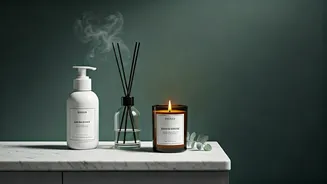









What Exactly Is Scent Layering?
Think of scent layering like creating a musical chord. It’s not about blasting one loud note, but about combining different, complementary fragrances to create a harmonious and complex whole. In your home, this means moving beyond a single scented candle
or plug-in. Instead, you strategically use multiple scent sources—like diffusers, candles, and sprays—to build a multi-dimensional fragrance profile that evolves as you move through the space. The goal is to create an olfactory 'story' for your room, one that adds depth and sophistication, making it feel curated and calming, much like a high-end spa.
Start with a Cohesive Scent Family
The first rule of successful layering is to avoid clashes. You wouldn’t pair heavy metal with a lullaby, and the same principle applies to scents. To ensure a harmonious blend, choose fragrances from the same or complementary scent families. The main families include Floral (rose, jasmine), Woody (sandalwood, cedar), Citrus (lemon, bergamot), and Gourmand (vanilla, coffee). For a classic spa-like feel, you might stick within the Woody family by combining sandalwood and pine, or you could pair a Woody base with a Citrus top note for a fresh, uplifting contrast. Deciding on your palette beforehand is the key to creating a cohesive experience rather than a chaotic one.
Anchor Your Space with a Base Scent
Every layered scent profile needs a foundation. This is your 'base note'—a constant, subtle fragrance that anchors the room. A reed diffuser or an essential oil diffuser set to a low, intermittent setting is perfect for this role. It provides a gentle, continuous background aroma without being overpowering. Choose a scent that is grounding and not too distracting. Scents like sandalwood, amber, or a light white tea work beautifully as a base. This foundational layer ensures your room always has a welcoming base fragrance, even when other scent products aren't in use.
Add Dimension with Middle and Top Notes
Once your base is established, it's time to add character. Your 'middle note' can be a richer, more noticeable fragrance, often delivered through a high-quality scented candle. This is the scent you light when you want to actively create an atmosphere—perhaps a warm floral or a spicy chai. Finally, your 'top note' is a fleeting, bright accent. A room spray is the ideal tool here. A spritz of something zesty like grapefruit or clean like eucalyptus can instantly refresh the air or prepare a room for guests. Using these three layers—a constant base, a situational middle, and an instant top—gives your home’s fragrance complexity and depth.
Techniques for Small Spaces
Layering scent in a small room requires a light touch. The key is 'less is more' to avoid overwhelming the space. Opt for lighter, fresher scents over heavy, musky ones. For example, choose cotton or linen over heavy vanilla. Instead of a large, three-wick candle, a smaller, single-wick version will provide enough fragrance. Place your reed diffuser in a spot with good air circulation but not directly under your nose, like a corner shelf. Use your room spray sparingly—one or two spritzes are enough. In a studio apartment, you can even use scent to 'zone' areas: a calming lavender near your bed and an energising citrus near your desk.