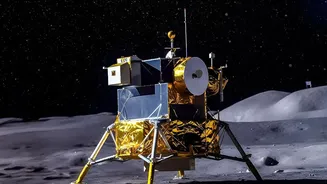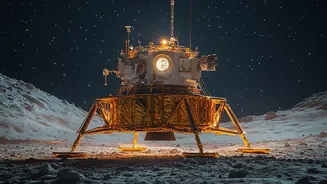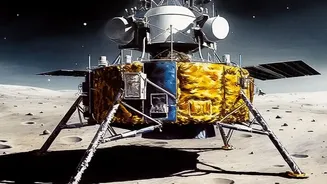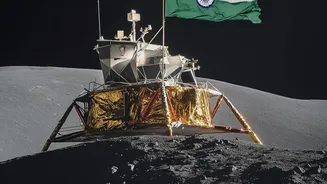


Fresh off the historic success of Chandrayaan-3’s soft landing, the Indian Space Research Organisation (ISRO) is already charting a course for its next giant leap: Chandrayaan-4. This mission isn't just another trip to the Moon; it's a round trip.
More Than a Landing: The Sample Return Challenge
Chandrayaan-4’s
primary objective is to achieve what only three other nations have ever managed: to land on the Moon, collect soil and rock samples, and bring them back to Earth. While Chandrayaan-3 was a masterclass in landing and roving, this new mission adds layers of unprecedented complexity. It’s the difference between visiting a historic site and bringing a piece of it home for study. The mission aims to collect up to three kilograms of lunar regolith, including subsurface material obtained via a drill, and return it in a pristine, uncontaminated state for scientists to analyze in terrestrial labs. This will be a foundational step towards India's ambitious long-term goal of a crewed lunar landing by 2040.
An Ambitious Five-Module Architecture
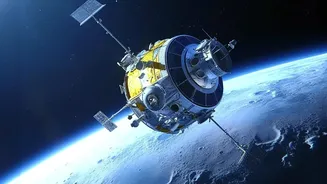
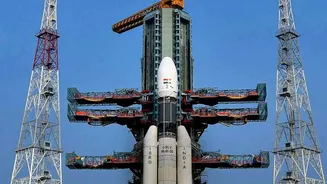
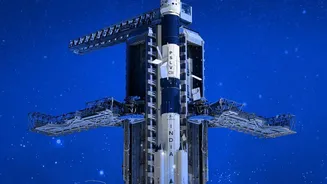
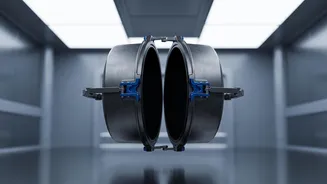
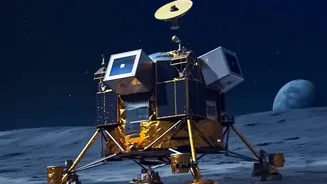
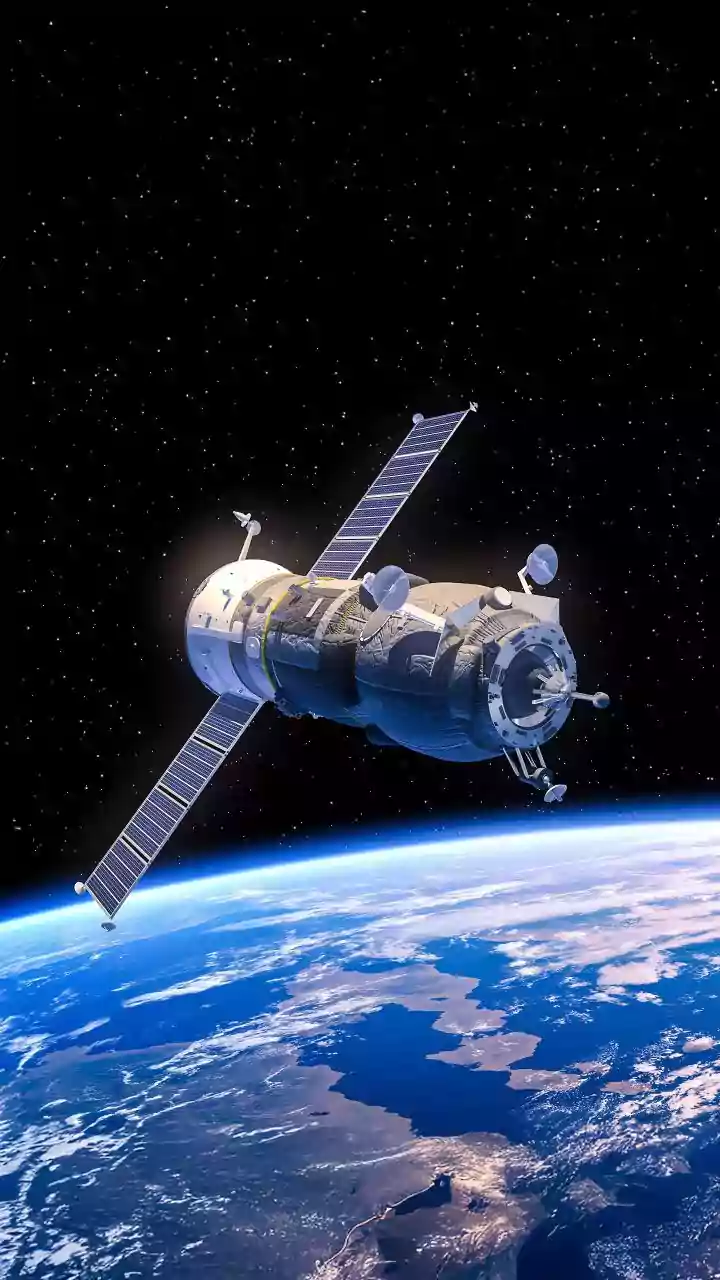
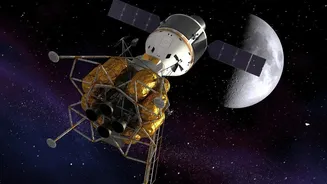
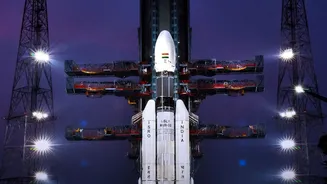
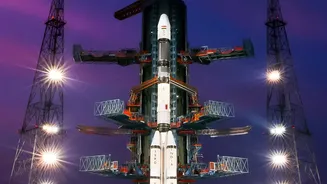
To pull this off, ISRO has designed a mission far more complex than its predecessor. Instead of three modules, Chandrayaan-4 will consist of five: a Propulsion Module, a Descender Module (the lander), an Ascender Module, a Transfer Module, and a Re-entry Module. The combined weight of this entire assembly is too heavy for even India's most powerful rocket, the LVM3, to lift in a single go. Consequently, the mission will require two separate LVM3 launches. The different components will be launched into Earth's orbit and then perform a delicate, automated docking maneuver to assemble the final, integrated spacecraft before the long journey to the Moon begins.
A Multi-Stage Symphony in Space
The mission profile reads like a carefully choreographed space ballet. After landing on the lunar surface, a robotic arm and drill on the Descender Module will collect the precious samples and transfer them into the Ascender Module. Then comes the first of many critical moments: the Ascender will act as its own small rocket, launching itself off the Moon’s surface using the Descender as a launchpad. It will then rendezvous and dock with the Transfer and Re-entry modules waiting in lunar orbit—a feat ISRO has never before attempted. Once the samples are securely transferred to the Re-entry Module, the spacecraft will fire its engines for the trip home. As it nears Earth, the Re-entry Module will separate and perform a high-speed atmospheric re-entry, relying on a robust heat shield to protect its cargo before landing.
Mastering New Frontiers of Technology
Chandrayaan-4 is not just a scientific mission; it's a massive technology demonstrator. Success hinges on mastering a host of new capabilities, all developed indigenously. These include the lunar ascent, the fully autonomous rendezvous and docking in deep space, the robotic systems for sample collection and transfer, and the technology to survive a fiery re-entry into Earth's atmosphere. To prepare for the docking maneuver, one of the mission's riskiest phases, ISRO has planned a dedicated preparatory mission called the Space Docking Experiment (SPADEX). Each of these technologies is a crucial building block for more advanced interplanetary and human spaceflight missions in the future.
The Scientific Treasure Awaiting on Earth
The scientific payoff for this immense effort is potentially huge. Analyzing lunar samples in state-of-the-art laboratories on Earth allows for a depth of study impossible for rovers to perform on-site. Scientists will be able to probe the precise chemical and mineralogical composition of the lunar soil from the South Polar region, an area largely unexplored but believed to hold water ice. These samples could unlock secrets about the Moon’s formation, its geological history, and the resources it might hold. ISRO is planning a dedicated, ultra-clean curation facility to store and handle the returned samples, ensuring they remain uncontaminated for decades of study by scientists in India and around the world.