


India’s Ambitious Return to Interplanetary Science
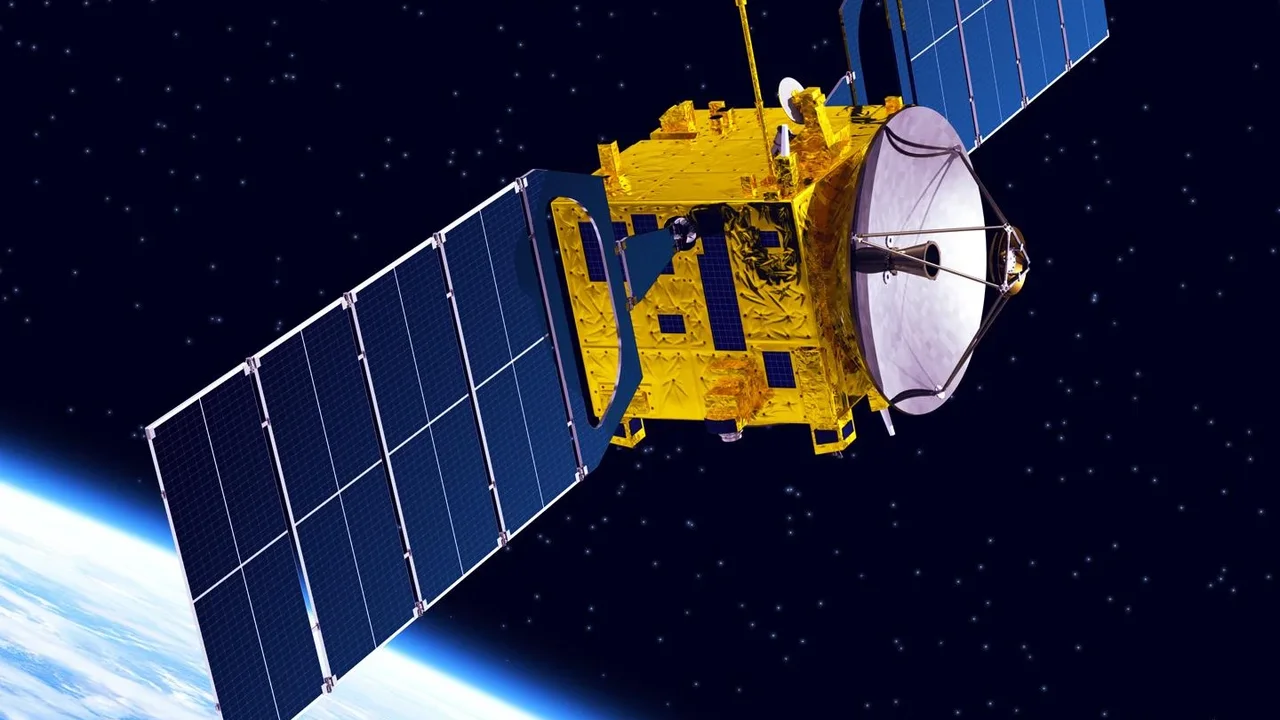
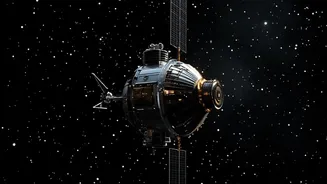
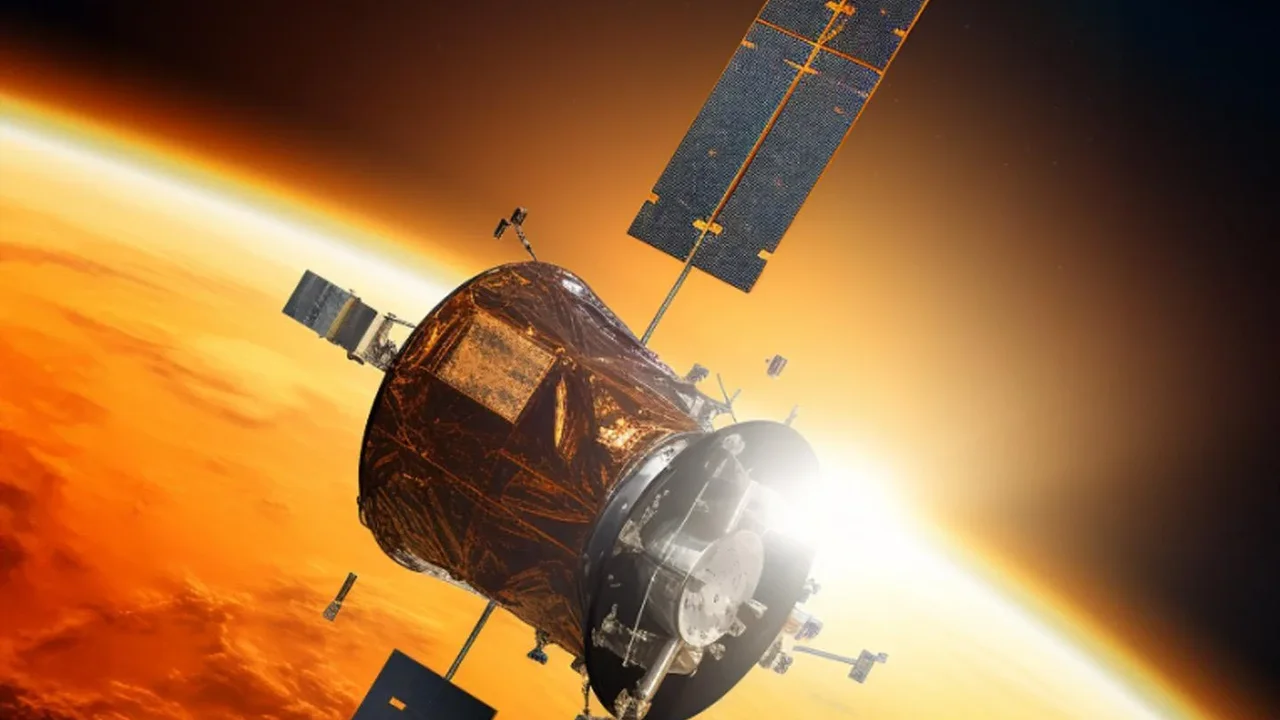
Following the monumental success of its Mars Orbiter Mission (Mangalyaan), the Indian Space Research Organisation (ISRO) is setting its sights on our other planetary neighbour. Shukrayaan-1, India’s first-ever mission to Venus, is a bold new chapter in the nation's
space exploration story. The mission, which received formal government approval in September 2024, is currently slated for a March 2028 launch. This orbiter will carry a sophisticated suite of scientific instruments designed to peer beneath the planet's thick, acidic clouds and analyse its hostile environment in unprecedented detail. The goal is to understand the powerful forces that shaped Venus and turned it into the inhospitable world it is today.
Venus: Earth’s Runaway Greenhouse Twin
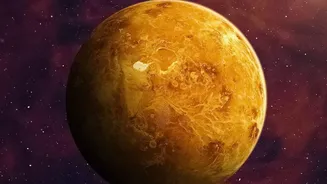
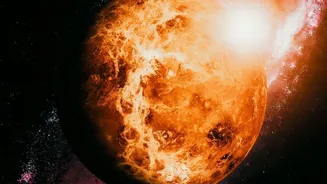
To understand why scientists are so fascinated by Venus, you only need to look at its similarities—and stark differences—to our own planet. It is nearly the same size as Earth and is believed to have once harboured liquid water oceans. Yet, today, its surface is hot enough to melt lead, and its atmosphere is over 90 times denser than Earth's, composed mainly of carbon dioxide with clouds of sulfuric acid. This is the result of a runaway greenhouse effect, a scenario that serves as a crucial case study for climate scientists on Earth. By studying how Venus evolved so differently, researchers hope to gain invaluable insights into planetary habitability and the long-term stability of Earth’s own climate.
The All-Important Sulfur Dioxide Clue
Among the many gases in Venus's thick atmospheric soup, sulfur dioxide (SO2) holds a special significance for scientists. On Earth, SO2 is primarily produced by volcanic activity. The gas doesn't last long in Venus’s upper atmosphere, as it is quickly broken down by intense sunlight. Therefore, if a spacecraft detects a high concentration of sulfur dioxide in the upper cloud layers, it must have been recently supplied from below. Previous missions, like NASA's Pioneer Venus and ESA’s Venus Express, have observed large fluctuations in SO2 levels over time. These dramatic changes are considered a tantalising hint—but not yet definitive proof—of active volcanoes on the planet's surface.
Listening for a Volcanic Pulse
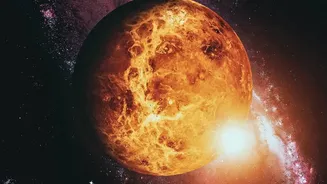
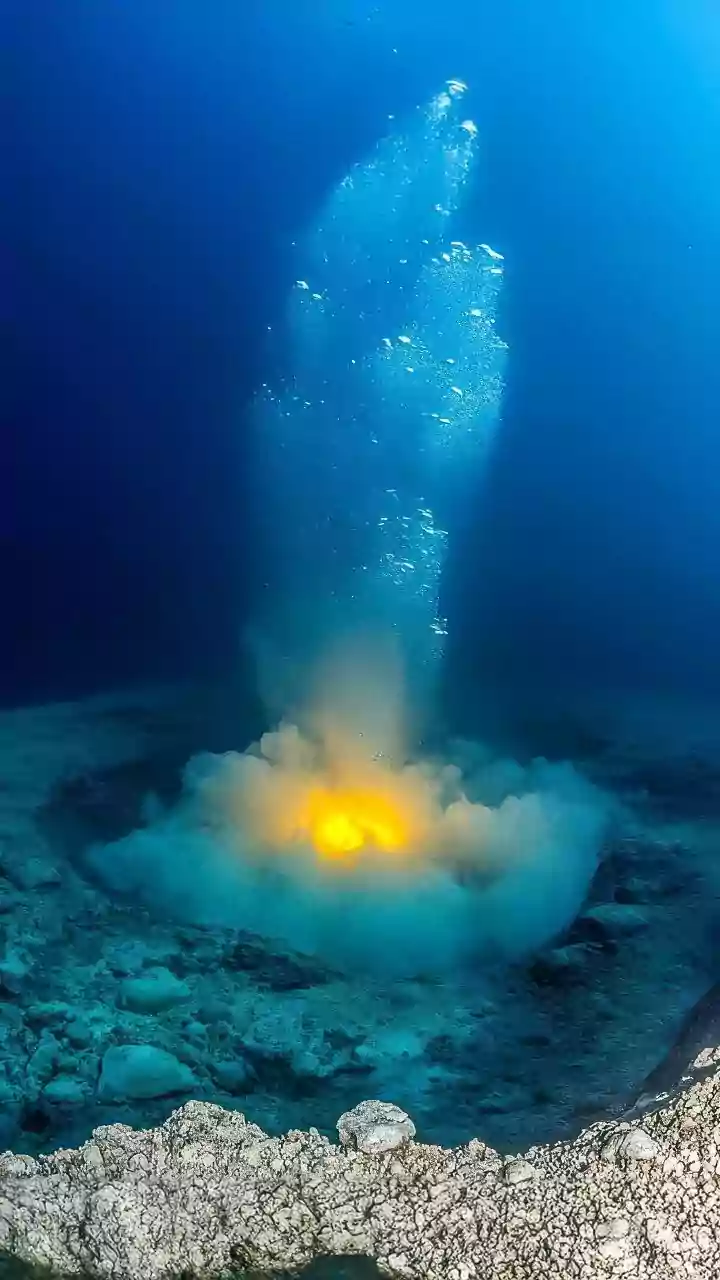
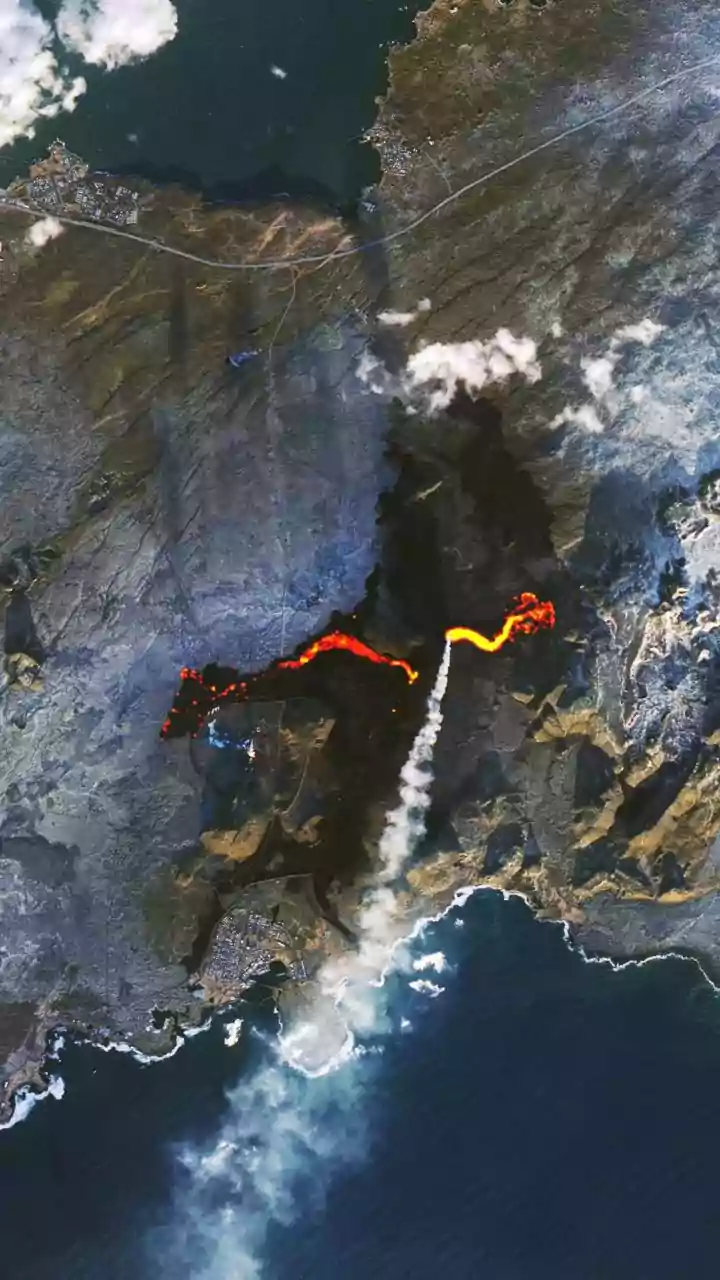
This is where the term "cosmic geology" comes into play. Confirming active volcanism on Venus would be a monumental discovery, proving that the planet is geologically alive today. An eruption could act like a powerful piston, blasting sulfur dioxide gas from the lower atmosphere high up into the clouds where an orbiter like Shukrayaan-1 can detect it. By systematically scanning for SO2, ISRO's mission can monitor the atmosphere for these tell-tale spikes. Finding them would be like detecting a volcanic heartbeat, a direct signal from the planet’s interior. This would provide a direct window into the ongoing geological processes that shape the Venusian surface, which is known to be covered in over a thousand volcanic structures.
Advanced Tools for a Hostile World
Shukrayaan-1 will be equipped with multiple instruments to achieve its scientific goals, including studying atmospheric chemistry and mapping the planet's surface. To study the surface, which is permanently hidden by thick clouds, the orbiter will use a high-resolution Synthetic Aperture Radar (SAR). This instrument can effectively see through the clouds to map the volcanic plains and lava flows below. For the atmosphere, specialised spectrometers will analyse its composition, hunting for sulfur dioxide and other key gases. By combining atmospheric data with surface mapping, scientists can connect the dots between a potential SO2 plume and a specific volcano on the ground, finally solving a long-standing planetary debate.