
An Enduring Solar Puzzle
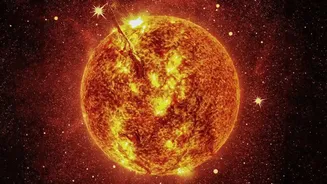
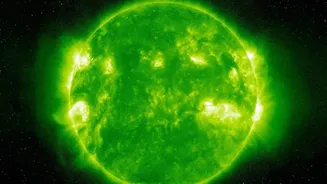
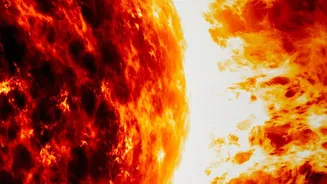
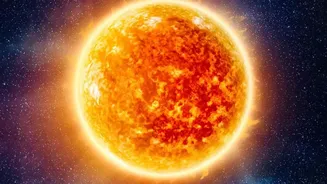
It’s a riddle that seems to defy the basic laws of physics: the surface of the Sun, known as the photosphere, sizzles at a temperature of about 5,500 degrees Celsius. Yet, its ethereal outer atmosphere, the corona, which extends millions of kilometres
into space, blazes at a staggering 1 to 2 million degrees Celsius. Intuitively, moving away from a heat source should mean things get cooler, not hundreds of times hotter. This mystery, known as the coronal heating problem, has puzzled astrophysicists since the 1930s. Scientists have long theorised that some form of energy must be continuously transferred from the Sun’s turbulent surface up into the corona, but the exact mechanism has remained elusive. Without a process to superheat the corona, it couldn't overcome the Sun's gravity, and there would be no solar wind—the stream of charged particles that flows through our solar system.
Riding the Magnetic 'Freeways'
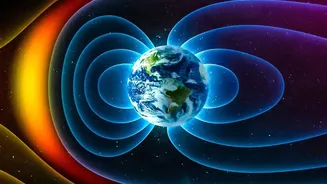
The leading theory involves plasma waves, specifically a type predicted in 1942 by Nobel laureate Hannes Alfvén. These Alfvén waves are ripples that travel along the Sun's magnetic field lines, much like a vibration travelling down a guitar string. These magnetic fields act as freeways, carrying energy from the churning surface upwards into the tenuous corona. For decades, it was believed that these waves could be transporting enough energy to account for the corona's extreme temperatures. The idea is that as these waves travel upwards, they become unstable and dissipate, releasing their energy as heat into the surrounding plasma. While larger, sporadic waves linked to solar flares have been seen before, finding a constant, widespread mechanism has been the real challenge.
A Breakthrough Observation
The latest headline-making discovery comes from new, high-resolution observations that have spotted a specific type of wave activity on the Sun's surface. Recent findings, including some from the world's most powerful solar telescope, the Daniel K. Inouye Solar Telescope in Hawaii, have provided unprecedented detail. One recent study identified swirling plasma vortices on the Sun's surface, believed to be the signature of something called Kelvin-Helmholtz instability. This happens when fluids or plasmas moving at different speeds slide past each other, creating a shear that grows into spiral-like waves. These tiny, constant whirlpools could be the 'motors' that continuously twist the Sun's magnetic fields, generating the very waves that then travel up to heat the corona. These are not the massive, singular events of a solar flare, but a constant, widespread process that could supply the steady energy the corona needs.
From Theory to Smoking Gun
Observing these phenomena directly has been the primary obstacle for scientists. The structures are incredibly small on a solar scale, and the coronal plasma is extremely thin. However, advanced instruments on spacecraft like the Solar Orbiter and ground-based telescopes like Inouye are finally providing the necessary resolution. They can measure tiny shifts in the plasma, detecting the signature of these waves as they travel and twist. In some cases, scientists were able to detect high-frequency waves carrying enough energy to contribute significantly to coronal heating and the solar wind. These observations are moving the concept of wave heating from a long-standing theory to something that is directly observable, providing the 'smoking gun' evidence that researchers have sought for decades.
Why It Matters for Us
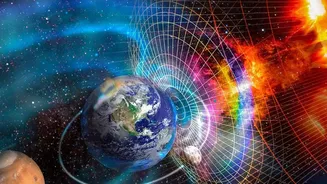
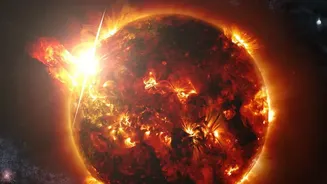
Solving the coronal heating problem is more than just an academic exercise. The same explosive energy release mechanisms that heat the corona are also responsible for space weather—events like solar flares and coronal mass ejections. These events can send massive bursts of energy and particles toward Earth, posing a risk to our satellites, communication networks, GPS systems, and even power grids. By understanding the fundamental physics of how the Sun transfers energy, we can build better models to predict these powerful eruptions. This new understanding of plasma waves provides a crucial piece of the puzzle, bringing us one step closer to forecasting space weather with the same accuracy we forecast weather on Earth.