



The oats dosa has become a breakfast hero for its quick, healthy, and delicious profile. But perfecting its texture often comes down to a key question: what else should go in the batter? Let's decode the roles of rice flour and semolina.
The Rise of the Instant Dosa
Traditional dosas,
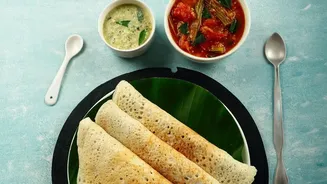
made from a fermented batter of rice and lentils, are a culinary masterpiece but require planning. The instant oats dosa, however, is a game-changer for busy mornings. By using powdered oats as a base, you can whip up a batter in minutes. This version skips the entire process of soaking, grinding, and fermenting. Oats bring a wealth of nutritional benefits, including heart-healthy soluble fibre, protein, and antioxidants, making this a wholesome meal to start your day. But oats alone can result in a soft, pancake-like texture. To achieve that signature dosa crispness, other flours are needed to provide structure and crunch.
The Role of Rice Flour: For Classic Crispness
Rice flour is the most common addition to an oats dosa batter, and for good reason. Its primary job is to make the dosa crisp. Think of it as the ingredient that connects the oats dosa to its traditional roots. Rice flour creates a light, brittle crispness, especially around the edges, and helps the dosa release cleanly from the hot pan, or tawa. Because it has a neutral flavour, it allows the nutty taste of the oats to shine through. Most recipes call for a combination of powdered oats and rice flour to balance the health benefits of the former with the textural properties of the latter. If you want a dosa that feels familiar but is healthier, rice flour is a reliable choice.
The Role of Semolina: For a Lacy Crunch
Semolina, known as rava or sooji in India, is another popular ingredient in instant dosa batters. Its function is similar to rice flour—it adds crispness—but the texture it creates is noticeably different. Semolina is coarser than rice flour, and these larger granules create a porous, net-like or 'lacy' texture, much like a classic rava dosa. It also absorbs a lot of water, which is why batters containing semolina need to be thin and watery and often require a resting period of 15-20 minutes for the grains to soften. This resting time is crucial; otherwise, you might feel a raw, gritty texture in the finished dosa. Semolina imparts a slightly wheaty flavour and a satisfying, grainy crunch.
Texture Showdown: Which Flour Is for You?
The choice between rice flour and semolina really comes down to the kind of texture you prefer. If your goal is a classic, uniformly thin and crispy dosa with smooth surfaces, rice flour is your best bet. It delivers a reliable, delicate crispness that many associate with traditional dosas. If you love the super-crispy, net-like texture of a restaurant-style rava dosa, then semolina is the way to go. It gives the dosa a more rustic and noticeably crunchy bite. Some home cooks find that semolina provides a more forgiving batter that is easier to work with, especially when aiming for that lacy effect. On the other hand, a batter with only rice flour can be made and used almost immediately, without the need for resting.
The Best of Both Worlds: Using a Combination
Why choose when you can have both? Many of the most successful instant oats dosa recipes use a combination of rice flour and semolina. This hybrid approach allows you to harness the strengths of each ingredient. The rice flour provides a foundational crispness and binding, while the semolina contributes that desirable lacy texture and extra crunch. A common ratio involves powdered oats as the primary ingredient, followed by smaller, often equal, parts of rice flour and semolina. This blend creates a dosa that is structurally sound, wonderfully crisp, and texturally interesting—a true crowd-pleaser.