








Understanding Buffer Zones
Before diving into the monsoon's effects, it's essential to understand what a buffer zone is. In wildlife conservation, a national park or sanctuary has a core area where protection is strictest and human activity is minimal. Surrounding this core is the buffer zone.
This area acts as a transitional space between the pristine forest and human settlements. It's a zone of co-existence, where limited human activities like regulated tourism or community-led conservation efforts might be permitted, serving as a protective layer for the core habitat. The Supreme Court of India has even mandated eco-sensitive zones around protected areas, reinforcing their legal and ecological importance.
The Great Monsoon Dispersal
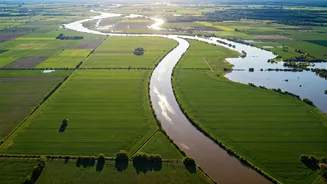
The monsoon transforms India's wild landscapes. While the rains rejuvenate forests and grasslands, they also cause significant disruption. In parks like Kaziranga in Assam, the Brahmaputra river swells, flooding vast low-lying plains. This inundation forces animals to seek higher, safer ground. Species like the one-horned rhinoceros, elephants, and deer are compelled to move out of their usual territories. This movement isn't just limited to flood-prone areas. In other regions, the monsoon prompts the growth of fresh, nutritious grass on the peripheries of forests, attracting herbivores out from the dense core. This natural migration is a survival strategy, but it pushes wildlife towards the edges of their protected homes.
When Worlds Collide
This outward movement of wildlife inevitably leads to an increase in human-animal encounters. As animals leave the core areas, they enter the buffer zones and, at times, venture beyond into agricultural fields and villages. This is where the potential for conflict escalates. Elephants may raid crops that are flourishing in the monsoon rains, leading to significant economic losses for farmers. Predators like leopards, following their prey, might also move closer to human settlements, increasing the risk of livestock predation. Tragic encounters can occur on highways and railway lines that often cut through these wildlife corridors, with animals attempting to cross from a flooded park to safer highlands.
The Buffer Zone as a Shock Absorber
This is precisely where well-managed buffer zones prove their immense worth. They act as a crucial 'shock absorber', mitigating the pressure from both sides. For wildlife, these zones provide a temporary refuge with food and water, reducing the need for them to venture further into dangerous, human-dominated landscapes. For humans, the buffer zone provides a vital safety margin. It creates distance between agricultural land and the core wildlife habitat, reducing the instances of crop raiding and other negative interactions. Effective buffer zones, often managed with the participation of local communities, can create a scenario where wildlife finds sanctuary and local populations see a benefit in conservation rather than a threat to their livelihood.
A Shared Responsibility
The monsoon highlights that conservation cannot be confined to the core areas of parks alone. The health and integrity of buffer zones are paramount. These areas are not just empty spaces but dynamic ecosystems that support both biodiversity and human well-being. Their management requires a forward-thinking approach that includes scientific monitoring, community involvement, and the protection of wildlife corridors that connect different habitats. As climate change makes weather patterns more erratic, the seasonal pressures on these zones are likely to intensify, making their role in our national conservation strategy more important than ever.