




Why Food Literacy Matters More Than Ever
Food literacy is more than just knowing what's healthy; it's the practical ability to make informed choices every day. It involves everything from reading a complicated nutrition label to planning a simple, balanced meal. With the rise of processed foods
and busy schedules, understanding what goes into your body is crucial for managing energy levels, maintaining a healthy weight, and preventing lifestyle diseases like diabetes and hypertension, which are increasingly affecting younger people. Developing these skills empowers you to take control of your own health and wellbeing.
Cracking the Code: A Guide to Food Labels
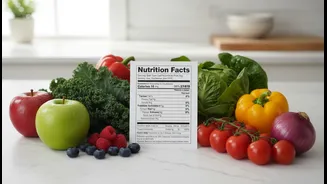
Food packages can be misleading, with flashy claims on the front that don't always match the information on the back. The Food Safety and Standards Authority of India (FSSAI) mandates that all packaged foods display key information. To make a smart choice, flip the pack and look for three things. First, check the ingredients list, which is always in descending order by weight. If sugar, maida, or 'hydrogenated vegetable fat' are in the top three, the product is likely not as healthy as it claims. Second, look at the 'per serving' size. Companies often define a serving as a very small amount, like two biscuits, making the calorie and sugar counts seem low. Always check how many servings are in the entire package to understand what you might actually consume. Finally, look for total sugar, sodium, and saturated fat content to get a true picture of the product's nutritional value.
Mastering Portions: The Indian Hand Guide
In a culture where food is love, 'how much' we eat is as important as 'what' we eat. Portion control doesn't mean you need to carry a weighing scale; you can use your hand as a simple guide. For a single meal, a healthy portion of cooked rice or grains is about the size of your clenched fist. A serving of protein, like dal, paneer, or chicken, should be roughly the size of your palm. One medium chapati is about the size of your whole palm. When it comes to vegetables, aim for at least half your plate, or about two cupped handfuls. Using smaller plates and bowls can also psychologically help you serve less while still feeling satisfied. These visual cues make it easier to manage intake without feeling deprived.
Building a Balanced Thali
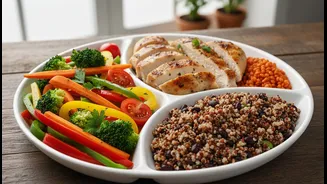
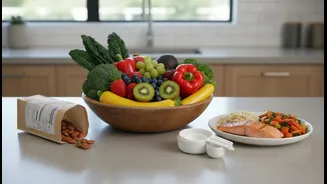
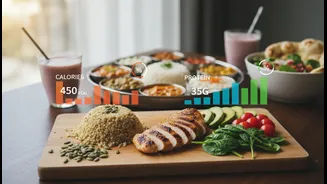
The traditional Indian thali is a brilliant, in-built tool for balanced eating. A well-rounded meal should have a mix of macronutrients: carbohydrates for energy, protein for muscle repair, fats for hormone function, and fibre for digestion. Aim to fill half your plate with non-starchy vegetables (like leafy greens, broccoli, bell peppers). One quarter of your plate should be a source of lean protein (dal, legumes, paneer, eggs, or chicken). The final quarter can be your carbohydrate source (rice, roti, or millets). Including a small portion of curd supports gut health, while a side of salad adds extra fibre and nutrients. This plate method ensures you get a variety of nutrients in one meal, helping you stay full and energized.
Smart Meal Planning for a Busy Life
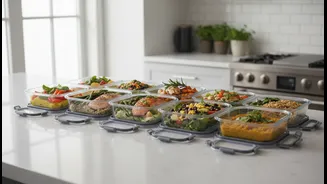
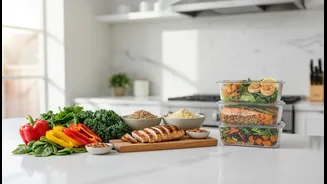
Meal planning saves time, reduces stress, and helps you avoid unhealthy last-minute choices. You don't need to cook every meal from scratch daily. Start small by planning your meals for just two or three days. Chop vegetables and store them in airtight containers for quick cooking. You can also prepare larger batches of staples like dal or boiled legumes to use over a couple of days. A simple plan could be poha for breakfast, roti and sabzi for lunch, and a khichdi with vegetables for dinner. Keeping healthy snacks like fruits, nuts, or roasted chickpeas on hand can prevent you from reaching for packaged junk food between meals. Planning ahead is one of the most effective strategies for consistently eating well.