




AI's Insatiable Appetite on Earth
The artificial intelligence revolution is running into a physical wall. The massive data centers that power AI models like ChatGPT and Grok are incredibly hungry for electricity and land. According to the International Energy Agency, electricity consumption
by data centers is projected to double by 2030, with AI workloads being the primary driver. Gartner forecasts that AI-optimized servers alone could consume 175 terawatt-hours in 2026. This surge is straining local power grids, consuming vast amounts of water for cooling, and sparking community opposition, or what Musk has called a high 'pitchfork level' for new data center construction. The industry is facing a bottleneck where future growth isn't just limited by the availability of advanced chips, but by access to sheer power and physical space.
The Orbital Solution
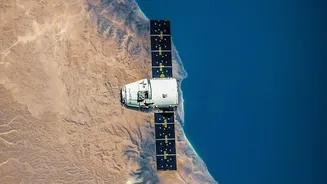
So, why space? Musk's proposal, centered around a project codenamed 'Starmind', is to build data centers that orbit the Earth. The core advantages are twofold: power and cooling. In space, solar panels can harvest the sun's energy continuously, without interference from weather or the day-night cycle, generating roughly 30% more power than on the ground. Musk also argues that cooling is 'much easier' in space. Instead of relying on water-intensive systems, satellites can use large aluminum radiators to shed heat into the cold vacuum of space. Data would be processed in orbit and beamed back to Earth via a high-bandwidth laser network, likely leveraging the existing Starlink constellation. During a recent conference, Musk suggested initial launches for the Starmind project, co-designed with NVIDIA, could begin as early as the third quarter of 2027.
A Universe of Challenges
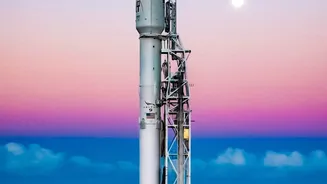
While the vision is compelling, the engineering and financial hurdles are astronomical. The primary obstacle has always been launch cost. Getting mass into orbit is expensive, and a data center is nothing but mass. However, this is where another of Musk’s projects, Starship, becomes critical. As the world's most powerful launch vehicle, designed for full reusability, Starship aims to slash the cost of reaching orbit by orders of magnitude. Beyond launch costs, orbital data centers would face a hostile environment. Cosmic radiation can corrupt data and damage sensitive electronics, requiring expensive, radiation-hardened chips. Performing repairs or upgrades, a routine task on Earth, becomes a complex and costly mission in space. There are also challenges with thermal management in a vacuum and the growing threat of orbital debris.
The Muskian Synergy
This proposal is a textbook example of Musk's strategy of vertical integration across his companies. SpaceX would provide the launches with Starship. The Starlink satellite network would supply the highspeed data links. And xAI, Musk's artificial intelligence company which was acquired by SpaceX earlier in 2026, would be the anchor tenant, developing the AI models that require this immense computational power. This synergy creates a closedloop ecosystem where one company controls every critical component, from launch to data processing. The idea is to bypass Earth's bottlenecks entirely, creating a new frontier for computing infrastructure that is limited only by launch capacity and manufacturing speed. Musk has projected that orbital compute could begin to outpace terrestrial growth as soon as 2029, a timeline that hinges on Starship becoming fully and rapidly operational.